7 Tips to Learn Tarot Card Meanings Fast
By Space Coast Daily // November 18, 2024
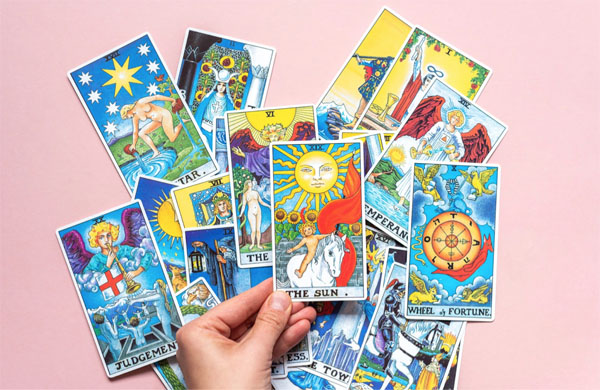
OK, got a tarot deck? Excellent! Now, you’re most likely browsing various blogs, books, and journals, as well as having a discussion with ChatGPT to gain some knowledge on tarot.
Chances are, the toughest part now is to learn the meanings that stand behind the cards. The good news is that we’ve done some work for you and listed the tips and tricks on how to learn the meanings fast. Here we go!
Oh, wait a minute.
Before we dive into the process, make sure you know your learning style. Are you an auditory learner? If so, get an audio guide and listen. In the case of visual learners, draw and write down the tarot cards and their meanings. Those who learn better by doing should make sure to work with the deck non-stop.
#1 Focus on One Deck for Now
Probably the best example here is the well-known Rider-Waite-Smith deck. It has clear imagery and consistent symbolism – two crucial elements for a beginner in the tarot world. Don’t get several decks to juggle them simultaneously. Thus, you’ll get a solid understanding of the basics. We also recommend choosing the deck that speaks best to your personality. When something resonates with you, the process of memorizing will turn out to be smoother.
#2 Learn the Numerology
If you take a closer look at each card, you’ll immediately see the numbers on each are based on the numerological principles. In other words, they symbolize the spiritual and material evolutionary process. The latter is known to begin with 1 and end with 9. For instance, when dealing with the number 1, think of potential opportunities, new beginnings in life, inspiration, progress, etc. At the same time, things like joy, rewards, and fulfillment come with the number 9. A lot of individuals prefer 7 mainly because it is whole and complete. Looking for patience, moderation, and growth? They come with the number 14.
#3 Break Down the Process into Small Bite-Size Chunks
Take your deck with the cards and break the whole pack into bite-sized pieces. Thus, you won’t get overwhelmed by the amount of information and progress well. Here are the groups we recommend you to divide:
- 22 cards for Major Arcana. These go first since they represent the key significant life themes.
- 56 cards for Minor Arcana. Check out the four suits – Wands (Fire), Cups (Water), Swords (Air), and Pentacles (Earth) – and learn them one by one together with their overarching themes.
- Court Cards. Taking into account that these cards usually require nuanced interpretation, explore them in the last place.
#4 Pull out a Card on a Daily Basis
Let drawing a card become a daily habit! Take one and reflect on its meaning. Now, get a journal and put down both the imagery and symbols of the card and how the message it conveys you can apply to this very day. Thus, you will be able to solidify your skills in the tarot world and connect this or that card to the situations in real life. If, at any point, you feel like stuck, talk to a pro. For instance, a team of experts from TarotAtlas is ready to assist you with interpreting tarot card meanings. Whether you need some intuitive insights or just some positive energy to keep you going, their revelations are available non-stop.
#5 Make Cards’ Meanings More Personal
Check out the cards from your deck to see if you can relate them to your personal experiences or the ones of people you know. For example, The Magician may be the card that reminds you of the time you got promoted due to your hard work. At the same time, The Empress may represent your cousin who was expecting her first child (twins!) and getting ready for the unknown and cared for by the whole family. Or maybe it’s The Hierophant that makes you think of your parents whose 45-year wedding anniversary is soon approaching? Whatever card you pick, these solid links with the personal will help you get a better understanding of the cards and meanings that hide behind them. Moreover, if you notice that your interpretation differs from the conventional one – bravo! Honor yourself for that.
#6 Create Flashcards
Remember the good old times in college? When you were using flashcards to promote active recall in the brain and, thus, to introduce, practice, and recycle terms in this or that field of study. Believe it or not, it works well in the case of tarot cards, too! Here’s what you can do: create flashcards and put down the name of the card on one side and the meaning of the tarot card or some related keywords on the other. Quiz yourself when taking your morning coffee, commuting to work, before going to bed, or whenever you feel like it.
#7 Assign Keywords to Every Tarot Card
This part is similar to the point #6 about flashcards. To help you memorize the tarot card meanings, explore simple keywords and assign them to the cards. For instance, The Chariot might mean something like “intellectual and material triumph,” “glorious success,” etc. The Lovers, on the other hand, might represent “love itself in whatever form it comes.” The Tower will come with a keyword like “sudden change,” while The Fool is all about the “new beginnings.”
Wrapping Up
Finally, read for yourself! Before you progress in your tarot routine, make sure to use your personal questions to learn to interpret cards and clarify meanings. Plus, a lot of advanced tarot readers recommend journaling your progress. That’s right! Get a journal and document your daily successes. They might include the cards you pull and the way you interpret each, as well as some simple insights. You will thus make your memory work at full capacity.
If you’re bored of doing that on your own – the online community welcomes you! Browse social media pages, online forums, or even local meetups of like-minded people. After all, sharing always helps no matter what you’re engaged in. Memorize tarot card meanings, and don’t forget to trust your intuition.