Top 10 HVAC Problems: How to Prevent Costly Repairs
By Space Coast Daily // March 11, 2025

Everyone appreciates keeping cool during the hot Summer months and warm in the Winter. When funny business starts rearing its ugly head though, many people dismiss this until it becomes much more serious. Instead, it’s always prudent to watch the way your HVAC is behaving.
There are all kinds of nasty allergens that can seep inside, people can develop health problems, and air can impact sleep and productivity too. With that in mind, ACRepair now kicks off its list of the top 10 most commonly encountered HVAC problems.
-
Clogged filters
One of the issues people all too commonly dismiss is when an air filter gets gummed up, dirty, or clogged. Over time, grime, dust, pet dander, mites, and all kinds of particles accumulate in the filter. This, in turn, blocks the airflow, forcing your system to work harder and hard. That means a higher energy bill and wasted power. It can even devolve into overheating or your coils freezing.
Worst of all, it can mean allergens getting into your home, which is not to be taken lightly, especially if you have people with breathing trouble living at home. Be certain to check your filters every month and have them replaced every 1-3 months.
-
Thermostat malfunctioning
Your system has to keep a proper lock on the temperature being produced, for obvious reasons. If something is off about it or it’s not quite calibrated, it won’t be able to read the temperature indoors properly, causing it to pump out too much cold air or too much heat. This will impact your immediate comfort.
Things that lead to this can be:
- dead batteries
- outdated settings
- wiring issues
If you’re experiencing this issue, you may consider upgrading to a programmable or smart thermostat. Keep an eye on it to make sure your HVAC is regulating your temperature properly.
-
Refrigerant leaks
Refrigerant is essential for cooling the air in your HVAC system. If it starts leaking, naturally your whole system could have trouble cooling, and thus you may end up with:
- warm air blasting from the vents
- ice building up on your coils
- unusual hissing sounds
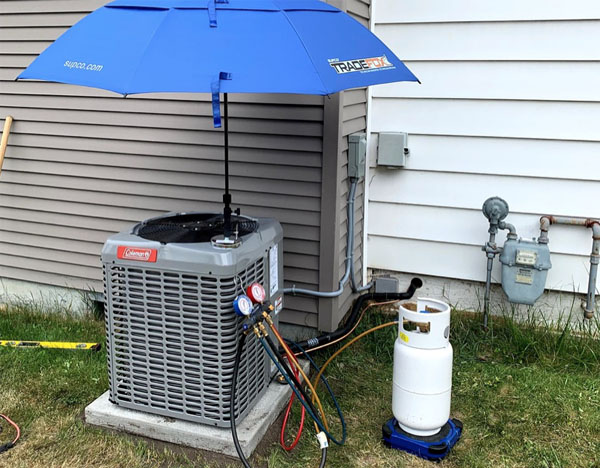
This will cause the compressor to have to work harder, hiking up your costs and rendering complete system failure a possibility.
-
Frozen or dirty evaporator coils
What these do is absorb heat from the air to help enhance cooling. When your airflow is insufficient due to your filters or coils gumming up or your refrigerant escaping, they can end up freezing. You won’t end up cooling your home or business properly in that case and your whole system can even shut down eventually because of it.
Dirty coils, on their part, reduce heat absorption so the system won’t operate like it’s supposed to in that case. So make sure your coils get cleaned regularly and your airflow is operating at a sufficient level. If your coils do freeze, be sure to turn the system off and allow them to thaw before addressing them.
-
Electrical component failures
HVAC systems rely on number of electrical components to do their job, including:
- capacitors
- relays
- wiring
Eventually, they can wear out or fail in light of power surges, corrosion, or overheating. A failing capacitor can lead to a non-starting compressor or a blower motor while faulty wiring can cause short cycling or shutdowns. If your lights start flickering when your HVAC turns on or you hear some clicking noises, definitely get it checked out.
-
Clogged drain lines and wire leaks
HVAC systems generate condensation that needs to drain properly. If the drain line becomes clogged with dirt, mold, or debris, water can back up and cause leaks, leading to water damage and mold growth. A full drain pan or excess moisture around the unit are warning signs of a drainage issue. Regularly flushing the drain line with a vinegar solution or using a wet/dry vacuum to clear clogs can help prevent costly water damage.
-
Blower motor and fan issues
These are responsible for circulating air around your home. If they get dirty, overworked, or unlubricated, the air passing around can get cut off, thus weakening your system’s efficiency. Some of the clues that you may find yourself in this situation are:
- weak airflow
- strange noises
- the system suddenly shutting down
-
Ductwork leaks
This can cause significant energy loss, rendering it a much taller task to maintain the temperature you’re aiming for. You could end up with uneven cooling and heating, rendering some parts of the home more comfortable than others. If you have excessive dust build-up or inconsistent temperatures, you might want to have a look at them. Consider sealing the leaks with duct tape or mastic sealant.
-
Inadequate insulation
This is another crucial factor in the heating and cooling of your home. You may be releasing tons of cool or warm air into your home, but your house ultimately needs a robust thermal envelope to keep all of that trapped. Cracks, crevices, and other openings are all places where air can escape.
Since insulation loses its power over time, you may consider beefing it up as well. Fiberglass, cellulose, and spray foam are the most common materials used. If you haven’t acquired new insulation in a while, that’s a potential consideration.

-
Short cycling
Your HVAC system can turn on and off frequently in short bursts rather than running through its normal heating or cooling cycle. This puts excessive strain on the compressor and other components. Calibrating the thermostat or replacing a dirty filter may resolve this.
Preventative maintenance tips
If you are attentive and tend to your HVAC system regularly, it will end up operating more efficiently, lasting longer, and will be less likely to require expensive repairs. Your energy bills will thank you as well.
The main things to keep in mind to that end are:
- Regularly replacing your filters: this is perhaps the simplest, easiest practice for homeowners. Filters don’t last forever, so if you want them to keep trapping what’s coming in from outside, this is a must.
- Routinely checking your thermostat: make sure it’s properly programmed for the season. Check your batteries on an annual basis as well if you use them.
- Scheduling professional inspections: a professional can spot a lot of hidden issues you wouldn’t be able to notice yourself. They can inspect your ductwork, check your refrigerant levels, and test your electrical components.
- Keeping your coils and drain lines clean: you can do this by gently brushing off dirt or using a coil cleaner spray. Another possibility is flushing the drain line with a vinegar solution every few months to clear it of debris.
- Monitoring your refrigerant levels: this is a technical issue and it’s best to use a professional for this.
- Safeguarding your electrical components: surge protectors can protect your system in the event of power surges. It’s best to leave these tasks to a technician too though.
- Sealing and insulating your ductwork.