Total Lunar Eclipse Will Bring Blood Moon March 13-14
By Zach Clark // March 8, 2025
Space Coast Daily Is Your NO.1 Source For NASA/Space News
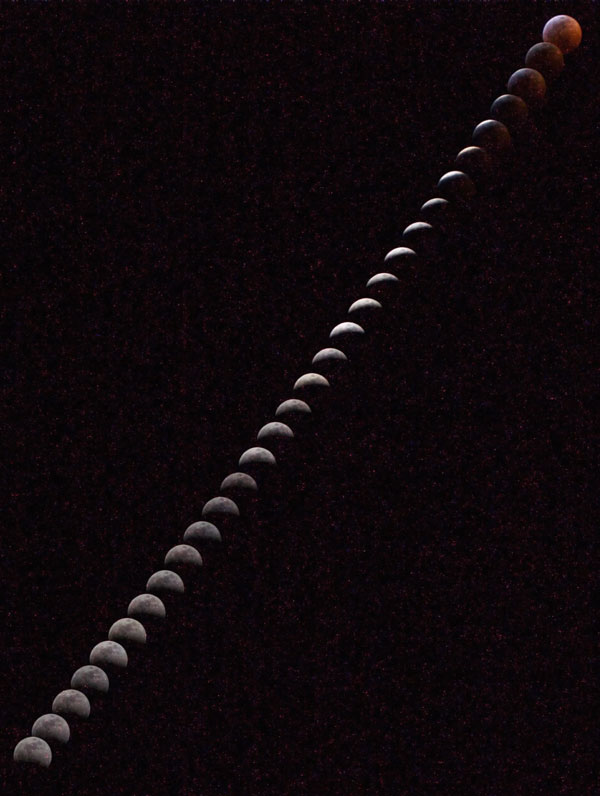
BREVARD COUNTY, FLORIDA – Mark your calendar for the night of March 13 and the early hours of March 14, when a total lunar eclipse will grace the skies. Just step outside and witness the celestial spectacle for yourself.
Among those eagerly anticipating the event is NASA’s Dr. Renee Weber—if the weather and a good night’s sleep allow.
“As a child, I begged my mom to wake me up for a lunar eclipse,” recalls Weber, chief scientist at NASA’s Marshall Space Flight Center in Huntsville, Alabama. “The next morning, I was so mad because I thought she hadn’t—but she actually did! I was just too sleepy to remember it. Luckily, I’ve had the chance to see a few eclipses as an adult, including the one on January 20, 2019, which I also photographed.”
While a “Blood Moon” might sound ominous compared to a Blue Moon or a Harvest Moon, the name is fitting. During a total lunar eclipse, the Moon takes on a deep red or orange hue, making it an awe-inspiring sight.
What Causes a Blood Moon?
A lunar eclipse happens when the Sun, Earth, and Moon align, causing the Moon to pass through Earth’s shadow. During a total lunar eclipse, the Moon moves into the darkest part of that shadow, known as the umbra. This is when the Moon appears red—hence the term “Blood Moon.”
In Huntsville, the eclipse will begin with partial phases at 10:57 p.m. on March 13 and conclude by 5:00 a.m. on March 14. Totality, when the Moon is fully immersed in Earth’s shadow, will last from 1:26 a.m. to 2:31 a.m., with the peak occurring at 1:58 a.m. Check local times for the best viewing opportunities across the Western Hemisphere.
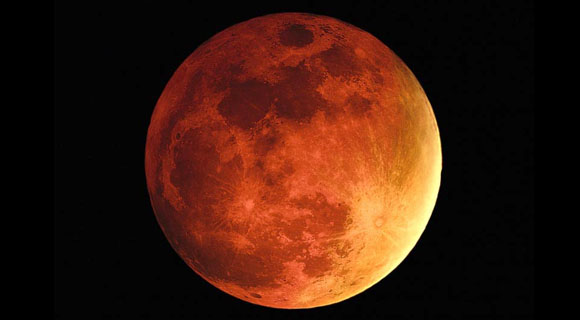
“With March being a month known for spring showers, there’s about a 50/50 chance of clear skies,” Weber advises. “But since totality lasts close to an hour, you might still catch a glimpse even if the clouds are scattered.”
How to Watch the Eclipse
No special equipment is required to enjoy the eclipse—just find a dark spot away from bright city lights for the best view. Binoculars can also enhance the experience.
Why does the Moon turn red? According to NASA, some sunlight filters through Earth’s atmosphere and reaches the Moon’s surface. Shorter wavelengths, like blue and violet, scatter easily, while longer wavelengths, such as red and orange, pass through. As a result, the Moon appears reddish during a lunar eclipse. If there are more clouds or dust in the atmosphere, the red hue can appear even deeper.
A Gateway to Lunar Exploration
This total lunar eclipse has already generated significant excitement. For Weber, such events help spark public curiosity about the Moon and NASA’s ongoing missions.
“The Moon is a fundamental part of human experience, and sharing that wonder is my passion,” she says. “NASA’s focus on lunar exploration—through the Artemis missions, robotic landers from the Commercial Lunar Payload Service initiative, and the Lunar Reconnaissance Orbiter—continues to push the boundaries of discovery. These missions will expand our knowledge and inspire people worldwide.”
So, set your alarms and get ready for a breathtaking lunar show—weather permitting, of course!