National Coffee Day 2025 Set Monday, See Where You Can Get a Free Cup of Joe in Brevard
By Space Coast Daily // September 28, 2025
International Coffee Day Set Oct. 1

BREVARD COUNTY, FLORIDA – Coffee fans across Brevard may want to set their alarms a little earlier on Monday, September 29, as national chains and Space Coast cafes prepare to pour out free cups and discounted drinks in honor of National Coffee Day 2025.
The annual celebration, observed in the U.S. since 2005, has grown into a major event for coffee shops and restaurants eager to reward their most loyal customers — and attract new ones.
While the global spotlight will turn to International Coffee Day on October 1, Monday’s festivities give American coffee lovers the first shot at deals.
From Krispy Kreme’s free coffee-and-doughnut combo to Burger King’s $1 any-size coffee for Royal Perks members, options will be brewing all over the Space Coast.
Scooter’s Coffee is offering a free medium brewed coffee through its mobile app, including Scooter’s Blend medium roast, bold dark roast or the flavored coffee of the day.
Circle K is offering free medium cups through its app, while Dunkin’ is giving rewards members a free hot or iced coffee with any in-app purchase.
7-Eleven will be pairing breakfast sandwiches with free coffee for loyalty members through late October, while Smoothie King is introducing a new protein coffee line tied to Starbucks Rewards points.
And while Starbucks itself hasn’t unveiled a direct freebie, its delivery partner, Grubhub, is stepping in with $7 off Starbucks orders of $20 or more for Grubhub+ members.
At Krispy Kreme, customers can pick up not only a free coffee and doughnut but also an extra dozen Original Glazed doughnuts for just $1 with the purchase of any dozen.
HISTORY OF COFFEE: Coffee Beans are the Second Most Traded Raw Material Worldwide, After Crude Oil
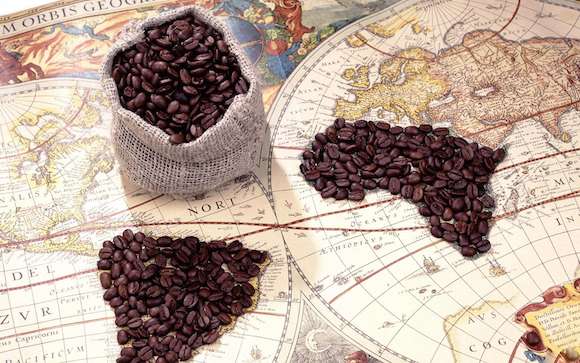
The story of the coffee plant and the drink made from it is pretty remarkable, but no one is entirely sure when and where it was first discovered. The best-known rumor is about a goatherd called Kaldi.
Coffee Originated in Ethiopia
Legend has it that one day, many hundreds of years ago in the Ethiopian highlands, Kaldi’s goats started eating some berries they found on a tree and became so energetic that they wouldn’t go to sleep that night.
Intrigued, Kaldi collected some of the berries and, the following morning, took them to his local monastery, where he explained the effect they had on his goats. The monks roasted the berries and mixed them with water, creating a delicious drink.
We know that all of the world’s coffee originated from plants in Ethiopia. Coffee plants are evergreen, meaning they have green leaves all year round.
It takes three to five years for coffee plants to start flowering. The small white flowers then produce green berries, which take almost a year to ripen and turn red. These berries are home to two small pits, and these pits are what we know as coffee beans.
 Related Story:
HOT OFF THE PRESS! August 26, 2024 Space Coast Daily News – Brevard County’s Best Newspaper
First ‘Starbucks’ Introduced Over 500 Years Ago on the Arabian Peninsula
Whether from Kaldi’s monastery or some other source, by the 15th century, both coffee beans and excitement about their energizing effects spread from Ethiopia to the Arabian Peninsula.
The beverage initially met with controversy and was banned due to religious concerns. But soon people realized that coffee would help them stay alert during long prayer and study sessions, and the bans were reversed.

The first known public coffee houses, which weren’t that different from today’s high-street coffee shops, were founded in Arabia. They were very popular, and, in addition to drinking coffee, customers would listen to music, watch performers, and stay up to date on the news.
Coffee’s Energizing Buzz Accounts For Its Demand
Probably the main reason coffee became so popular was because of the buzz you get when you drink it. This effect is due to the caffeine in the coffee beans.
As our cells work, they produce a molecule called adenosine. Adenosine enters the bloodstream and travels around the body until it binds to brain cells. This sets off a series of reactions to tell the brain we are tired.
Caffeine binds to brain cells in the place of adenosine. This means that when we drink coffee, the brain doesn’t get the message that we’re tired. Instead, the brain releases adrenaline, a hormone that causes our hearts to beat faster, dilates our pupils, and releases sugar into our bloodstream. This is what causes coffee’s energizing effect.
 Related Story:
Ven Pa’ Ca Café in Titusville Features Latin American Food, Fresh Pastries and Specialty Coffees
Holy Land Pilgrimages Bring ‘Bitter Invention of Satan’ to Western World
Thousands of people from Europe traveled to the holy city of Mecca on the Arabian Peninsula each year on religious pilgrimages. In the 17th century, some of them took coffee back home with them.
Again, the drink was met with suspicion and fear as priests called it the “bitter invention of Satan.” Pope Clement VIII was asked to intervene, but when he tried coffee for himself, he found it so delicious that he decided to baptize it, meaning Catholics were free to enjoy it.

Soon, coffeehouses sprang up across Western Europe and became centers of social activity and conversation. Many businesses grew out of coffeehouses, including Lloyd’s of London, which originated from Edward Lloyd’s coffeehouse.
The custom of tipping also originated from the coffeehouses of England. To make sure they were served quickly, customers would put coins in boxes labeled “To Insure Prompt Service,” or TIPS for short.
Smuggled Plants Survive Harrowing Voyage to Caribbean and South /Central America
In 1714, the Mayor of Amsterdam presented King Louis XIV of France with a young coffee plant as a gift, and Louis ordered it to be planted in the Royal Botanical Garden in Paris. Eleven years later, a young naval officer, Gabriel de Clieu, stole a seedling from the King’s plant and took it with him on a voyage to Martinique, in the Caribbean.
It was a terrible journey. A fellow crew member attacked Gabriel with a dagger and tried to destroy the small plant, but Gabriel was able to fight him off. Later, pirates attempted to take over the ship, and the crew spent a whole day defending themselves.
Then a terrible storm nearly sank the ship, and almost all of the freshwater supplies were lost. Gabriel shared his water ration with the seedling for the rest of the journey.

After finally reaching Martinique, Gabriel grew the plant, and within 50 years, there were over 18 million coffee plants on the island. Incredibly, all of the coffee plants across the Caribbean – and South and Central America – originated from this seedling.
The resulting coffee harvests were so profitable for the French that eventually Louis forgave Gabriel for his thievery and made him Governor of the Antilles.
Rumor That Brazil’s Coffee Industry Result of Illicit Liaison
In 1727, the Brazilian government sent Colonel Francisco de Melo Palheta to French Guiana to acquire some of the lucrative beans. The French Governor was reluctant to give any away, but his wife was a little more generous.
Rumor has it that she had an affair with the Colonel, and when the time came for his return to Brazil, she gave him a bunch of flowers, secretly sprinkled with fertile coffee seedlings. Brazil’s coffee industry soon took off, and it is now the globe’s largest producer, growing around 30 percent of the World’s coffee.
Arabica Plants Produce Best-Tasting ‘Joe’
Coffee plants can only thrive in tropical climates because they can’t survive winter frosts. There are two species of coffee plant that are used to produce all of the coffee drank today: Arabica and Robusta.

Arabica plants produce the best-tasting drinks but can only be grown at altitudes higher than around 600 meters above sea level. Robusta plants can grow at lower altitudes, but the better taste of Arabica beans means that around 80 percent of the world’s coffee is produced from them.

Heavy Tea Taxes Prompted American Colonists To Turn to a Preference for Coffee
The Europeans first introduced coffee to New York (then known as New Amsterdam) in the 1600s, but initially, the settlers preferred to drink tea. This was until King George III imposed expensive taxes on tea, leading to a protest called the Boston Tea Party.
In December 1773, angry protesters boarded ships and destroyed a whole shipment of tea being transported to Boston’s harbor. This led to coffee becoming America’s preferred drink and also escalated the American Revolution, eventually culminating in the War of Independence, which began near Boston in 1775.
Coffee Dominant on the World Market
Coffee continues to change the world today. In 1991, workers at the University of Cambridge, U.K., became frustrated at making trips to the coffee pot only to find it empty. They set up the world’s first webcam to allow them to monitor the amount of coffee in the pot from their desks and avoid pointless trips.

Coffee beans are now the second most traded raw material worldwide, after crude oil, with annual sales exceeding $55 billion. With its widespread popularity as the world’s second-favorite drink, after water, and the special effects it has on the drinker, it seems likely coffee is here to stay.
CLICK HERE FOR BREVARD COUNTY NEWS