Florida’s New HB 113 Law Hopes to Limit Police Car Chases to Movies
By Space Coast Daily // October 24, 2025
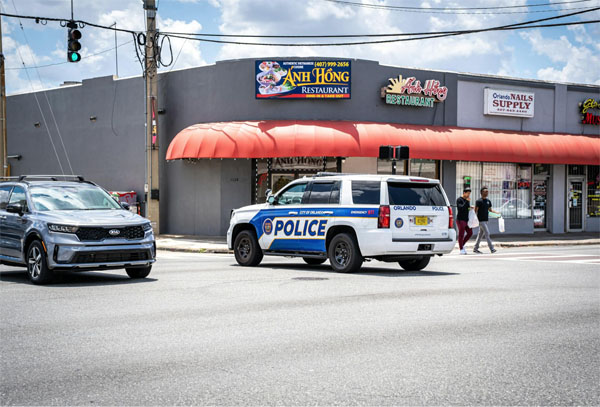
High-energy police car chases that rivet everyone, from bystanders to theater audiences, have been a staple of many movies. The Bourne Supremacy. Ryan Gosling in Drive. And, of course, the Mad Max franchise.
What seems so adrenaline-pumping on the silver screen is actually immensely dangerous in real life. The risk for physical injury aside, fleeing from the police also sets one up for much higher charges. And yet, many people try to escape law enforcement by racing against police vehicles. Some states, like Florida, fare worse than others in the statistics on hit-and-run cases.
Recently, Florida implemented a new House Bill (HB 113) that aims to curb hit-and-run cases by significantly increasing the deterrents. What are its implications for the residents? What can we expect for the future of road safety through this new lens?
HB 113 Law: What Fleeing from the Police Will Now Mean
The Florida Senate brought the new HB 113 into effect on October 1, 2025. Under the new guidelines, fleeing from or eluding a law enforcement officer is now a Level 5 offense. If a driver causes injury or damages property during the chase, they can be charged with a Level 6 offense.
Both these charges are up, from Level 4 and 5, respectively. It means the person fleeing will now receive a higher score for sentencing, potentially leading to prison time and not just probation.
For instance, escaping after the police have ordered you to stop can incur a fine of up to $5,000 or (and) five years in prison. Aggravated fleeing, i.e., causing property or personal damage, can directly increase the punishment to $10,000 and/or 15 years of prison time.
The law also features strict penalties for repeat offenders; you could face a 1.5× sentencing multiplier for prison time.
Clearly, the law makes it evident that the state is cracking down on offenders fleeing the police, delaying punitive action, and risking the lives of people around them. It is now classified as a more serious offense to deter offenders and protect residents from the dangers of reckless driving.
The Implications of HB 113: A 360-Degree Perspective
The revised law certainly holds promise for making Florida’s streets safer and law enforcement quicker. The risk of increased punishment for attempting to flee can deter people and encourage them to remain in the scene.
This response becomes particularly relevant in cases of fleeing after a hit-and-run. Florida sees several incidents where the errant drivers escape from the scene of the crash. Finding the commensurate compensation for vehicular damage becomes challenging in such cases. The increased stringency of the new law can address this problem.
That said, we must still be proactive about taking prompt action, such as documenting the scene through photographs and written records. According to Lesser, Landy, Smith & Siegel, PLLC, victims must file claims related to personal injury within four years from the accident. The timeline stands at two years for a wrongful death claim. Failing to meet these timelines can render your case legally ineffective.
A potential complication of the heightened punishment concerns drivers whose fault in the matter is debatable. Vehicle collisions can have several causes that don’t involve personal fault. For example, a malfunctioning braking system or a sudden deer crossing the road has resulted in many accidents in the US over the years.
These sudden, unexpected accidents can catch even the most cautious of drivers unaware, causing a flight response. It will become necessary to work with defense lawyers who can establish a lack of intent or emergency circumstances to handle these situations.
Why Did HB 113 Remove the Marked Vehicle Requirement?
A prominent change in the revised law is the removal of the requirement for vehicle markings such as insignia and jurisdictional details. The law enforcement vehicle no longer needs to even have the siren and lights on.
These modifications mean that defense lawyers can no longer use the excuse that the said vehicle “was not marked,” which is why the defendant continued to drive away.
Some circles have argued that marked vehicles can make it harder for the police to catch reckless drivers or conduct investigative work. These could be possible triggers behind the new decision.
However, unmarked vehicles may also be perceived as a problem in emergency situations, causing traffic chaos and affecting public trust. Moreover, they may also impact visibility, especially in inclement weather conditions. In August 2025, an alleged police impersonator wore a Maryland State Police uniform and drove a marked police car.
In September this year, Reuters reported that an upsurge in federal law enforcement under President Trump has exposed the FBI’s fleet of unmarked cars. Some bureau members feel that it could become a risk to national security and surveillance projects.
As the new law takes effect, enforcers will need to be more vigilant of such scenarios. They will need to remain mindful of both the pros and cons of removing the marked vehicle requirements.
Florida’s HB 113 may just set an example for other US states that suffer from increasing hit-and-run cases. Fleeing from law enforcement, while an established offense, is more common than we realize. Stringent legislation like this one can change the situation, bringing more stability and safety for citizens.