Rugged Storage for Mission-Ready Tech | Royal Case
By Space Coast Daily // October 24, 2025
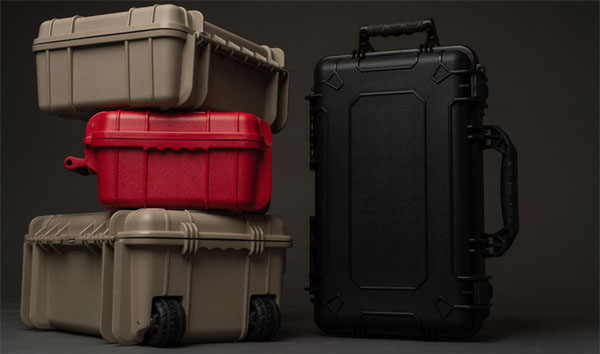
In the race to deploy cutting-edge technology where it’s needed most, organizations often overlook a fundamental vulnerability: the physical environment itself. Whether it’s a defense contractor testing autonomous systems in desert conditions, a public safety agency managing evidence from patrol vehicles, or an energy company collecting seismic data in sub-zero temperatures, the stakes are identical.
Yet procurement teams continue to approve standard commercial storage solutions for field deployments, only to discover the true cost of that decision when drives fail mid-mission. The financial and operational consequences of data loss in harsh environments are staggering, and the ripple effects extend far beyond a single corrupted file or crashed system.
The High Cost of Data Failure in Harsh Environments
In commercial sectors, unplanned operational technology downtime carries similarly devastating financial consequences. Both scenarios underscore an uncomfortable truth: mobility complicates data protection, as mission-ready technology must travel wherever the job demands.
The hidden costs extend far beyond the immediate hardware replacement. When a drive fails during a critical operation, teams lose not just the device but also irreplaceable field data, mission continuity, and operational momentum.
Recovery efforts can require redeployment of personnel, re-collection of time-sensitive information, and explanations to stakeholders about why deliverables are delayed. For defense contractors, a single data-loss incident can trigger security audits, contract reviews, and erosion of client trust that takes years to rebuild.
Environmental factors accelerate failure rates in ways that standard IT planning rarely accounts for. Without ruggedized protection, organizations are essentially gambling that their equipment will outlast the mission; a wager that becomes costlier with every failed deployment.
Why Rugged Storage Matters for Mission-Ready Technology
Field teams battle more than cyber-threats; they face shock, vibration, temperature swings, and moisture that can infiltrate devices. Any of these factors can corrupt firmware or crack a solder joint, rendering critical data inaccessible.
According to IDC, ruggedized device shipments are growing because organizations refuse to let environmental risk dictate innovation. This resilience is often bolstered by protective gear, like a durable custom soft case, ensuring data integrity is the last line of defense for a mission.
Decoding Ruggedization Standards
Before approving a procurement request, most IT and logistics officers scan the spec sheet for three key acronyms: MIL-STD-810, IP, and FIPS. Each represents a different but complementary pillar of durability and security.
MIL-STD-810H: Built for Tactical Performance
The U.S. Department of Defense’s MIL-STD-810H testing regimen is a gauntlet of environmental challenges. It simulates drops from four feet onto every surface, rapid temperature shocks from -51°C to 71°C, and significant vibration across three axes. Devices that pass this standard can survive life at the tactical edge, enduring the constant jarring of a patrol vehicle.
IP Ratings: Keeping Dust and Water Out
Ingress-Protection (IP) codes, defined by the International Electrotechnical Commission, measure a device’s resistance to solids and liquids. An IP65 rating shields against high-pressure water jets, while IP67 allows for submersion in one meter of water for up to 30 minutes. For units stationed on a humid flight line or deployed in coastal rescue boats, an IP67 rating is quickly becoming the minimum requirement.
FIPS 140-2 & TAA/NDAA: Stay Compliant, Stay Safe
Data security and supply chain integrity are non-negotiable for federal and defense applications. NIST’s FIPS 140-2 standard validates cryptographic modules, ensuring that encryption methods stand up to federal scrutiny. Meanwhile, TAA and NDAA clauses govern country-of-origin and supply-chain integrity, eliminating red-tape delays during audits.
Real-World Use Cases: From Battlefield to Factory Floor

Alt text: Field researcher carrying rugged equipment case.
Understanding ruggedization standards is essential, but seeing how they perform in actual field conditions brings the value into sharper focus. Across defense, public safety, scientific research, and industrial sectors, rugged storage solutions are solving problems that would cripple conventional drives within hours or days.
These aren’t hypothetical scenarios; they’re daily realities for teams operating in some of the harshest environments on the planet. The following examples illustrate how mission-ready technology translates abstract IP ratings and MIL-STD certifications into tangible operational advantages:
- Mission-Ready Mobility: A light infantry unit streams UAV imagery to NVMe-based rugged drives mounted in an armored vehicle, surviving off-road vibration while retaining 100% data integrity.
- Preserving the Record: Police cruisers running constant dash-cam recordings endure Phoenix heat, where IP67-rated SSDs prevent write failures that would otherwise erase crucial footage.
- Extreme Temperatures: Arctic scientists log seismic data at extremely low temperatures, using heaters in rugged enclosures to maintain optimal drive temperature and sustain write speeds.
- Vibration-Heavy Robotics: On an automotive assembly line, solid-state rugged drives with conformal-coated PCBs stay operational despite high-frequency vibrations from robot arms.
Safeguarding Local Innovation and Intellectual Property
When prototypes, source code, or telemetry leave the safety of headquarters for field testing, they become vulnerable to physical loss and cyber theft. Self-encrypting drives (SEDs) offer two critical layers of protection.
- Encryption at Rest & in Motion: AES-256 hardware engines encrypt every bit of data the moment it’s written, eliminating the performance penalty of software-based solutions.
- Crypto-Erase Capability: In a worst-case scenario, a single command can destroy the encryption key, rendering the drive’s data unreadable if the device is compromised.
For government labs and defense subcontractors, local data sovereignty rules require that sensitive information remain on approved devices. Rugged storage with FIPS-validated encryption and tamper-evident seals satisfies compliance mandates and maintains operational agility.
Stay Mission-Ready
Rugged storage is not a luxury; it is a force multiplier that keeps local innovation alive in environments that destroy ordinary hardware.
By mapping MIL-STD-810H, IP67, and FIPS 140-2 requirements to real-world threats, your organization can specify solutions that align with operational reality.
Following a practical checklist ensures critical data remains intact from the assembly line to the front line.