Why Community Association Management Software Is A Game-Changer For Small HOAs
By Space Coast Daily // November 18, 2025

Small HOAs often find themselves stuck between two extremes: overpaying for full-service property management companies or struggling to manage their operations internally. Full-service firms come with high costs and rigid service packages, while self-management without support quickly leads to burnout, governance gaps, and dissatisfied residents.
The rise of digital-first PMCs—firms that use cloud platforms, automation, and lean systems—has given these communities a powerful third option. These companies use software-driven operations to deliver professional-grade service at a fraction of traditional costs.
Technology has effectively erased the old line between self-management and professional oversight. Thanks to digital PMCs, even the smallest communities can access enterprise-grade tools without the enterprise-level price tag. This reflects a broader shift toward hybridized management models where control, transparency, and cost-efficiency coexist.
The thesis is clear: digital PMCs represent the future of community management by combining automation, scalability, and expert support into a single streamlined solution.
Understanding Digital PMCs and Their Role
Digital PMCs are not just tech-forward management companies—they’re an entirely new model. They replace paper-heavy, manual processes with fully integrated digital systems. These platforms centralize HOA accounting, communications, document storage, and compliance tracking into a unified dashboard.
Instead of outsourcing every task, a 40-home HOA can use a digital PMC to manage vendor contracts, process dues, and issue violation notices—all through automation. The human element isn’t eliminated; it’s reallocated. Professionals focus on legal compliance, tax prep, and vendor negotiation, while the system handles repetitive admin work.
The backbone of this model is community association management software, a purpose-built toolset that ties all these services together and makes digital PMCs possible.
The Software Infrastructure Behind Digital PMCs
Community associations can’t run smoothly on a patchwork of spreadsheets and emails. Modern management requires purpose-built software. Digital PMCs rely on CAM software—an acronym for Community Association Management software—that merges core functions like accounting, communication, maintenance tracking, and document management into one secure platform.
These systems provide:
- Resident databases for easy contact and voting records
- Financial tools with real-time bank syncing and automated invoicing
- Shared dashboards for board members, vendors, and homeowners
- Secure file storage for documents, CC&Rs, meeting minutes, and budgets
For example, an HOA board can log in to view cash flow, approve vendor payments, and send meeting reminders—all from a single interface. These tools scale beautifully for small associations, reducing overhead while maintaining transparency and professionalism.
Scalability and Cost Efficiency for Small Communities
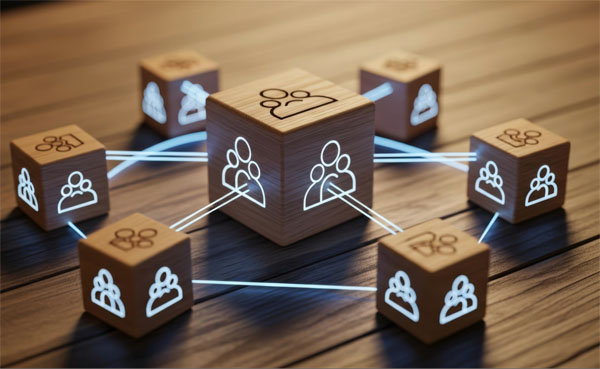
The power of digital PMCs lies in scale. Instead of duplicating management processes for each HOA, they use shared software infrastructure to run dozens of communities simultaneously. This keeps costs low and quality high.
Automation eliminates the need for on-site staff and minimizes travel time. Tasks like invoice matching and ACH payments that once took hours are handled in minutes. The system also maintains a digital ledger for every transaction, making audits painless.
Predictive maintenance features analyze historical data to anticipate vendor needs before problems arise. This proactive model helps prevent costly emergencies and builds trust with residents.
By streamlining operations through automation, digital PMCs make professional management accessible to smaller HOAs that previously couldn’t afford it.
Financial Oversight in the Age of Automation
Finance is arguably the most sensitive and complex part of HOA governance. Inaccurate books or poor tracking can jeopardize reserves, increase liability, and erode trust.
Digital PMCs use advanced tools to simplify and strengthen financial oversight. HOA finances become manageable through automation—dues tracking, forecasting, and reconciliation all occur in real time.
Consider the following:
- Late fees apply automatically after the grace period.
- Online payments sync instantly with accounting software.
- Board members can review up-to-date financial reports from anywhere.
Even self-managed HOA finances benefit from this system. Volunteers with no accounting background can produce audit-ready reports, track reserve balances, and avoid errors typically caused by manual entry.
In short, digital PMCs marry the discipline of professional accounting with the transparency that residents expect.
Communication and Resident Engagement as Core Functions
Most resident frustrations boil down to poor communication. When updates are missed or rules aren’t clear, tension builds.
Digital PMCs address this through built-in tools that centralize communication:
- Message boards and push notifications for announcements
- Ticketing systems for maintenance requests
- Document libraries with searchable meeting minutes and CC&Rs
A resident can submit a maintenance request that automatically routes to the correct vendor, updates the board, and notifies the resident when the job is complete.
This eliminates the need for follow-up calls and provides a verifiable record of all interactions. Transparent communication builds resident trust and reduces friction, transforming the relationship from reactive to collaborative.
The Human Element: Balancing Automation with Expertise
A common misconception is that digital PMCs are cold or robotic. In reality, they free up professionals to focus on what matters most.
Automation handles the paperwork. Humans handle the people.
An automated violation system may send out reminders, but a live expert handles disputes with empathy and nuance. Tax filings are prepared using the system’s data, but a compliance specialist ensures every detail aligns with local laws.
This balance of technology and human insight ensures consistency without sacrificing compassion. It also reduces burnout, as experts spend less time on repetitive admin and more time on strategic governance.
The Future of HOA Management: Hybrid and Data-Driven Models
Digital PMCs aren’t just a trend—they represent the next phase in HOA evolution. These hybrid models blend self-governance with professional support, powered by data and automation.
Artificial intelligence and predictive analytics will soon refine every aspect of management:
- Reserve studies that adapt to spending patterns
- Assessment models adjusted dynamically to meet financial goals
- Vendor evaluations benchmarked across dozens of communities
With the ability to compare performance data across properties, boards can identify inefficiencies and make smarter decisions.
The future of small HOA management lies in adaptability. Digital PMCs give communities the flexibility to scale, the tools to stay accountable, and the expertise to navigate challenges—without the overhead of traditional firms.
Conclusion – The Scalable Middle Ground
Small HOAs no longer need to choose between expensive property managers and overwhelmed self-governance. Digital PMCs offer a middle path: scalable, affordable, and transparent.
By integrating Community Association Management Software with automated financial systems and communication tools, these firms transform everyday operations.
As more communities seek efficiency without sacrificing control, digital PMCs will become the new standard—redefining what professional HOA management looks like for the next generation.