How to Measure Quality of Hire in Recruitment
By Space Coast Daily // December 15, 2025
As organizations strive for stronger business performance and sustainable growth, one metric has emerged as a critical benchmark for the success of recruitment practices: quality of hire. Using quality of hire as a north star allows HR leaders and hiring managers to go beyond basic metrics like time-to-fill or cost-per-hire, focusing instead on the long-term value and contributions that new employees bring to the organization. Understanding how to measure this metric accurately can be transformative.
A quality-of-hire assessment involves a thorough review of how well new hires perform, how long they stay, whether they embody the company’s values, and how quickly they become productive. Organizations that develop systematic methods for gathering and interpreting these insights can make more informed hiring decisions and consistently build stronger teams.
The shift towards measuring quality of hire reflects a broader industry realization: the most effective recruitment strategies focus not just on filling roles quickly, but on hiring the right people who will propel the business forward. By embedding quality assessment into the recruitment process, organizations set themselves up for continual improvement and competitive advantage.
Early adoption of quality-centric hiring practices leads to better outcomes for both organizations and their employees, helping businesses win and retain top talent even in highly competitive markets. Companies that make strategic hiring decisions based on data and ongoing evaluation tend to see increased innovation, reduced turnover, and higher employee satisfaction.
Understanding Quality of Hire
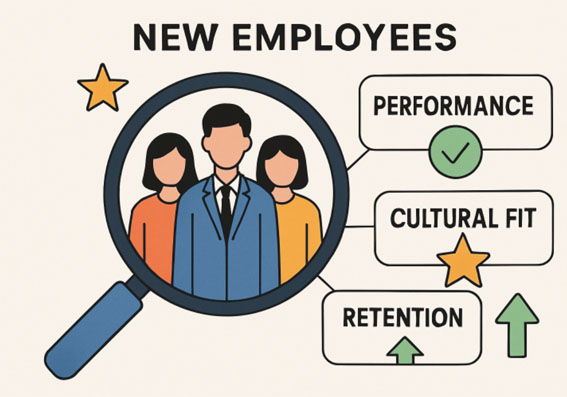
Quality of hire represents the aggregate value a new employee delivers across their tenure. It’s a nuanced metric that captures multiple data points—performance in the role, cultural fit, retention rates, and impact on team dynamics. Unlike speed-based hiring metrics, quality of hire focuses on the depth of value added, not just the efficiency of filling open positions.
The concept has gained momentum as organizations increasingly report that high-performing, engaged employees are the cornerstone of sustained business growth. According to Harvard Business Review, businesses that prioritize quality of hire experience not only lower turnover but also have greater productivity per hire. Quality of hire, therefore, isn’t just about avoiding costly bad hires; it’s about continuously bringing in talent that is poised to drive long-term success.
Key Metrics for Assessing Quality of Hire
A comprehensive quality of hire framework requires organizations to look at several core metrics:
- Employee Performance: Regularly evaluating a new hire’s performance against predefined goals provides objective insights into how effectively they’re contributing.
- Retention Rates: Monitoring the percentage of new hires who remain with the company, especially during the first year, helps highlight both fit and possible onboarding issues.
- Cultural Fit: Successful hires should align with the company’s core values and work culture. This can be measured through surveys or qualitative feedback from managers and peers.
- Time to Productivity: Assessing how quickly a new hire reaches expected performance benchmarks is vital for understanding the efficiency of your onboarding processes.
- Hiring Manager Satisfaction: Collecting feedback from those who oversee new hires can yield invaluable qualitative insights into new employees’ integration and day-to-day effectiveness.
Implementing Effective Measurement Strategies
To operationalize quality of hire, organizations need structured, repeatable processes that transform subjective impressions into actionable data. The following strategies are essential:
- Defining Success Criteria: Create specific, measurable objectives for what constitutes a successful hire in every role, aligning these with organizational goals.
- Data Collection: Gather performance review scores, retention data, 90-day check-ins, and anonymous employee feedback to create a holistic picture.
- Regular Analysis: Establish a cadence for analyzing this data—quarterly reviews are common, enabling trends to be quickly spotted and acted on.
- Continuous Improvement: Leverage data-driven insights to refine job descriptions, interview questions, and your assessment criteria for ongoing optimization.
By following a disciplined evaluation cycle, companies can close feedback loops, iterate on their recruitment models, and elevate their overall talent strategy.
Leveraging Technology in Quality of Hire Assessment
As workforce analytics becomes more advanced, organizations are increasingly turning to technology to automate the complex process of quality assessment. AI-powered recruitment platforms analyze historical performance data, behavioral assessments, and retention trends to help predict which candidates are most likely to succeed. Integrating applicant tracking systems (ATS) with performance management and onboarding solutions can also streamline the collection and analysis of quality-related data, supporting a seamless view of employee progress from pre-hire to post-hire.
Platforms like LinkedIn Talent Insights and Workday offer dashboards and reports that empower HR teams to uncover patterns and make smarter decisions at scale. The strategic use of these tools is transforming the way companies view recruitment—from a transactional process to a long-term value investment. As reliance on technology increases, it’s important for organizations to ensure their tools are interoperable and to provide training for stakeholders who use these platforms.
Challenges in Measuring Quality of Hire
Despite clear benefits, measuring quality of hire presents organizational challenges that require foresight and investment to overcome:
- Data Integration: Many businesses use multiple HR systems that do not communicate with one another, resulting in fragmented data and incomplete insights.
- Subjectivity and Bias: Performance reviews and cultural fit assessments can be influenced by unconscious biases or inconsistent standards across teams.
- Delayed Feedback Loops: The impact of a hiring decision may not become fully evident for months, creating a time lag between action and measurable results.
Overcoming these obstacles demands the creation of standardized definitions and metrics for quality, as well as investment in an integrated technology stack.
Best Practices for Enhancing Quality of Hire
For organizations committed to building world-class teams, the following best practices are highly recommended:
- Structured Interviewing: Use consistent, validated interview techniques to reduce subjectivity and improve hiring accuracy.
- Comprehensive Pre-Hire Assessments: Deploy skill and cultural assessments before offers are extended, ensuring candidates meet both technical and value-based requirements.
- Continuous Feedback: Gather feedback from new hires and their managers regularly to assess fit, address early issues, and refine onboarding practices.
- Emphasize Data-Driven Decision Making: Analyze hiring data at every stage and use these insights to inform ongoing process improvement and training initiatives.
For additional strategies, SHRM’s guidelines offer a range of research-backed methods to enhance your recruitment effectiveness.
Conclusion
Measuring quality of hire enables organizations to move from reactive hiring practices to a strategic model focused on sustainable talent acquisition. By prioritizing outcome-focused metrics, leveraging advanced technology, and implementing best-in-class practices, companies can dramatically improve workforce quality—and achieve stronger business results. As talent competition intensifies, embedding rigorous quality-of-hire measurement at every step of the recruitment process is not just a best practice; it’s a business imperative.