NASA, Department of Energy to Develop and Deploy Lunar Surface Nuclear Reactor By 2030
By Space Coast Daily // January 15, 2026
deployment of lunar surface reactor will enable sustained lunar missions by providing continuous, abundant power

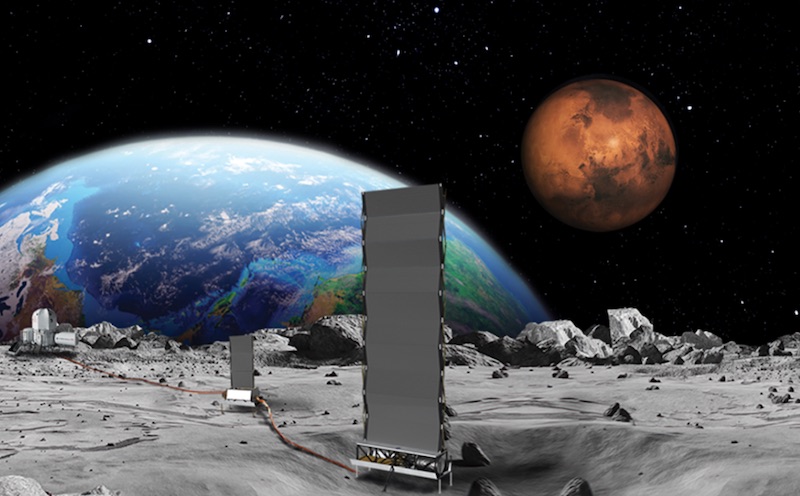
NASA, along with the U.S. Department of Energy, announced Tuesday a renewed commitment to their longstanding partnership to support the research and development of a fission surface power system for use on the Moon under the Artemis campaign and future NASA missions to Mars.

A recently signed memorandum of understanding between the agencies solidifies this collaboration and advances President Trump’s vision of American space superiority by deploying nuclear reactors on the Moon and in orbit, including the development of a lunar surface reactor by 2030.
This effort ensures the United States leads the world in space exploration, security, and commerce.
“Under President Trump’s national space policy, America is committed to returning to the Moon, building the infrastructure to stay, and making the investments required for the next giant leap to Mars and beyond,” said NASA Administrator Jared Isaacman.

“Achieving this future requires harnessing nuclear power. This agreement enables closer collaboration between NASA and the Department of Energy to deliver the capabilities necessary to usher in the Golden Age of space exploration and discovery.”
NASA and DOE anticipate deploying a fission surface power system capable of producing safe, efficient, and plentiful electrical power that will operate for years without refueling.
The deployment of a lunar surface reactor will enable sustained lunar missions by providing continuous, abundant power regardless of sunlight or temperature.
“History shows that when American science and innovation come together, from the Manhattan Project to the Apollo Mission, our nation leads the world to reach new frontiers once thought impossible,” said U.S. Secretary of Energy Chris Wright.
“This agreement continues that legacy. Thanks to President Trump’s leadership and his America First Space Policy, the department is proud to work with NASA and the commercial space industry on what will be one of the greatest technical achievements in the history of nuclear energy and space exploration.”
The agencies’ joint effort to develop, fuel, authorize, and ready a lunar surface reactor for launch builds upon more than 50 years of successful collaboration in support of space exploration, technology development, and the strengthening of our national security.