5 Best GPS Fleet Tracking Systems: Top Providers Compared
By Space Coast Daily // February 1, 2026
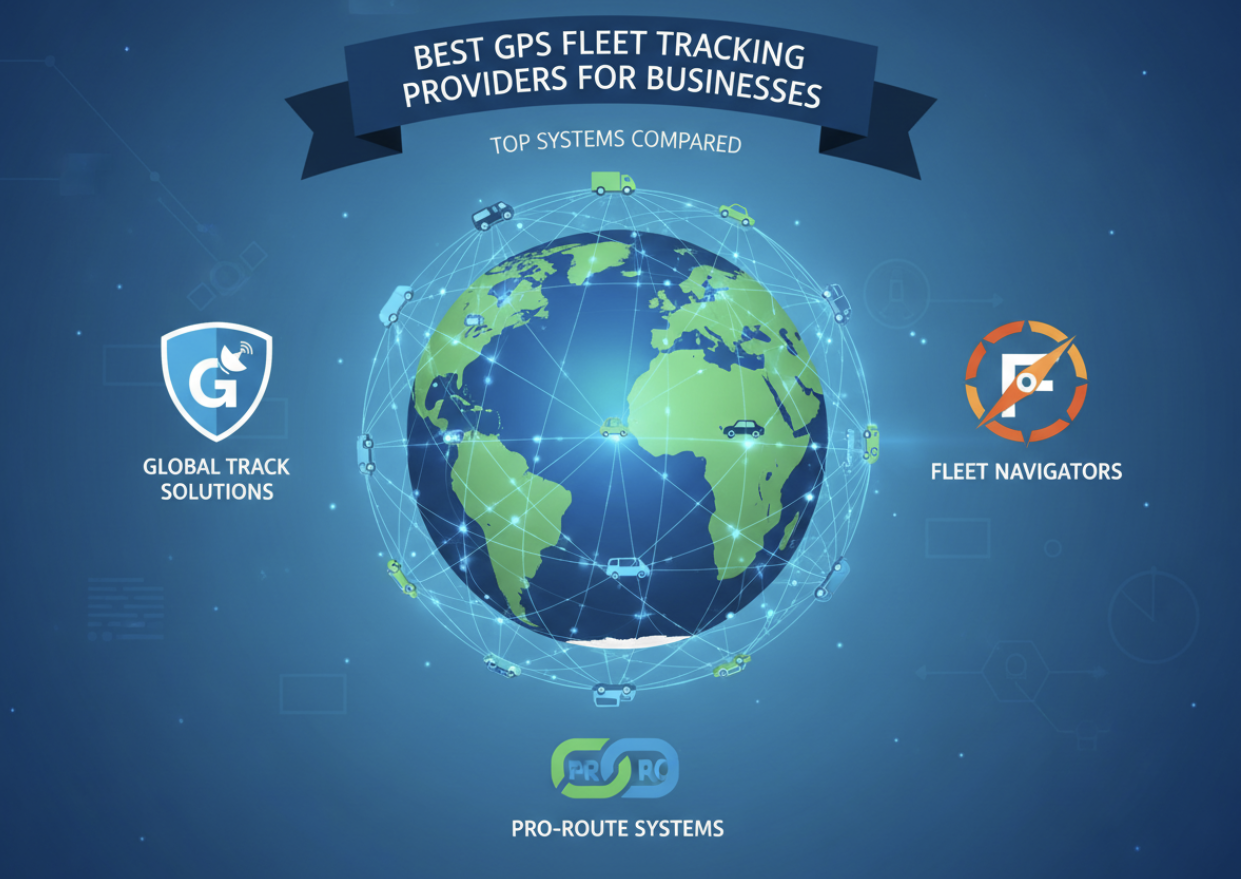
Managing a fleet in 2026 requires more than just knowing where your trucks are parked at night. You need data that helps you cut costs while keeping your drivers safe on the road. Finding the right tools can feel overwhelming with so many options available today.
This guide breaks down the top providers to help you find the right fit for your budget and operational goals. Whether you run a small local delivery service or a massive enterprise operation, the right technology exists to simplify your day. We’ve done the research so you don’t have to spend hours comparing specs.
You’ll learn about the latest features like AI dash cams and 5G connectivity that are changing the industry this year. We also include a breakdown of costs and ROI to ensure your investment pays off quickly. Let’s look closer at the best fleet tracking systems currently on the market.
Top GPS Fleet Tracking Systems Comparison
Review this quick-glance comparison table to identify which providers align with your specific operational needs and budget. It’s the fastest way to see how the industry leaders stack up against each other. Each provider offers different strengths depending on your fleet size.
| Provider | Best For | Monthly Price Range | Contract Term |
| Matrack | Affordability & No Contracts | $12.95 – $25.00 | Month-to-month |
| Samsara | AI Dash Cams & IoT | $30.00 – $50.00+ | 3-5 Years |
| Verizon Connect | Enterprise Scale | $35.00 – $60.00 | 3 Years |
| Motive | ELD Compliance | $25.00 – $50.00 | 1-3 Years |
| Azuga | Safety Gamification | $25.00 – $40.00 | 3 Years |
Evaluate key metrics such as monthly pricing, contract requirements, and core hardware options across the industry’s leading vendors. Most providers now offer a mix of plug-and-play hardware and hardwired devices. Your choice depends on how much data you need to collect.
Use this summary to narrow your search before diving into the detailed provider reviews and feature breakdowns below. While price is important, the value often comes from the specific software tools provided. Some systems excel at safety, while others focus on pure logistics.
Best GPS Fleet Tracking Providers for Businesses
Choosing the right partner involves balancing software capabilities with the physical demands of your vehicles and drivers. You need a system that can survive the heat of a construction site or the constant vibration of long-haul trucking. Reliability is just as important as the feature list.
We have analyzed the top-tier solutions based on their reliability, user interface, and overall value for different fleet sizes. Modern gps fleet tracking systems are more intuitive than they were just a few years ago. You can now manage your entire operation from a mobile app while you’re in the field.
Explore these detailed profiles to understand how each provider addresses common challenges like fuel waste and unauthorized vehicle use. Each vendor has a unique approach to data visualization and driver communication. Choosing the right one can transform your business efficiency overnight.
Matrack GPS Fleet Tracking: Best Overall Commercial Tracker
Matrack GPS Fleet Tracking provides a highly competitive price point without sacrificing the essential data you need for daily operations. It’s a standout choice because it avoids the long-term commitments that many other vendors require. You get reliable hardware and a clean software interface for a fraction of the usual cost. They also offer Dash Cam and ELD Integration with their fleet tracking.
This solution is particularly effective for small business fleet tracking where budget constraints meet the need for robust asset protection. You can monitor vehicle locations in real time and receive alerts for speeding or harsh braking. It’s a straightforward approach that focuses on what actually matters to your bottom line.
You can benefit from no-contract options and a user-friendly interface that simplifies the transition to digital fleet management. This flexibility is rare in an industry dominated by multi-year agreements. If your business needs change, you aren’t locked into a system that no longer fits.
The platform offers versatile hardware that fits various vehicle types, making it an ideal affordable commercial tracker for growing fleets. Whether you need an OBD II device or a waterproof asset tracker, they have options that work. This variety helps you manage mixed fleets of cars, vans, and heavy equipment easily.
| Pros | Cons |
| No long-term contracts required | Fewer advanced AI features |
| AI Dash Cam & ELD Integration | Interface is simpler than competitors |
| Lifetime hardware warranty included | Less focus on deep enterprise integration |
| Easy plug and play hardware setup | Limited third party app marketplace |
Samsara: Best for Big Fleet with IoT
Samsara stands out for its advanced technology stack, specifically focusing on high-definition AI dash cams that improve driver safety. These cameras can detect distracted driving or tailgating and provide in-cab coaching in real time. This proactive approach helps prevent accidents before they happen.
Your team can leverage the unified fleet management dashboard to view real-time data from vehicles, equipment, and even site sensors. It’s a complete ecosystem that connects every part of your operation. Market research shows that AI adoption in these systems has reached up to 75% in 2026.
This provider is a top choice for commercial truck tracking due to its seamless integration of compliance tools and safety analytics. They make managing HOS and ELD requirements much less stressful for your drivers. Everything is handled through a single tablet or smartphone app.
Pros include industry-leading hardware and a vast app marketplace, while cons typically involve higher premium pricing and multi-year commitments. You are paying for the most advanced tech on the market. If you need the absolute latest in IoT connectivity, this is the provider to watch.
Verizon Connect: Best for Large Enterprise Operations
Verizon Connect offers an expansive suite of tools designed for scalability, making it the go-to for fleets with hundreds or thousands of vehicles. Their software handles massive amounts of data without slowing down. You get a high-level view of your entire organization while still being able to zoom in on a single driver.
The platform excels at integration with fleet management systems already in use by large corporations, ensuring data consistency across departments. This helps your maintenance, accounting, and dispatch teams stay on the same page. You won’t have to worry about data silos or manual entry errors.
You will find their reporting depth unmatched, though the complexity may require more intensive training for your administrative staff. The system provides insights into everything from fuel card usage to engine diagnostics. It’s designed for managers who want to optimize every possible cent.
While Verizon Connect provides a powerful feature set, be mindful of their standard 36-month contract terms and potential hidden fees. Large scale operations often find the stability worth the commitment. However, it may be too much software for a small business just starting out.
Motive: Leading Choice for ELD Compliance
Motive, formerly KeepTruckin, has built its reputation on a driver-first approach that simplifies ELD compliance for long-haul operators. Their interface is designed to be easy for drivers to use on the road. This leads to fewer logging errors and better relationships between your office and your road crew.
The hardware is designed for easy installation and high hardware durability, ensuring it withstands the rigors of heavy-duty trucking. You don’t want your tracking device failing in the middle of a cross-country haul. Motive builds their gear to last in tough environments.
You gain access to a comprehensive safety suite that uses automated coaching to reduce risky behaviors across your entire roster. The system identifies speeding, harsh braking, and rapid acceleration automatically. This helps you lower your insurance premiums by proving your fleet’s commitment to safety.
Consider Motive if you require a reliable balance of compliance, safety, and straightforward fleet tracking software reviews. They offer a middle ground between basic tracking and high-end enterprise systems. It’s a popular choice for mid-sized trucking companies that need reliable compliance tools.
Azuga: Specialized in Driver Behavior Monitoring
Azuga utilizes a unique gamification approach to driver behavior monitoring, encouraging friendly competition to improve safety scores. Drivers can see how they rank against their peers on a leaderboard. This turns safety into a positive challenge rather than just another rule to follow.
The system provides detailed fuel efficiency monitoring by tracking idling and aggressive driving patterns that drain your bottom line. You can see exactly which habits are costing you money at the pump. Many fleets see significant savings just by making drivers aware of their idle time.
You can easily install their plug-and-play devices, which makes them a favorite for fleets that rotate vehicles frequently. There’s no need for professional installers or complex wiring. You just plug the device into the OBD II port and start collecting data immediately.
While excellent for safety, Azuga may offer fewer advanced IoT features compared to enterprise-heavy competitors like Samsara. It’s a focused tool that does one thing very well. If your main goal is improving driver habits and safety, this is a top contender.
Key Features to Look for in Fleet Management Solutions
Modern systems go far beyond simple location dots on a map, offering deep insights into every aspect of your mobile workforce. You can now monitor engine health, fuel levels, and even the temperature of your cargo. This level of detail was impossible just a decade ago.
When evaluating vendors, prioritize features that directly impact your most significant costs, such as fuel, maintenance, and insurance premiums. A good system should pay for itself through these savings. Look for tools that automate your most time-consuming tasks like reporting and scheduling.
The adoption of advanced technology is accelerating, with many fleets now expecting integrated video and predictive analytics as standard. Industry guides suggest that software costs in 2026 typically range from $25 to $60 per vehicle. Investing in the right features now prevents you from falling behind your competitors.
Real-time Tracking and Geofencing Capabilities
Real-time tracking allows you to provide customers with precise ETAs and respond immediately to dispatch changes. You no longer have to call drivers to find out where they are. This transparency improves customer trust and makes your dispatchers much more efficient throughout the day.
By implementing Geofencing, you can set virtual boundaries around job sites or depots to receive instant alerts for unauthorized vehicle use. You’ll know the second a truck leaves its assigned area. It’s an essential tool for theft prevention and ensuring drivers stick to their routes.
These features work together to enhance security and provide a digital breadcrumb trail for every asset in your fleet. If a customer disputes a delivery time, you have the data to prove exactly when your vehicle arrived. This protection is invaluable for avoiding unnecessary disputes and claims.
Route Optimization and Maintenance Tracking
Route optimization uses complex algorithms to find the most efficient paths, significantly reducing mileage and wear on your vehicles. It considers traffic, weather, and delivery windows to save your drivers time. Research indicates this can lead to a 15% reduction in route times during 2026.
Proactive maintenance tracking ensures you never miss an oil change or inspection, preventing costly breakdowns and extending vehicle life. The system monitors engine hours and mileage to send you automatic reminders. Keeping your trucks in top shape is the best way to avoid emergency repairs.
Integrating these tools helps you move from a reactive management style to a predictive one that saves time and money. You can fix small issues before they become major problems that take a vehicle off the road. It’s about keeping your fleet moving and your costs predictable.
The Impact of 5G on Future Fleet Tracking Accuracy
The rollout of 5G networks is revolutionizing data transmission speeds, allowing for near-instantaneous updates from vehicle sensors. This means the location you see on your screen is accurate to the second. It eliminates the lag that used to make real-time tracking feel slightly delayed.
Higher bandwidth supports more sophisticated AI dash cams and live video streaming without the lag associated with older LTE networks. You can check in on a live video feed with perfect clarity. This is a big shift for safety managers who need to investigate incidents as they happen.
As a forward-looking business, you should verify if your chosen provider’s hardware is 5G-ready to avoid premature equipment obsolescence. Technology moves fast, and you don’t want to buy hardware that will be outdated next year. 5G is the standard for connectivity in 2026 and beyond.
Calculating ROI and Total Cost of Operation (TCO)
To find the true value of a system, you must look beyond the monthly subscription and calculate the Total Cost of Operation (TCO). You need to account for activation fees, hardware costs, and any required professional installation. Sometimes the cheapest monthly rate has the highest upfront cost.
Consider factors like installation labor, hardware buyouts, and potential downtime during the transition to a new platform. A plug-and-play system might save you thousands in labor costs compared to hardwired units. Always ask for the full price over a three-year period to get a clear picture.
Most fleets see a return on investment within 6 to 12 months through fuel savings, reduced insurance claims, and improved driver productivity. The data provided by Matrack shows that idle time reduction alone can save hundreds per vehicle. It’s an investment that pays for itself if you use the data correctly.
Frequently Asked Questions
What is the best fleet tracking company?
The best company depends on your fleet size and specific needs. Samsara is often cited for tech-heavy fleets that need advanced AI, while Matrack is preferred for affordability and businesses that want to avoid long contracts.
Look for companies with high customer support ratings and transparent contract terms to ensure a long-term successful partnership. Always test the software with a demo or trial before committing your entire fleet to a specific provider.
What is the best GPS tracking system?
A top-tier GPS tracking system should offer real-time updates, robust reporting, and a reliable mobile app for on-the-go management. It needs to provide accurate location data with a high refresh rate to be truly useful for dispatching.
Systems that integrate AI dash cams and ELD compliance, like Matrack or Motive, are currently considered the most comprehensive on the market. These all-in-one solutions reduce the number of different apps your team needs to manage every day.
Which construction fleet tracking system is best?
For construction, you need a system that tracks both vehicles and heavy equipment, often requiring ruggedized hardware with long battery life. It should be able to monitor PTO usage and engine hours to track equipment utilization accurately.
Providers like Matrack and Teletrac Navman are highly regarded in construction for their ability to monitor engine hours and job site activity. These systems help you ensure your expensive equipment is being used efficiently and stays secure on the site.