WATCH: Beloved Brevard Music Teacher Returns to Health First’s Holmes Regional Medical Center to Thank Her Lifesavers
By Space Coast Daily // November 25, 2025
Suntree resident Loretta Fox was struck suddenly by a stroke in her backyard in August
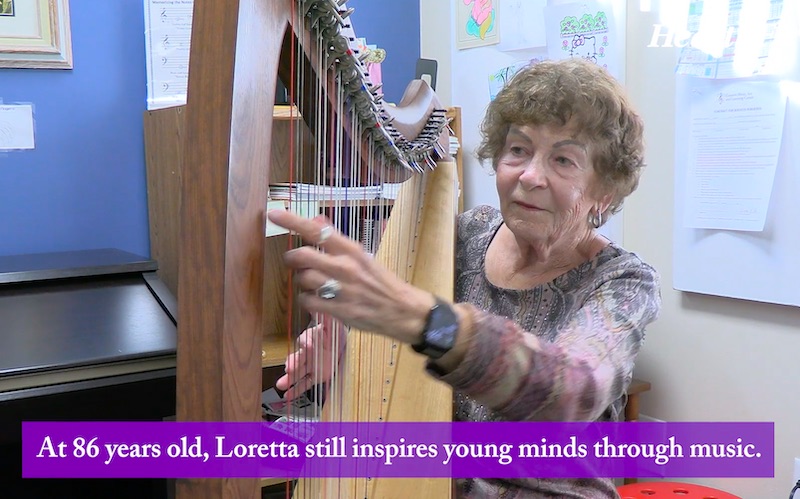
WATCH: Stroke survivor Loretta Fox was grateful this Thanksgiving week, as she met first responders and members of her care team at Health First’s Holmes Regional Medical Center, where she could say ‘thank you’ to those who provided lifesaving care. (Health First video)
BREVARD COUNTY, FLORIDA – Suntree resident Loretta Fox, 86, has been teaching kids for decades – first as an elementary school teacher in Wisconsin for more than 30 years, then as a preschool music teacher, and now as the owner/instructor of Creative Music & Art Center for the last 25 years.
A model of health, vitality, and genuine love for educating children, all that Loretta lived for was suddenly cast into doubt when she was struck suddenly by a stroke while outside in her backyard in August.
If not for an alert neighbor who noticed and tended to Loretta, and timely response and care from Brevard County Fire Rescue first responders and the stroke team at Holmes Regional Medical Center, Loretta’s outcome may have had a much different story.
“All I remember was being able to think, I knew what was going on .. but I couldn’t speak or move. It was frightening. I knew something was wrong and the words were there … I just couldn’t get them out,” Loretta recalled.
“I can’t remember much more after being loaded into the ambulance. Four days in Holmes Regional and I was back on the road to recovery. I am truly thankful.”
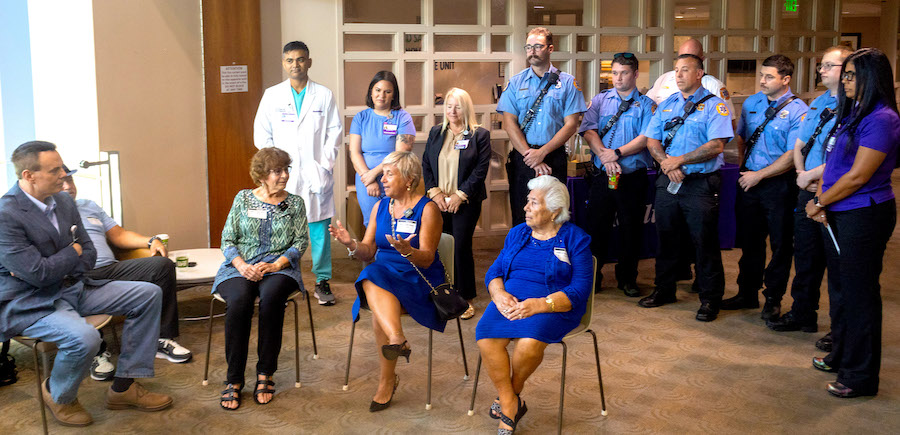
For a career educator and musician, the impacts of the stroke could have been truly devastating. But Loretta returned to Holmes Regional Medical Center to the applause of dozens of Health First physicians, nurses, stroke team members, and Brevard County Fire Rescue team first responders after a full and rapid recovery.
Appropriately chosen timing – Thanksgiving week – Loretta wanted to give thanks of her own to those who saved her life … and livelihood.
As she scanned across the room, Loretta, accompanied by family members and neighbors who initially found her in distress and called 911, addressed the room.
“Thank you. Thank you all. I couldn’t believe how everything went through since that day it happened. And I remember waking up in the hospital with nurses and everybody, you know, just hopeful. Everyone was wonderful. I had the best of care, and I’m so happy to be able to continue doing what I love. I’m a little bit slower and I’ve reduced the number of kids that I teach from 40 to 20, but I am just so grateful to be here sharing my story with you today.”
With that, Loretta stood up and walked to the grand piano gracing the Holmes Regional atrium balcony for an additional surprise. She pulled up the bench, opened up a music sheet, and belted out a rendition of “Have a Holly Jolly Christmas”… effectively kicking off the holiday season a few days early.
While Loretta had the best in care helping her to a speedy and full recovery, she also had a little bit of luck on her side – allowing her to quickly be tended to by EMS and transported to Holmes Regional.

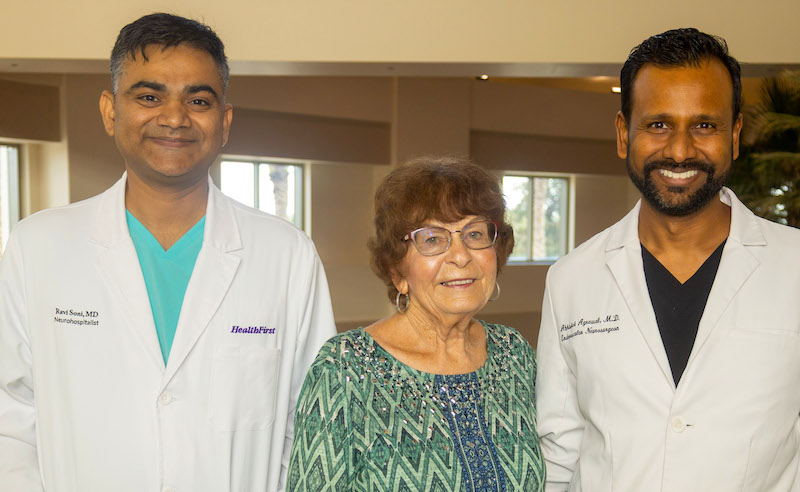
Dr. Ravi Soni, who was one of the attending physicians when Loretta arrived at Health First Holmes Regional Medical Center said the rapid response and having a dedicated stroke team in Brevard County made a huge difference in Loretta’s live being saved – and her achieving a 100 percent recovery.
“I was the on-call neurologist on that day. As soon as I heard that there was a stroke alert coming, we got the initial report from the EMS. Looking at that report, it presented as a real stroke I ran down to the emergency department and quickly assessed her based upon her symptoms.
We got three different scans where we look at the blood vessels and see where the clot could be. And the third scan is called a C.T. perfusion scan in the Emergency Room for any patients who are having stroke-like symptoms. We can then determine immediately how much brain tissue is damaged and how much can be perfused with the intervention,” Dr. Soni explained.
“Because of the speed of response and care, Loretta was a candidate for a life-saving thrombectomy procedure. When I saw her the next day, she was actually talking to me normally, moving all of her arms and legs like normal. She was treated and back to baseline within a day after having a procedure done,” Soni continued.
Neuroradiologist Dr. Abhishek Agrawal shared a reminder that in cases of stroke (like heart attacks) TIME is tissue (brain.) The longer an individual goes without treatment for a stroke, the more irreversible brain damage, up to death, can occur.
“As they say, stroke is brain. People have learned and been taught about heart attack risks, signs and symptoms. But we are trying to educate more and more of the general population to better understand the signs and symstoms of stroke. Any time you have symptoms of stroke, tingling, numbness, weakness, inability to speak, just call 911! Because a blood clot can come from anywhere in the body, from the heart, from the arteries of the head, in the neck or anywhere in the body. So every minute, millions of brain cells and neurons die if the patient is not taken care of,” Agrawal explained.
“For Loretta, we were lucky. And we continue to improve our outcomes because of people recognizing symptoms and getting help immediately. She was here on time and we were able to get the job done. And that’s why we are here. But for normal population, it’s really imperative. Even if you feel you or someone in your presence might have signs of symptoms of stroke, but you’re not sure -just call 911. Come to the nearest emergency department and we have the team and technology to get it taken care of quickly.”
According to the American Heart Association, Stroke is the No. 5 cause of death and a leading cause of disability in the United States. Stroke is a disease that affects the arteries leading to and within the brain and occurs when a blood vessel that carries oxygen and nutrients to the brain is either blocked by a clot or bursts (or ruptures). When that happens, part of the brain cannot get the blood (and oxygen) it needs, so it and brain cells die. More than 80% of all strokes are avoidable.
The Health First Neurology team reminds the community to be aware of the following signs and symptoms. B.E. F.A.S.T.: Balance or dizziness, Eyes or blurred vision, Face drooping, Arm weakness, Speech difficulty and Time to call 911.