How Technology Makes Online Gaming Feel Alive
By Space Coast Daily // December 4, 2025
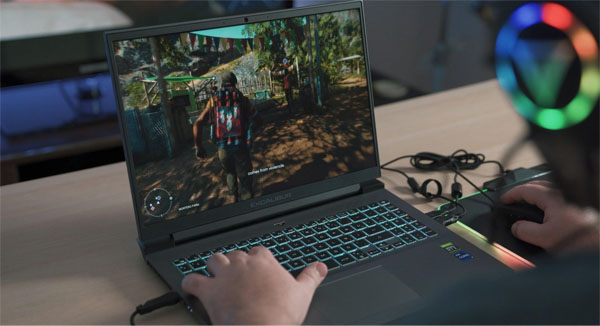
There was a time when online games felt like flat arenas: static maps, predictable NPCs, rigid rules. Logging in was almost mechanical: move, shoot, repeat. But today? Games hum, breathe, and shift like living ecosystems.
Online gaming isn’t just about “playing”; it’s about existing inside a world. You log in, and suddenly, the environment responds as if it has its own heartbeat. Weirdly thrilling, right?
The AI Revolution: More Than Just Smarter Bots
Artificial Intelligence is no longer a sidekick, it’s a co-pilot in world-building. In 2025, AI agents are being woven into games in ways that make characters act, respond, and even improvise like real people. Google’s cloud-gaming division talks about a “living games” era: dynamic, ever-evolving worlds shaped by player behavior and AI.
Take PUBG, for example: solo players may now team up with AI squadmates powered by NVIDIA’s ACE tech. These AI companions don’t just follow orders: they listen, loot, drive vehicles, and fight like human teammates.
That kind of responsiveness blurs the line between playing with someone and playing someone. It’s uncanny and that’s exactly what makes these games feel alive.
Over at Microsoft, WHAMM is pushing boundaries further. This generative-AI model renders full game scenes even classics like Quake II in real time, straight in your browser.
The AI doesn’t just draw graphics; it interprets the environment, reacts to your actions, and adapts continuously. Imagine a world that literally thinks while you play. That’s a game feeling alive.
Worlds That Grow With You
Procedural generation and AI-driven environments have transformed maps from static blueprints to ecosystems that evolve with your choices. Google DeepMind’s Genie 3 can turn a single text prompt into a fully interactive 3D world that remembers your actions and adapts accordingly.
The beauty? These aren’t pre-scripted histories. Your choices influence the narrative: every corner you explore, every building you destroy, every conversation with an NPC leaves a trace. Games are no longer static stories; they’re co-written with you. It’s as if the world has a memory, and it’s watching subtle, maybe even a little mischievous, like it knows the tricks you’ll try next.
Feeling It: Haptics, VR, and the Sensory Connection
Graphics get the spotlight, but touch is just as powerful. Just imagine a future where haptic technology suits simulate resistance or environmental forces, making you truly feel the game. When you draw a bowstring, you could feel tension in your fingers. When your character trudges through mud, there could be subtle resistance in your movements.
You might even feel the pull of luck in virtual pacanele, online slot machines enhanced with tactile feedback, where the spinning reels and tiny jolts of anticipation make every near-win and jackpot hit feel just a touch more real. It’s the kind of immersion that makes you lean in, smile, or even gasp in excitement, as if the digital world has a heartbeat of its own.
Combine that with VR and AR, and you’re not just seeing a world, you’re inside it. Modern VR headsets track gestures, gaze, even posture, responding instantly. A glance at a distant cliff might trigger a flock of birds; a sudden turn could kick up dust. That interplay makes a virtual environment feel alive, as if it’s aware of you. Honestly, it’s a bit uncanny, but in the best way.
Connectivity Without Compromise: The Rise of Cloud Gaming
One of the biggest leaps? Moving the heavy lifting to the cloud. Faster networks, smarter encoding, and adaptive streaming mean even players with modest hardware can access high-fidelity, low-latency experiences.
But here’s the kicker: cloud gaming isn’t just about better graphics. It’s about “always-on” worlds. Economies shift, NPCs interact, and events unfold, even when you’re offline. Log in tomorrow, and the town you saved yesterday might be thriving, destroyed, or completely different. The continuity mirrors the real world, and that unpredictability is a big part of why it feels alive.
Think about it. Your actions have consequences, but you’re not always around to witness them. That little tension, that sense of anticipation, makes logging in feel like stepping into a living, breathing story.