THIS DAY IN HISTORY: NASA Pilot Joseph A. Walker Flew X-15 to Edge of Space in Historic Missions
By Space Coast Daily // March 25, 2026
Flashback to March 25, 1960
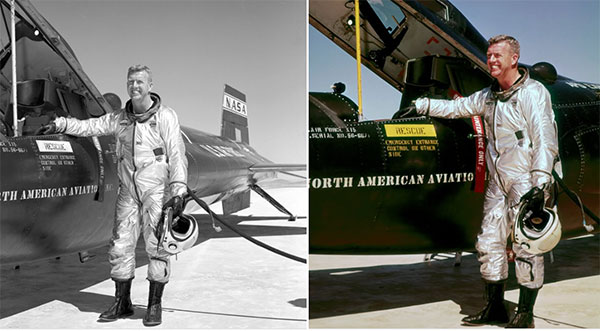
BREVARD COUNTY, FLORIDA – NASA test pilot Joseph A. Walker played a key role in early spaceflight research, flying the experimental North American X-15 to the edge of space during a groundbreaking era for aviation and astronautics.
Walker first piloted the X-15 on March 25, 1960, marking the beginning of a series of high-risk, high-reward research missions that helped pave the way for human spaceflight.
Over the course of the program, he flew the aircraft a total of 24 times, gathering critical data on hypersonic flight, atmospheric reentry, and the challenges of operating at extreme altitudes.
His most historic flights came in the summer of 1963, when he pushed the X-15 beyond the Kármán line—commonly recognized as the boundary between Earth’s atmosphere and outer space. Walker achieved this milestone on two separate missions, effectively becoming one of the first Americans to reach space.
The X-15 program, conducted jointly by NASA and the U.S. Air Force, was instrumental in advancing aerospace technology. Data collected from flights like Walker’s contributed directly to the development of future spacecraft, including the Space Shuttle.
Walker’s achievements remain a significant chapter in the history of space exploration, demonstrating the courage and innovation that defined the early days of America’s journey beyond Earth.