The Main Roles, Characteristics, and Advantages of PLC
By Space Coast Daily // July 16, 2024
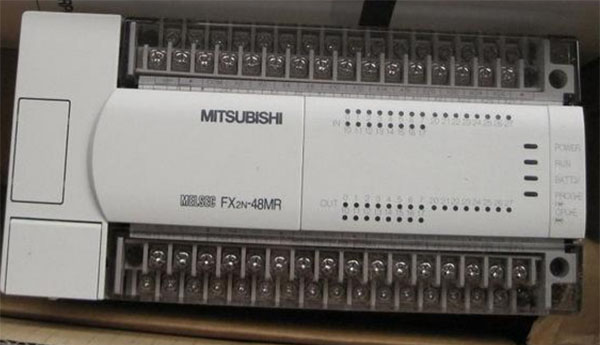
PLC, or Programmable Logic Controller, is an electronic device widely used in industrial control. As a high-performance control device, PLC can be applied in various fields such as automated production control, process control, logistics control, and data processing.
- Definition of PLC
A PLC is an electronic device used for industrial control, incorporating components such as a CPU, memory, input and output ports, and communication interfaces. It controls various industrial equipment and machinery through programming to achieve automation. PLCs first appeared in the 1960s and have since played an irreplaceable role in the field of industrial automation.
- Characteristics of PLC
- Programmability: PLC includes multiple functional components that allow for control and adjustment of processes through programming, making it adaptable to complex industrial control processes and production needs.
- Stability: PLCs are highly stable and reliable, capable of long-term stable operation in complex and harsh industrial environments.
- Scalability: PLCs can be expanded with additional modules according to production needs, enabling functional expansion of industrial production lines.
- Ease of Maintenance: The modular design of PLCs makes them easy to maintain, allowing for quick replacement of faulty modules.
- Advantages of PLC
- Stability and Reliability: PLCs use high-quality electronic components and modular design, ensuring stable and reliable operation in complex industrial environments.
- Efficient Automation Control: PLCs can automate control processes through programming, reducing manual intervention and increasing production efficiency. They also reduce the workload of control system design and construction, as PLCs replace many intermediate relays, time relays, and counters in relay control systems. This significantly reduces the design, installation, and wiring workload of control cabinets. Additionally, PLC user programs can be debugged in a laboratory setting, further reducing on-site debugging workload. The low failure rate and strong monitoring capabilities of PLCs, along with their modularity, make maintenance extremely convenient.
- Ease of Maintenance: The modular design of PLCs makes them easy to maintain, allowing for quick replacement of faulty modules, reducing downtime and maintenance costs.
- High Flexibility: The programmability of PLCs allows them to adapt flexibly to different production needs, enhancing their applicability. PLCs are compact, robust, lightweight, and low in power consumption, making them ideal for integrating microelectronic technology into industrial equipment. Their strong anti-interference capabilities also make them easy to install within equipment, making them an ideal control device for mechatronic integration.
- Applications of PLC
PLCs are widely used in fields such as automated production control, process control, logistics control, and data processing. Here are some typical application examples:
- Automated Production Control: PLCs can be used for full automation control of production lines, such as automatic assembly, automated sorting, and automated packaging.
Example: In a company’s production line, PLCs are used to control the speed and position of goods on a conveyor belt, achieving fast and efficient logistics operations. The company installed a PLC control system, which precisely controls parameters such as the conveyor belt’s speed and position through programming, significantly improving the efficiency and accuracy of logistics operations.
- Process Control: PLCs can be used for the automation control of various industrial processes, including water treatment, chemical manufacturing, food processing, and pharmaceuticals.
Example: A water treatment plant needs precise control of water flow. The plant uses a PLC control system, which monitors and controls parameters such as water flow and quality in real-time through programming, ensuring that water quality and flow remain within reasonable ranges, thereby improving the efficiency and quality of water treatment.
- Logistics Control: PLCs can be used for the automation control of various logistics equipment, including logistics sorting, cargo transportation, and automated storage.
Example: A truck loading dock needs precise control of the unloading speed and position of goods. The truck loading dock uses a PLC control system, which precisely controls the goods through programming, significantly improving the efficiency and safety of unloading.
In summary, PLCs are high-performance control systems characterized by high stability and strong reliability. They are widely used in fields such as automated production control, process control, logistics control, and data processing. By using PLCs for automation control, production efficiency can be increased, manual intervention reduced, product quality improved, and costs lowered, enhancing the competitiveness of enterprises in the market.