A Beginner’s Guide to Forex Market Analysis
By Space Coast Daily // November 30, 2024

As a newbie, stepping into Forex trading can feel like learning to drive on a busy highway. There’s so much going on, and even a slight mistake is punished severely.
But when trading in the largest financial market, trading over $7 trillion daily, you need to make calculated moves to survive.
If you don’t know where to start, trying to guess what all the numbers and charts mean can feel like you are alone, but that’s not true. At some point, every trader goes through that. But you shouldn’t jump on a trade without basic knowledge because how well you prepare determines how smoothly you will navigate the bumps.
Here’s the good news: just like attending a driving school, you can learn how to navigate forex trading. And the best part? You don’t have to attend school or pay for an expensive course because this guide has everything you need to get started.
Understand How Trading Works
Have you ever wondered how traders make money trading currencies? Forex, which is the foreign exchange where people buy and sell currencies, is what it’s all about. Traders can do this on a forex trading platform, betting for one currency against another. The idea is to buy cheap and sell high when the price moves up or sell when they think the price is going down.
Succeeding in forex depends on how accurately you can predict price direction. Forex is traded in various currency pairs ranging from minor to major to exotic. This can be the popular EUR/USD, USD/JPY or any other pair of your choice.
Forex runs 24 hours a day, five days a week, so you can trade day or night across different time zones because the Forex markets are open and closed worldwide. One of the reasons why people love Forex trading is its flexibility; whether an early riser or a night owl, there’s always a trade waiting for you.
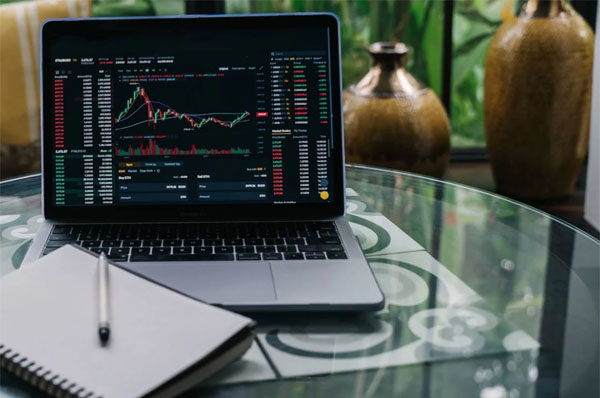
Pillars of Forex Market Analysis: Technical Analysis and Fundamental Analysis
Accurately predicting the price direction, at least most times, depends on how good you are at fundamental and technical analysis. What are they, and how do you master them?
1. Technical Analysis
Technical analysis is like guessing where someone might be going by studying their footprints. However, in forex, it takes a lot more than that. To accurately predict price direction, you need to use various technical analysis tools. They include:
Price Charts: These simply provide visuals of how a currency has performed over time. Although line charts and bar charts are used, candlestick charts are the most popular.
Trends: Spotting trends is key to knowing price direction. A trending market is where the price is continuously going up, and it can be an opportunity to buy. A down trending market is where the price keeps going down, a good opportunity to sell.
Support and Resistance Levels: You can think of these as floors and ceilings but for prices. When the price drops and starts behaving like it has hit the floor and can’t move further down, this becomes support levels. When prices stop rising, behaving as if they have reached a ceiling, this forms the resistance resistance level.
Indicators: The Moving Average or Relative Strength Index can help you to know where the market will head. They are mathematical calculations that use past market data to forecast with accuracy.
2. Fundamental Analysis
Unlike technical analysis, which focuses on looking at the charts, fundamental analysis takes a different approach. It requires looking at a larger view, focusing on things that directly or indirectly drive the price of a country’s economic performance through:
Economic Indicators: Important statistics such as GDP, inflation and unemployment rate influence their currency’s performance.
Interest Rates: High interest rates mean receiving high returns from investment in a country. This attracts investors, which pushes demand for its currency, and the price goes up.
Political Stability: If the government has no political stability, that is risky for business. Investors won’t want to put their money in that country as it is thought to be less secure, and the government might not function properly, which weakens its currency.
Market Sentiment: It’s all about how traders feel. When most traders know a currency’s strength, they will buy more and drive its price higher.
Common Mistakes You Should Avoid as a Beginner
Think of forex trading as learning any other skill; there’s a learning curve. But it’s not every mistake you make; it’s a step closer to trading success. So, avoiding mistakes traders commonly make can help you limit losses and improve performance:
- Not properly understanding the way the market works before getting in.
- Taking huge risks by overleveraging.
- Trading without a plan.
- Getting controlled by emotions, especially after losing a trade.
- Trading without risk management practices like using stop loss.

Conclusion
Forex trading can be profitable for anyone if they do it properly. This starts with educating yourself about the market and the two main types of analysis: fundamental and technical. However, you also require other skills, including self-control to avoid emotional trading and discipline to stick to an effective trading plan.
Another key ingredient many beginners are missing nowadays is patience. Remember, there is a learning curve, so things may not go exactly as promised by other fake forex gurus on social media. The best thing about forex trading is that you don’t need to know everything to start. Trading is a process, and good practices make one better over time.