
How Fast Charging Is Reshaping the Road Trip Experience
By Space Coast Daily // April 26, 2025
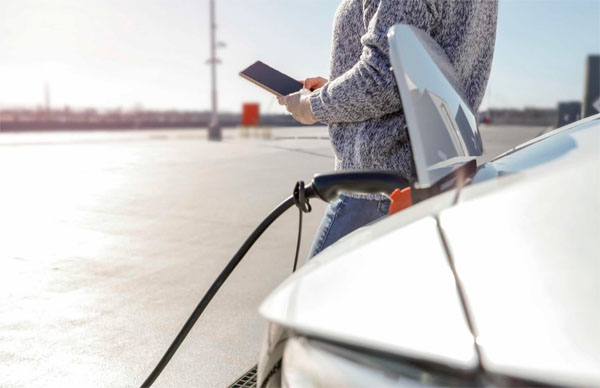
Once a hallmark of summer vacations and a symbol of freedom, the American road trip is undergoing a significant transformation in the electric era. With the proliferation of electric vehicles (EVs), traditional notions of cross-country travel are evolving. While the allure of hitting the open road remains intact, the infrastructure and logistics underpinning that freedom have seen a dramatic upgrade. No longer is a road trip merely a test of patience and gas mileage; it has become an opportunity to explore the future of sustainable mobility.
Electric vehicles, once sidelined for city commuting, are now at the forefront of long-distance travel. Improved battery range and the increasing availability of fast-charging stations are allowing drivers to venture further with fewer worries about range anxiety. What was once a primary deterrent to EV adoption is now being actively addressed through public and private investments. Governments and corporations alike are working toward building an interconnected network of high-speed chargers, making the idea of a spontaneous, cross-state journey in an EV more realistic than ever.
The cultural implications of this shift are significant. Just as roadside motels and gas stations defined the mid-century motorist experience, a new era of rest stops is emerging. These aren’t just places to refuel but to recharge—literally and metaphorically. From solar-powered charging parks to stations featuring gourmet food options and high-speed Wi-Fi, the very character of the road trip is becoming more refined and future-forward, offering drivers not only efficiency but also comfort and innovation.
Technology in the Driver’s Seat
At the heart of this transformation is the rapid advancement in EV charging technology. Fast charging, commonly defined as DC fast charging capable of adding 60 to 100 miles of range in 20 minutes or less, has emerged as the cornerstone of long-distance EV travel. These systems are not just about speed; they represent a leap in engineering, software integration, and user experience. As more vehicles adopt high-voltage architectures, compatible chargers are pushing the boundaries of power delivery and thermal management.
Unlike the early days of EVs, when finding a public charging station was akin to a scavenger hunt, modern platforms now integrate real-time charger availability, route planning, and predictive battery analysis. Drivers can now chart their trips with surgical precision, avoiding congestion and ensuring optimal use of charging time. The experience of using a fast charger is beginning to feel less like a workaround and more like a streamlined feature, akin to plugging in your phone for a quick top-up before heading out.
An excellent example of this evolution is seen in companies like ChargeTronix, a rising name in the EV charging ecosystem. Their modular and powerful DC fast-charging systems are not only built for performance but also tailored for reliability and versatility. With the ability to energize multiple dispensers from centralized power cabinets and incorporate features like RFID readers and cable management, they represent the kind of forward-thinking infrastructure that makes fast charging viable for longer journeys. The company’s work with partners across North and Latin America has helped set a new benchmark in user-focused charging innovation, a critical element as fast charging continues to reshape the travel landscape.
Infrastructure Meets Expectation
Building out fast-charging networks along highways is no small feat. It requires coordination between state authorities, private enterprises, utility companies, and local municipalities. Unlike gas stations that rely on well-established distribution systems, EV chargers depend on high-voltage connections, robust grid access, and intelligent power management. These challenges have slowed deployment in some regions, but recent policy initiatives and incentive programs are accelerating progress nationwide.
Major players in the EV space are collaborating to create “charging corridors” designed specifically with long-haul EV travel in mind. These corridors place ultra-fast chargers at predictable intervals, typically 50 to 70 miles apart, allowing even mid-range EVs to maintain momentum without detouring off major highways. While the goal is seamless travel, the execution varies greatly depending on geography, existing electrical infrastructure, and demand forecasts. Still, states like California, Texas, and Colorado are already showcasing what an optimized fast-charging network can look like.
In many ways, this transformation is reflective of earlier infrastructure revolutions, such as the creation of the Interstate Highway System. Then, as now, the government and private sector had to work in concert to deliver a new form of mobility. What differs this time is the level of technological complexity and the pace at which expectations are rising. Travelers don’t just want access; they want convenience, reliability, and an experience that matches—or exceeds—the gas-powered paradigm they’re leaving behind.
The Changing Psychology of the Pit Stop
Fast charging is reshaping not just the mechanics of the road trip, but also its pacing and rhythm. Traditional road trips often involved brief, frantic stops for gasoline, snacks, and bathroom breaks. Today’s EV pit stops invite drivers to slow down, recalibrate, and engage with their surroundings. A 20-minute charge may once have felt like a delay, but increasingly it is seen as an interlude, a built-in moment for rest, recalibration, or even entertainment.
Charging station operators are capitalizing on this behavioral shift by curating environments that encourage people to stay and explore. From retail pop-ups to food truck gatherings, the fast-charging station is becoming a destination in itself. This reimagining is prompting developers to think beyond utility and into hospitality. As EV adoption grows, so too does the realization that the charging station of the future might look more like a micro-hub than a utility outpost.
This change in perspective has economic implications as well. Roadside businesses that traditionally catered to fuel-based traffic are now reconfiguring to accommodate longer dwell times. Cafes, lounges, and even mini-theaters are being introduced in high-traffic locations. For travelers, this means their journey is punctuated by more than just necessity; it is interlaced with opportunity—opportunity to stretch, snack, shop, and recharge both body and battery.
The New Economics of Long-Distance EV Travel
The cost of long-distance travel in an EV presents a mixed bag of considerations. While electricity is generally cheaper than gasoline, fast charging—especially at high-performance stations—can be significantly more expensive than home charging. This cost discrepancy introduces a new layer of economic decision-making. For many drivers, it comes down to balancing convenience with cost, a calculus that becomes more complex with family travel or tighter schedules.
Subscription models and loyalty programs are emerging as one solution to this problem. Networks offer discounted rates for members or bundled services that integrate charging with other travel amenities. Additionally, pricing transparency has become crucial. Drivers are increasingly calling for better interfaces that show real-time pricing and expected charge time, giving them greater control over their travel budget. For frequent travelers, the rise of intelligent routing systems that factor in cost, speed, and station quality is a welcome advancement.
As the industry matures, experts predict that the cost of fast charging will stabilize through competition and innovation. Greater efficiency in charger design, better energy management, and enhanced grid integration are likely to drive down operational expenses. Until then, the cost-conscious traveler must navigate a landscape that, while improving, still contains significant variability. Fast charging is a premium experience today, but it may soon become the standard baseline—affordable, accessible, and as routine as filling a tank used to be.
Designing Cars for the Fast Lane
Vehicle manufacturers are responding to the fast-charging revolution with equal enthusiasm. New EV models are being engineered from the ground up with road trips in mind, featuring larger batteries, more aerodynamic designs, and advanced thermal systems to manage high-speed charging. These vehicles are not only capable of longer ranges but are also optimized to accept power quickly without degradation, turning what used to be a bottleneck into a competitive feature.
Automakers are also refining the in-car experience for long journeys. Intelligent route planning integrated with real-time charging station data, cabin comfort enhancements, and seamless infotainment systems help make the wait more enjoyable and productive. Features such as recline-and-rest modes, ambient lighting, and climate zones contribute to the creation of mobile living spaces. The car becomes more than transportation; it becomes a personalized travel companion.
This hardware-software harmony is critical to the future of road trips. As vehicles and infrastructure evolve in tandem, the barriers that once confined EVs to urban use are dissolving. The ability to drive across states or even across the country in an electric vehicle is no longer aspirational—it is becoming expected. Fast charging is a major reason why, enabling a new era where distance does not dictate vehicle choice.
Looking Ahead: The Road Trip Reimagined
The EV road trip of tomorrow will likely look very different from even today’s emerging landscape. With autonomous driving on the horizon, energy-efficient highways under discussion, and the continued growth of renewable energy sources powering chargers, the entire journey is poised for reinvention. These changes won’t just impact drivers; they will influence how towns develop, how tourism functions, and how Americans relate to the vast geography around them.
The road trip has always been a symbol of personal freedom, a physical manifestation of the American dream. That symbolism is being updated for a new generation, one that values sustainability, technology, and meaningful experiences over sheer speed or distance. Fast charging is central to this narrative. It enables spontaneity without sacrificing practicality, allowing the electric road trip to be both aspirational and accessible.
Ultimately, the success of this transformation depends not just on technology or infrastructure but on a collective willingness to embrace a new way of thinking about travel. The road is still long, and challenges remain, but the destination has never been more exciting. In this redefined journey, charging stops are no longer interruptions—they are invitations to pause, connect, and enjoy the ride.















