City of Titusville Exceeds Nutrient Reduction Goals for Indian River Lagoon
By Space Coast Daily // July 25, 2025
city has implemented numerous stormwater infrastructure projects
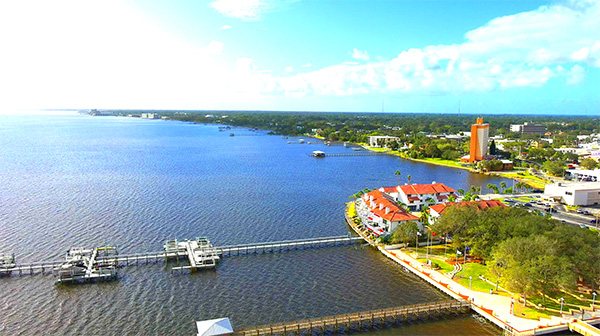
Since 2016, Titusville has received more than $24 million in grant funding for projects that directly improve lagoon water quality.
BREVARD COUNTY • TITUSVILLE, FLORIDA — The City of Titusville exceeded its nutrient reduction goals for the Indian River Lagoon, as set forth in the Basin Management Action Plan.
The BMAP, a comprehensive plan developed by the Florida Department of Environmental Protection, is designed to restore water quality in impaired water bodies, such as the Indian River Lagoon, by reducing pollutant loads to meet established targets.
Under this plan, Titusville was required to reach certain nutrient reduction benchmarks by 2025.
Titusville has achieved:
● 220% of the 2025 nitrogen reduction goal
● 173% of the 2025 phosphorus reduction goal
City of Titusville officials said improving the health of the Indian River Lagoon remains one of the highest priorities.
As of 2024, the City of Titusville has achieved 48,282 pounds per year in total nitrogen reductions and 6,373 pounds per year in total phosphorus reductions, surpassing the 2035 TN milestone and 2030 TP milestone requirements outlined in the Basin Management Action Plan.

Sandra Reller, City of Titusville Public Works Operations Director, stated, “These accomplishments clearly demonstrate that our city and our team members are fully committed to long-term efforts that promote a healthier Indian River Lagoon. Surpassing both the 2030 and 2035 nutrient reduction milestones ahead of schedule reflects this dedication, and we are proud of every project we pursue.”
As stormwater flows across rooftops, streets, and landscapes, it collects debris, sediments, and excess nutrients that can end up in the lagoon.
Early sections of the City were developed before stormwater regulations were designed to help treat this stormwater runoff. Without intervention, this polluted runoff can have a serious impact on the health of our waterways.
To address this, the city has implemented numerous stormwater infrastructure projects designed to capture, treat, and reduce these harmful pollutants before they reach the lagoon.
Since 2016, Titusville has received more than $24 million in grant funding for projects that directly improve lagoon water quality.
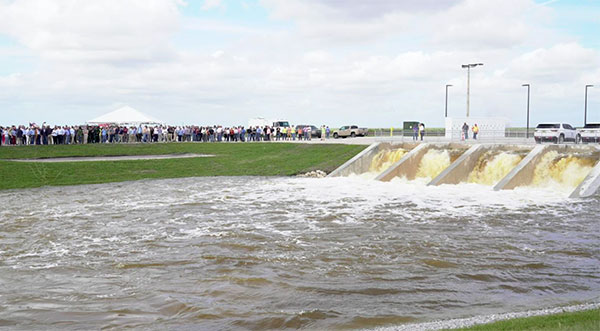
Key features of our stormwater infrastructure
● Stormwater Retention Ponds – These engineered basins collect runoff, allow sediments to settle, and slowly release cleaner water back into the environment.
● Floating Wetlands – Managed Aquatic Plant Systems are man-made wetlands installed in bodies of water across the city. They mimic the function of natural wetlands by absorbing nutrients and filtering contaminants.
● Baffle Boxes – These stormwater structures are designed to remove sediment, suspended particles, and other pollutants like nitrogen and phosphorus from stormwater.
● Tree Boxes – These specialized, vegetated structures act as mini bio-retention areas, filtering stormwater runoff along roadways and parking lots.
All of these efforts are part of a broader, strategic approach to safeguarding our local environment, and they are already making a measurable impact.
Explore the interactive Water Quality StoryMap here, which showcases the completed and ongoing stormwater projects throughout the city that help protect and preserve the Indian River Lagoon.
 Related Story:
HOT OFF THE PRESS! July 14, 2025 Space Coast Daily News – Brevard County’s Best Newspaper