
How Artificial Intelligence Is Revolutionizing Table Tennis Training
By Space Coast Daily // December 1, 2025
Table tennis demands exceptional speed, precision, and timing. Given the sport’s rapid pace, players have historically depended on coaches to observe their technique and offer corrective advice. The coach’s role remains crucial. However, this method alone often fails to detect every micro-movement, shift in balance, or slight adjustment of the paddle.
Companies like CHI Software, experts in AI solutions development, are advancing systems that address these limitations by providing detailed motion analysis and real-time feedback.
Artificial intelligence (AI) is changing that. By providing objective measurement and detailed motion analysis, AI in table tennis is reshaping how players learn, practice, and refine their skills. Instead of relying solely on intuition or repeated drilling, athletes now have access to data-driven insights that make progress clearer and training more efficient.
Why Traditional Coaching Alone Has Limits
A trained coach can identify strategic patterns and offer valuable advice. However, certain tactical and technical details occur with a speed or subtlety that surpasses human visual perception. For example:
- The paddle may open or close only a few degrees during contact.
- Weight transfer may occur too late by just a moment.
- Footwork may drift slowly out of position over time.
These small issues often accumulate into habits that are hard to identify and correct. Players may repeat them for months without realizing the root cause of inconsistent performance.
AI for table tennis directly addresses this perceptual gap. Its role is not to replace the coach but to provide them with precise quantitative data. This information supports and refines the teaching process, leading to greater accuracy.
How AI Observes and Interprets Movement
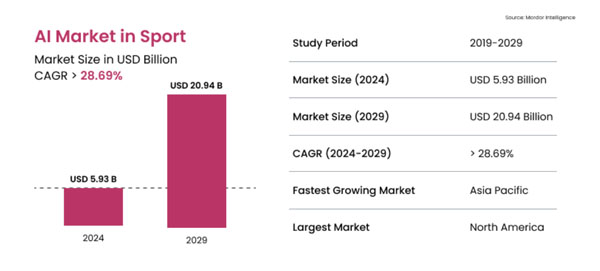
Modern table tennis with AI training systems uses video capture and motion tracking to break down each stroke in real time. The software identifies the player’s posture, swing path, timing of contact, and ball trajectory. After processing this data, it highlights what is happening mechanically rather than relying on assumptions.
During this stage of training, many players rely on table tennis AI analysis tools that review their recorded practice sessions from multiple camera angles. These systems identify patterns in technique and gameplay—such as recurring stroke habits, timing tendencies, and positioning choices—and present this information in a clear way that helps players understand where improvements are needed.
The feedback is specific—not general advice, but measurable detail. Instead of “swing higher,” a player may see guidance such as “your paddle angle is closing 7° too early during follow-through.”
Real-Time Feedback Speeds Up Learning
One major advantage of AI is the ability to give feedback as the player trains. If a movement deviates from the intended form, the system can indicate it immediately. This prevents incorrect technique from becoming a habit and helps players adjust faster.
Instead of practicing for an hour and only later reviewing footage, the athlete makes changes during the session, while the movement is still fresh.
This leads to:
- Fewer repeated errors;
- Faster correction of habits;
- Improved muscle memory;
- More efficient training sessions.
The result is not necessarily more practice, but better practice.
Tracking Progress Over Time
Tracking progress over time is another key advantage of AI systems. Each training session generates stored performance data, allowing players to observe how their consistency, precision, and footwork develop.
Instead of relying on vague impressions like “I think I’m improving,” players can review clear indicators such as accuracy percentages, timing consistency in their strokes, movement efficiency around the table, and recurring patterns in missed shots or weak responses.
This long-term visibility reinforces motivation and gives players and coaches a reliable basis for adjusting training goals and methods.

Personalized Training Based on Individual Style
Not all players move or strike the ball in the same way. Some rely on fast attacking shots, others prefer placement and control. AI recognizes these differences and adapts training recommendations to the individual.
For example:
- If a player struggles with returning backspin, the system may suggest specific looping drills.
- If footwork slows when moving to the backhand corner, targeted movement exercises can be introduced.
- If serve returns are inconsistent, the system highlights contact timing and paddle angle.
Instead of one standard practice routine, training becomes tailored and efficient.
Tactical Understanding, Not Just Technique
Artificial intelligence elevates tactical awareness, an element as vital as technical ability in competitive table tennis. Its analysis of match video pinpoints strategic strengths and weaknesses with great clarity.
The technology reveals the success rates of different serves, highlights losing rally patterns, and detects stylistic predictability. It further examines how pressure impacts a player’s choices. This transforms training into a holistic process that integrates the execution of shots with the wisdom for their application.
Coaches Gain a Stronger Role — Not a Smaller One
It is important to clarify: AI does not replace coaching. Instead, it strengthens it.
The coach remains responsible for:
- Strategy;
- Mental preparation;
- Competitive mindset;
- Training structure.
AI assists by providing clear technical detail, freeing the coach to focus on what humans do best—interpret, motivate, guide, and plan.
What Comes Next
The ongoing advancement of AI technology is enabling a new generation of training tools. These emerging systems include adaptive training robots that modify tactics mid-rally and visual systems capable of direct spin detection. Simulated opponents can now replicate the specific habits of real players.
Predictive tools also anticipate athlete fatigue to recommend optimal rest intervals. This fusion of human skill and intelligent technology is fundamentally reshaping the design and experience of table tennis training, illustrating how AI and table tennis now work together to create smarter, more precise development methods.
Conclusion
Artificial intelligence introduces unprecedented precision, personalization, and effectiveness to table tennis training. It detects movement subtleties invisible to human observation. Players consequently correct technical errors more rapidly. They develop a clearer understanding of their own progress. Training sessions become highly purposeful.
Intelligent analysis now complements the sport’s essential qualities of rhythm, touch, and instinct. Coaches utilize more powerful diagnostic tools. Athletes gain deeper self-awareness. Improvement transforms from an uncertain process into a quantifiable outcome. This synergy helps players systematically realize their full potential.













