
What is Image to Video AI and How Does it Differ from Text-to-Video?
By Space Coast Daily // December 8, 2025
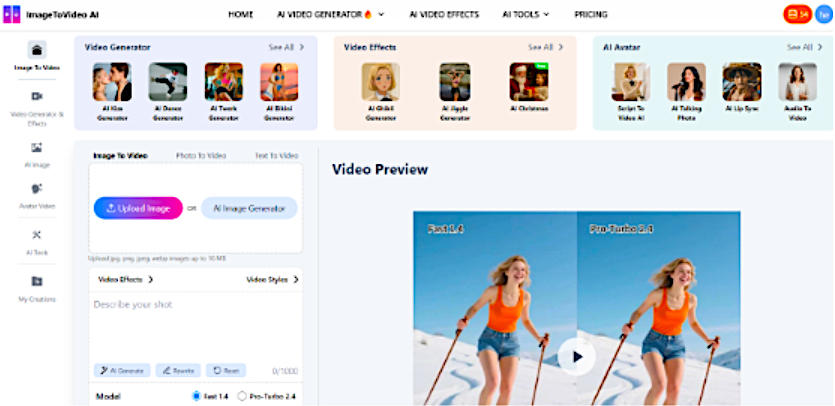
In the rapidly evolving world of artificial intelligence, one of the most fascinating developments is the rise of AI video generation. From simple image-based animations to lifelike AI-generated movies, this technology is revolutionizing how visual content is created. Among these innovations, image to video AI and text-to-video AI have gained significant popularity for their ability to turn simple inputs into dynamic visuals. But what exactly is image to video AI, and how does it differ from text-to-video systems? Let’s explore this in detail — and understand how such innovations are even shaping tools like the AI Kiss Video Generator.
Understanding Image to Video AI
Image to video AI is a technology that uses synthetic intelligence to transform still images into movement motion pictures. In essence, it animates static pics, giving them realistic expressions, gestures, and moves. This generation is powered with the aid of superior neural networks and laptop vision fashions that understand human facial systems, lighting fixtures, and frame movement.
For example, you may take a portrait image of a person and use image to video AI to cause them to smile, blink, or maybe speak. Some present day tools even permit users to create emotional or romantic scenes — like a couple sharing a kiss — all generated from photographs. This is in which the AI Kiss Video Generator era comes into play. It can create practical short videos primarily based on simple snap shots or face facts, giving users a laugh, creative manner to generate practical content for enjoyment, advertising, or personal use.
How Image to Video AI Works
The process begins with deep learning algorithms trained on thousands of human faces and body movements. These models learn how different facial muscles interact during expressions or actions. When you upload an image, the AI analyzes the person’s features — such as the eyes, mouth, and facial proportions — and maps them to a motion pattern based on the desired action.
Using this data, the AI then generates a sequence of frames that simulate motion, creating a video that appears natural and fluid. Technologies like GANs (Generative Adversarial Networks) and motion transfer models play a crucial role in maintaining realism. For instance, an AI Kiss Video Generator may use two input images (a man and a woman) and generate a short video of them kissing, ensuring realistic head movement, lip synchronization, and smooth transitions.
Text-to-Video AI Explained
While image to video AI relies on visual input, text-to-video AI starts from written prompts. This type of AI interprets text descriptions and automatically creates a video that matches the scene. For instance, if you type “A couple sharing a kiss at sunset,” the AI generates a video scene based solely on that description.
Text-to-video systems use multimodal AI models, which combine natural language understanding with visual generation. These models interpret the context, tone, and emotion behind the text to produce scenes that reflect the input. Unlike image to video AI, which animates a specific image, text-to-video AI creates everything — from characters and backgrounds to lighting and camera movement — entirely from scratch.
Key Differences Between Image to Video AI and Text-to-Video AI
- Input Source:
- Image to Video AI requires at least one static image as input.
- Text-to-Video AI needs only a text prompt.
- Image to Video AI requires at least one static image as input.
- Output Realism:
- Image-based AI often produces more realistic human motion, since it works from real photos.
- Text-based video generation is broader but sometimes less realistic, depending on the complexity of the prompt.
- Image-based AI often produces more realistic human motion, since it works from real photos.
- Creative Control:
- With image to video tools like the AI Kiss Video Generator, users have more control over characters’ appearance and emotions.
- Text-to-video systems offer flexibility in storytelling but less precision over individual facial details.
- With image to video tools like the AI Kiss Video Generator, users have more control over characters’ appearance and emotions.
- Use Cases:
- Image to video AI is ideal for personalized clips, digital avatars, and emotion-based content.
- Text-to-video AI is more suitable for marketing, storytelling, or explainer videos.
- Image to video AI is ideal for personalized clips, digital avatars, and emotion-based content.
Applications of Image to Video AI
The technology has found use in several industries:
- Social Media and Entertainment: Platforms and creators use AI tools to generate fun and emotional short clips, such as AI-generated kisses, smiles, or reactions.
- Marketing and Advertising: Brands can use an AI Kiss Video Generator to produce attention-grabbing romantic or emotional scenes for product promotion.
- Gaming and Virtual Reality: Developers use animated avatars to create lifelike characters from player photos.
- Memorial and Artistic Projects: Old photographs can be animated to bring historical or personal memories to life.
The Role of AI Kiss Video Generators
The AI Kiss Video Generator is a perfect example of how image to video AI blends creativity and technology. It allows users to animate images into short romantic videos that look authentic and emotionally engaging. The system combines facial recognition, expression mapping, and motion synthesis to ensure realistic interactions between two characters.
For content creators and social media enthusiasts, this innovation offers endless possibilities — from making cinematic moments to experimenting with digital storytelling. As the technology evolves, AI-generated kiss videos may soon achieve photorealistic quality, blurring the line between reality and digital creation.
Conclusion
Both photo to video AI and textual content-to-video AI are redefining how we create and consume visual media. While text-to-video focuses on storytelling via words, picture to video brings present visuals to lifestyles with motion and emotion. Together, they constitute a future wherein each person — without or with technical abilities — can generate cinematic content in minutes.
And as gear like the AI Kiss Video Generator retains to enhance, the boundary among imagination and fact will most effectively develop thinner, starting new creative horizons for virtual artists, entrepreneurs, and regular users alike.













