AI SOC Platforms Explained: How Artificial Intelligence Is Reshaping Security Operations
By Space Coast Daily // February 11, 2026
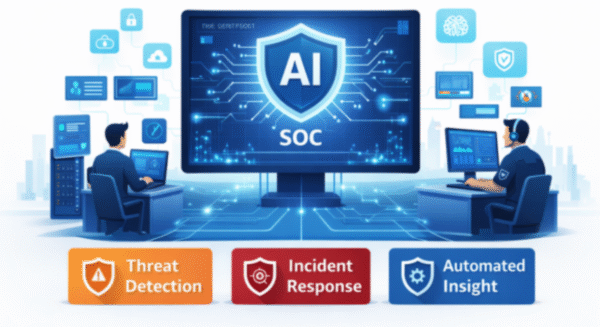
Security Operations Centres are under more stress than ever before. SOC teams are stretched thin because of expanding attack surfaces, cloud adoption, identity-centric threats and constant alert volumes. Even companies with a lot of resources struggle to detect and respond to threats fast enough, even though they deploy multiple security tools.
In response, a lot of companies are using AI SOC platforms to improve efficiency and scale operations. These platforms provide faster detection, smarter investigations and less analyst fatigue through machine learning and automation. But expectations often outrun reality.
It is very important to know how AI SOC platforms work and what value they can deliver. This blog talks about how AI is improving security operations and also what problems AI SOC platforms are best at solving.
What AI SOC Platforms are Designed to Solve
They are built to handle challenges that are too overwhelming for human analysts to handle. Their main goal is not to replace analysts, but to help them by reducing noise and accelerating the decision-making process.
Core problems addressed include:
- Too many alerts
- Manual triage and investigation effort
- Slow correlation across disparate data sources
- Inconsistent response execution
When implemented right, these platforms can help SOC teams focus on high-impact threats rather than routine noise.
How AI SOC Platforms Work in Practice
The platforms apply machine learning and behavioural analytics to security telemetry.
In practice, they:
- Analyse large number of logs and events
- Detect patterns or anomalies across data sources
- Link alerts with incidents
- Give context to alerts
- Recommend or carry out response actions
The goal is not to generate more alerts. Instead, they aim to reduce alert noise by grouping related activity into actionable insights.
Improving Detection Accuracy with AI
Detection accuracy is one of the most valuable contributions of AI.
AI SOC platforms improve detection by:
- Identifying deviations from normal behaviour
- Detecting subtle attack patterns missed by static rules
- Reducing reliance on signature-based detections
- Continuously adapting to environmental changes
This method works well against identity theft, insider threats and low-and-slow attack techniques.
Speeding up Investigations and Response
AI platforms support faster investigations by:
- Automatically collecting related evidence
- Mapping activity across endpoints and cloud services
- Providing possible attack narratives
- Suggesting next steps
Analysts can focus on validation and containment instead of context assembly by reducing manual data gathering.
Reducing Analyst Fatigue and Burnout
One of the most common problems in SOC is analyst burnout.
AI platforms help fix this by:
- Eliminating repetitive triage tasks
- Suppressing low-confidence alerts
- Prioritising incidents based on risk
- Supporting consistent workflows
Reducing cognitive overload improves responses quality and staff retention.
Where AI SOC Platforms Deliver the Most Value
They are most effective in specific scenarios.
They give great value when organisations:
- Work in hybrid or cloud-first environments
- Have large volumes of identity and endpoint data
- Have mature logging and data coverage
- Maintain well defined response workflows
In these situations, AI may improve existing functions instead of compensating for missing fundamentals.
Common Misunderstandings About AI SOC Platforms
As adoption grows misunderstandings continue.
Some common misunderstandings are:
- AI platforms replace human analysts
- AI automatically eliminates false positives
- Deployment alone improves SOC performance
- AI works without quality data
These platforms depend heavily on data quality, process maturity and analyst expertise.
Limitations Organisations Must Understand
Although they’re powerful, they aren’t infallible.
Some of the key limitations are:
- Dependence on accurate and complete data
- Less effectiveness in immature SOCs
- Risk of over-automation without analysis
- Difficulty explaining some AI-driven decisions
Understanding these limits will help businesses use AI in a safe way.
Integrating AI SOC Platforms into Existing SOC Workflows
Successful adoption requires integration, not replacement.
Effective integration includes:
- Aligning AI outputs with existing triage processes
- Defining when automation can act independently
- Training analysts to interpret AI recommendations
- Continuously tuning models based on feedback
These platforms work best when they are part of operational workflows rather than operating in isolation.
Measuring Success with AI
Success should be measured through outcomes, not features.
Meaningful metrics are:
- Reduction in alert volume
- Faster mean time to detect (MTTD)
- Faster mean time to respond (MTTR)
- Improved detection coverage
- Analyst workload balance
These metrics show if these AI platforms are improving security outcomes.
How AI Platforms Support SOC Maturity
AI adoption often accelerates SOC maturity when applied strategically.
They support maturity by:
- Making analysis consistent and repeatable
- Improving signal quality over time
- Supporting proactive threat hunting
- Freeing analysts for higher-value tasks
However, AI enhances existing maturity – it doesn’t create it from scratch.
When Organisations Should Consider AI SOC Platforms
These platforms are particularly useful when organisations:
- Face a constant overload of alerts
- Operate complex, multi-environment infrastructures
- Have stable SOC processes in place
- Want to scale operations without linear hiring
Foundational improvements should come first for early-stage SOCs.
Next Steps
When organisations are looking at AI SOC platforms, they should start by assessing the alert quality, investigation workflows and data coverage. AI delivers the greatest value when applied to mature processes rather than as a shortcut around them.
CyberNX is a cybersecurity firm that provides AI powered SOC services that helps to proactively identify and neutralize threats in real time. It can help you align security operations with real-world threat behaviour by making sure that AI technology meets your real-world operational needs.
Conclusion
AI is changing how security operations function, but only when used thoughtfully. AI SOC platforms have powerful tools that can reduce noise, improve detection accuracy and accelerate response. However, they cannot replace skilled analysts, strong processes or sound governance.
As the threat landscape changes, the future of effective security operations will depend on combining human expertise with smart automation.