SpaceX Acquires xAI to Build and Launch Space-Based Massive Solar-Powered Orbital Data Centers
By Space Coast Daily // February 17, 2026
long-term solution is orbital data centers powered directly by near-constant solar energy

SpaceX has acquired xAI to create a $1.25 trillion, vertically integrated entity aiming to build massive, solar-powered orbital data centers
BREVARD COUNTY, FLORIDA – SpaceX announced on February 2 that it has acquired xAI in a move the company describes as the next major chapter in its long-term mission to expand humanity’s presence beyond Earth.
The acquisition brings together artificial intelligence, reusable rockets, space-based internet, direct-to-mobile communications, and a global real-time information platform under a single vertically integrated structure.
According to the announcement, the combined effort is focused on dramatically scaling artificial intelligence by moving compute infrastructure into space. Company leadership argues that current advances in AI rely on massive on-site data centers that require significant electricity and cooling.
They contend that global electricity demand for AI cannot be met sustainably in the near term without placing a strain on communities and the environment.
SpaceX and xAI propose that the long-term solution is to develop orbital data centers powered directly by near-constant solar energy. By placing compute infrastructure in space, the companies say they can access vast amounts of available power while reducing operational and maintenance costs.
The vision includes launching a constellation of up to one million satellites that would function as orbital data centers, dramatically expanding global AI compute capacity.
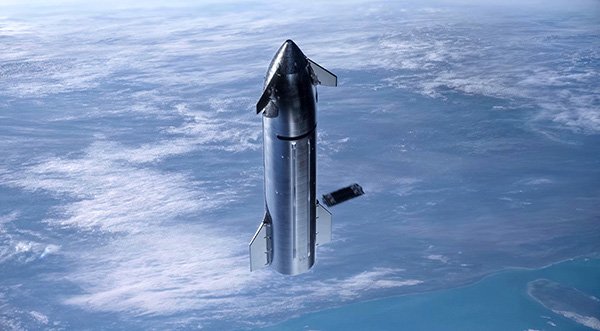
The announcement outlines the role of Starship, SpaceX’s next-generation launch vehicle, in enabling this strategy.
While 2025 marked a record year for global orbital launches, with approximately 3,000 tons of payload sent into orbit, the company says far greater lift capacity will be required to support space-based data centers and future permanent installations on the Moon and Mars.
Starship is expected to deploy more advanced Starlink satellites, including higher-capacity V3 models and next-generation direct-to-mobile satellites designed to provide cellular coverage worldwide.
Company projections estimate that launching one million tons of satellites annually, each generating 100 kilowatts of compute power per ton, could add 100 gigawatts of AI compute capacity per year.
Leadership further states that there is a long-term pathway to delivering even greater capacity from Earth and, eventually, from lunar-based manufacturing operations.

Future plans include using in-space propellant transfer to land significant cargo on the Moon, establishing manufacturing facilities to produce satellites from lunar resources, and deploying them farther into space.
The companies say these efforts would build on existing satellite sustainability practices, including end-of-life disposal strategies already implemented in SpaceX’s broadband systems. Beyond AI infrastructure, the broader objective is to support self-sustaining bases on the Moon, build a civilization on Mars, and enable deeper exploration of the solar system.
SpaceX leadership framed the acquisition as part of a larger mission to expand human knowledge and extend consciousness beyond Earth, positioning the integration of SpaceX and xAI as a step toward that long-term vision.
 Related Story:
HOT OFF THE PRESS! February 9, 2026 Space Coast Daily News – Brevard County’s Best Newspaper