
How AI Changes Health Information for Different Patient Groups
By Space Coast Daily // April 8, 2026
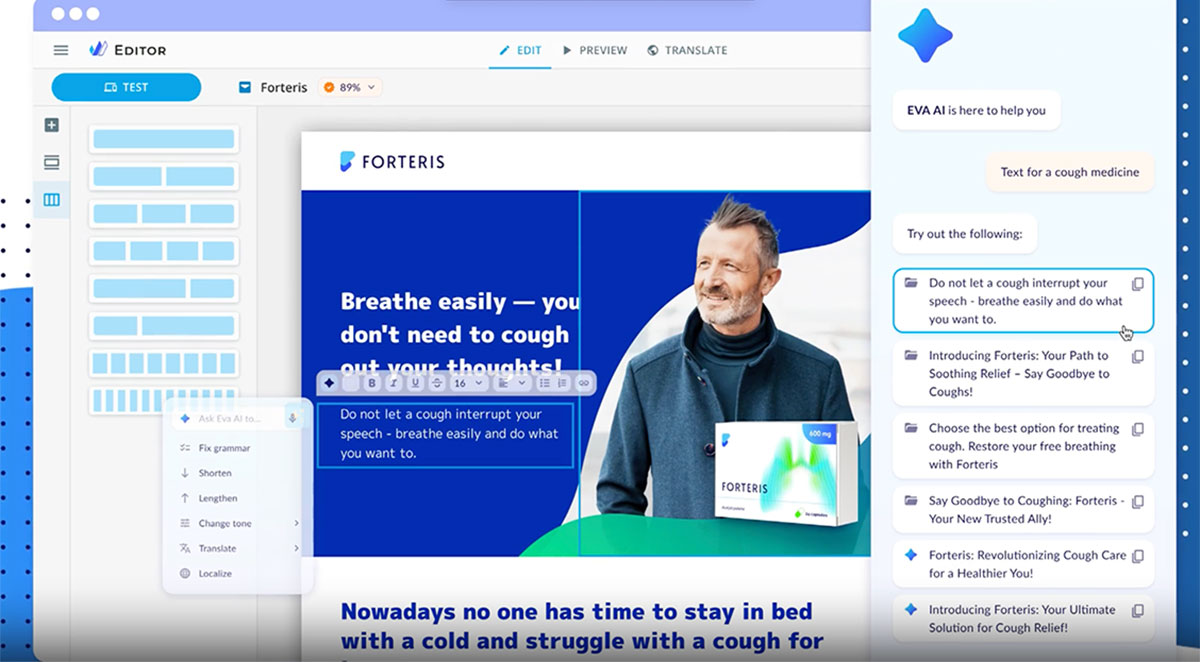
The old model was broad distribution. A brand website, a PDF, and a fixed email sequence had to work for everyone. The newer model uses behavior signals, patient journey mapping, and approved content blocks to serve different people in different ways.
Different patient groups need different health information. Caregivers after discharge need practical steps. Plain summaries benefit newly diagnosed patients. Individuals under treatment usually need help with sticking to their medication, managing side effects, and finding the right and speedy ways to access approved resources. Public health recommendations, like the one above, rely on health literacy programs, language support, and simple materials for everyone to understand.
For brands making that shift, working with a pharma marketing company can help keep patient education aligned with approved messaging at each stage of care.
Why AI in pharma personalization beats one-size-fits-all education
AI in pharma personalization works best when pharma stops treating content as a single finished asset and starts treating it as a library of approved parts. One paragraph can be rewritten for lower reading burden, another can be shortened for SMS, and a third can be expanded for a patient portal or chatbot. Pfizer’s Health Answers by Pfizer shows this model in public: it offers real-time responses, follow-up questions, links to verified sources, and a personalization feature to help tailor results.
A quick planning example shows why AI helps. Picture a brand team with:
1. 4 patient groups.
2. 3 disease stages.
3. 3 delivery channels.
4. 2 reading-depth levels.
That is 72 content variants before translation, accessibility, or country review. Human teams can build that matrix, but AI makes it far easier to assemble, adapt, and test approved variants at scale.
Table 1. Static education vs AI-personalized education
| Model | How it works | Likely result |
| Static content | Same copy for all patients | Lower relevance, more drop-off |
| Rule-based personalization | Basic segmentation by disease or channel | Better than static, but limited |
| AI-driven personalization | Adapts by behavior, journey stage, channel, and content depth | More relevant education and faster routing to next steps |
That is where normal AI in pharma personalization gets direct business value. It can cut dead-end clicks, reduce call-center strain, and help patients get to the next approved action faster. Pfizer reported that its Brazil chatbot, Fabi, answered more than 6,000 non-technical customer questions, which also reduced call-center workload.
How pharma companies build patient group segments with AI
The strongest programs usually segment patients across several layers at once:
• Disease-specific communication: asthma, oncology, diabetes, rare disease, heart failure
• Journey stage: symptom search, diagnosis, onboarding, adherence, side-effect monitoring
• Health-literacy need: brief overview versus deeper explanation
• Language and accessibility need: preferred language, larger text, mobile-first layout
• Support context: patient alone, caregiver involved, post-discharge, long-term management
This is where patient journey mapping becomes practical rather than theoretical. IQVIA says its Patient Journey software applies AI to real-world data, characterizes around 300 million patients in real time, and can reach 3 to 5 times more of the right patients within weeks. It also highlights intervention points and lets teams pivot engagement strategies with up-to-date de-identified patient-level data.
How pharma companies adapt health information in real time
Real-time content adaptation does not mean inventing new medical claims on the fly. In a compliant model, the medical, legal, and regulatory team approves content modules first. AI then helps pick the right module, format, and order for the patient’s situation.
A workable flow looks like this:
1. Gather approved content blocks by indication, audience, and channel.
2. Map those blocks to patient states, such as new diagnosis, refill risk, or post-discharge follow-up.
3. Use AI to recommend the next content variant, channel, or support action.
4. Log what was shown, what was clicked, and what led to the next approved step.
5. Review outcomes and update the content map, not the scientific claim itself.
Pfizer’s public example is even more concrete. Health Answers by Pfizer says answers are generated from trusted independent sources, source links are shown, and answers that do not rely on those independent sources are labeled “unverified.” That is a smart pattern for trust because it separates sourced output from unsupported output in front of the user.
AI case examples from pharma companies
Real-world examples
| Company / platform | What it does | What marketers can learn |
| Pfizer Health Answers | GenAI Q&A with verified-source links, follow-up context, and personalization | Trust signals and source transparency matter |
| Pfizer chatbots: Medibot, Fabi, Maibo | Gives medicine information through country-specific assistants | Local regulation and market needs shape the experience |
| Novartis AI Nurse | Supports heart-failure patients with monitoring, reminders, and chatbot guidance | Chronic-care education works better when support continues after discharge |
| IQVIA Patient Journey | Uses AI and real-world data to segment and activate patient journeys | Better segmentation creates better targeting and timing |
Pfizer’s older chatbot program shows that localization matters. The company launched Medibot in the US, Fabi in Brazil, and Maibo in Japan to make medical information easier to access, with different country needs and reporting rules shaping the design.
Novartis offers a strong chronic-care example. It says more than 100,000 heart-failure patients in China were using its AI-enabled AI Nurse platform, which supports patients from pre-diagnosis through at-home management. Novartis also reported 160,000 detected instances of disease worsening and said the product had been updated more than 80 times based on user feedback. That is a good reminder that personalized patient communication in pharma works better when the system keeps learning from real use after launch.
What pharma companies still get wrong about AI personalization
A lot of teams treat personalization as a content problem when it is really a delivery problem, a data problem, and a trust problem at the same time.
Common failure points include:
• Pushing every patient toward digital-only support.
• Personalizing tone but not timing.
• Writing for internal reviewers rather than patients.
• Skipping language access and accessibility.
• Building chat interfaces without clear source disclosure.
• Optimizing clicks instead of next useful actions.
There is evidence for these risks. Sanofi’s 2024 patient-community report includes feedback that too much digitalization is out of reach for some people and can make interactions feel impersonal. EMA’s current work on electronic product information also stresses preferred-language access, while patient-group commentary around ePI argues for keeping paper leaflets as a complement rather than assuming digital access for all.
How to build an AI personalization program patients will actually use
Start with this checklist:
• Map the patient journey before you build prompts or workflows.
• Define patient groups by need, not by channel alone.
• Keep medical claims in approved modules.
• Let AI choose the path, not invent the science.
• Add language support and readability review from day one.
• Keep a non-digital fallback for people who need it.
• Show sources, timestamps, and escalation paths.
• Review performance by action taken, not by clicks alone.
For brands that need to operationalize that model across web, email, portals, and approved content workflows, working with a pharma marketing company that knows medical review can shorten the gap between strategy and execution.
That is also where the synonym matters: AI in pharma personalization is not the same as flashy automation. Done well, it becomes AI-driven pharma personalization with traceable sources, tighter segmentation, better tailored patient education, and fewer mismatches between what a patient needs and what a brand sends.
Personalized education at scale
The companies getting the best results are not using AI to replace patient education. They are using it to route the right education, in the right format, at the right point in the journey, with clearer wording and better source visibility. The next phase of pharma AI patient engagement will likely belong to teams that combine patient journey mapping, medical-review discipline, multilingual access, and real-time content adaptation in one operating model.













