
What Happened to Gregg Popovich? Health News, Career and Legacy
By Space Coast Daily // April 26, 2026
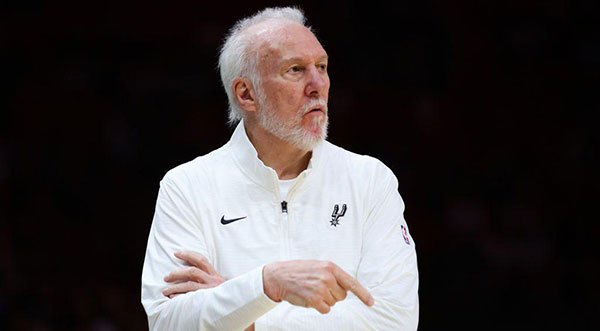 Introduction
There is a version of this story that writes itself — legendary coach, health scare, outpouring of support, legacy assessed. That version exists and it is accurate. But it misses something.
What made November 2024 feel different was not the news itself. Coaches get sick. People age. What made it land harder was the specific person it happened to — someone who had been in the same place, doing the same job, for 29 years without ever making it look like obligation. Fans tracking developments through platforms like dbbet noticed the reaction was quieter than usual sports news. Less hot take, more genuine concern.
That quiet said something.
How Old Is Gregg Popovich
- Born January 28, 1949. East Chicago, Indiana. Air Force Academy graduate. Head coach in San Antonio since 1996 — which means how old is Gregg Popovich and how long he has coached the Spurs are almost the same conversation.
| Personal Detail | Information |
| Full Name | Gregg Charles Popovich |
| Date of Birth | January 28, 1949 |
| Age (2025) | 76 |
| Birthplace | East Chicago, Indiana |
| Education | United States Air Force Academy |
Still there at 76. Same franchise. Nobody pushed him out, nobody lured him away. That is its own kind of answer about who he is.
What Happened to Gregg Popovich
A mild ischemic stroke. November 2024. The Spurs confirmed it in plain language — no spin, no dramatic framing, no attempt to minimize or amplify. Just the fact of it.
Ischemic means a clot. Blood flow to part of the brain, blocked. “Mild” is a real qualifier — it is not the same as severe, and plenty of people recover well. But 76 is 76, and recovery from a stroke does not care about coaching records or legacy.
| Event | Details |
| Type of incident | Mild ischemic stroke |
| When reported | November 2024 |
| Location | San Antonio, Texas |
| Coaching status | Stepped back from active duties |
| Interim coach | Mitch Johnson |
Mitch Johnson took the sideline. The Spurs went quiet after the initial statement. No updates, no drip of information designed to manage perception. Just silence, which felt appropriate.
Gregg Popovich Health: The Recovery
Gregg Popovich health details have been kept private — deliberately, consistently, without apology. The organization established that early and held to it.
Stroke recovery is not linear. It involves neurological work, physical therapy, cognitive assessment, gradual reintroduction to normal life. The specifics — which part of the brain, how fast treatment came, what the daily reality looks like — none of that has been shared publicly. That is the right call.
What was visible was the response from people who know him. Not the official statements — those were expected and predictable. The unscripted things. Coaches and players talking about him in ways that did not follow a template. It sounded like people who actually cared, not people who felt obligated to say something. That distinction matters and it was noticeable.
No announcement about returning or stepping away had come by early 2025. Still open. Still honest about being open.
29 Years. What That Actually Means.
Five championships — but spread out, which is the part that gets overlooked. 1999 was lockout basketball, grinding and ugly. 2014 was something else entirely — ball movement so deliberate and beautiful that it looked like a different sport. Not the same formula repeated. A different read each time on what the moment needed.
Then the 22 consecutive playoff appearances. 1998 through 2019. Every season. Rosters completely turned over during that stretch — Duncan retired, Parker and Ginobili aged out, Leonard came and went — and San Antonio kept appearing in the postseason anyway. That does not happen through talent. Talent comes and goes. Something else kept that run alive.
For basketball followers in Central Asia tracking the sport through platforms like kazino uz, where NBA interest has grown real and steady over the past decade, Popovich has been the clearest available answer to what sustained excellence at the highest level actually requires. Not stars. Not luck. Something embedded deeply enough to survive any individual departure.
The Numbers
| Achievement | Detail |
| NBA Championships | 5 (1999, 2003, 2005, 2007, 2014) |
| Coach of the Year | 3 times (2003, 2012, 2014) |
| Regular season wins | 1,400+ |
| Seasons with Spurs | 29 |
| Olympic coaching | Tokyo 2020 — Gold Medal |
| Consecutive playoff appearances | 22 (1998–2019) |
Permanent. None of what follows changes any of it.
The Pressers. The Opinions. The Players Who Keep Coming Back To The Same Things.
The press conferences became their own category. Reporters who covered him regularly knew the shape of it — blunt, occasionally funny in a way that arrived without warning, genuinely impatient with questions that felt hollow. He answered what he thought deserved an answer and left everything else untouched.
He said things outside basketball that people in his position almost never say. Political things. Social things. His actual view, in his own voice, without the hedge. Mixed reactions, consistently. He did not appear to track the reactions closely.
Former players return to the same territory when asked. Not the rings — those come up eventually but they are rarely where people start. They start with the expectation. The accountability that ran in every direction. The sense that growing as a person was treated with the same seriousness as growing as a player. Several have said it changed how they think about leadership long after basketball ended for them.
The assistants who left his system and became head coaches elsewhere brought recognizable things — the defensive identity, the movement, the insistence that individual talent has to serve something larger. His influence on how the league is coached does not require his name attached to it. It is just there.
What Happens Now
Nobody outside the immediate circle knows. That is the actual answer and it should stay that way rather than be replaced with comfortable speculation.
Returning to coaching after a mild stroke at 76 is not medically impossible. Recovery varies. Some people come back to demanding work. But an NBA season is a specific kind of demanding — the travel, the hours, the sustained decision-making across months without real rest — and that reality sits alongside whatever the private medical picture looks like.
The Spurs have not pushed toward a conclusion. The Wembanyama rebuild is long-term by nature, and the same patience that ran through everything Popovich built appears to be how the organization is handling this too. No timeline. No closed doors. Both directions remain genuinely possible.
The legacy does not need a resolution to be complete. Five championships, 1,400-plus wins, 22 straight playoff seasons, a gold medal, and an influence on the sport that runs deeper than statistics can measure. Built across 29 years in one city, with one consistent idea about what matters. That is not contingent on anything that happens next.
It already is what it is.













