
From Lonestar Gas to Energy Transfer: Kelcy Warren’s Unconventional
By Space Coast Daily // May 13, 2026
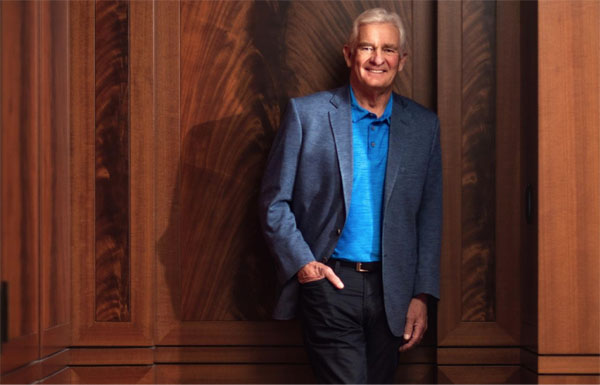
Kelcy Warren walked away from a stable engineering job for a position that paid him less. It was a deliberate choice. Few would have longer reach.
Warren is the Executive Chairman of Energy Transfer, one of the largest midstream companies in the United States, with assets covering crude oil, natural gas, refined products, and natural gas liquids across a continental network. The commercial instincts that helped build that enterprise were not developed in a boardroom. They were shaped behind a gas-buying desk in Midland, Texas, after he traded a higher salary for a closer look at how the business actually worked.
Kelcy Warren’s Engineering Roots and an Early Confidence Shift
Kelcy Warren grew up in White Oak, Texas, a town of roughly 1,900 people in the Piney Woods of East Texas. His father spent his career at Sun Pipeline Company. When Warren sat with his high school counselor to discuss options, the question was direct: what four-year degree paid the most? Engineering, the counselor said. Warren enrolled at the University of Texas at Arlington.
His time there was harder than his later success might suggest. “I had to work harder than others did to pass in engineering, and I was very insecure. I didn’t have much self-confidence,” he said during a lecture at Hardin-Simmons University. A turning point came when civil engineering professor Syed Kassim recruited him for a National Science Foundation university competition. Their project, titled “Ethane Gas Production From the Anaerobic Digestion of Cattle Manure,” was a novel concept in 1977 and a technique now commonplace in agricultural energy production. They won. Warren graduated the following year and joined Lone Star Gas Company.
The Pay Cut That Redirected Kelcy Warren’s Career
Three years into designing pipelines and compressor stations at Lone Star Gas, Warren started paying close attention to a different group of people. Commercial staff would call his desk asking him to size pipe for a gas move, price it out, get the specs together. He would provide the technical answer. Everything about why that gas was moving, and at what price, remained on their end of the call.
“The people I really enjoyed working with were the commercial people,” he told the Hardin-Simmons audience. The engineering work was solid, but he had hit a ceiling. “There’s just so many Weymouth formulas you can do,” he said. The Weymouth formula is the standard flow equation used across the pipeline industry. What Warren wanted was the layer above it. “I want to learn how the cash register works,” he said.
He applied for a commercial position in Midland, Texas. The salary was lower than his engineering role. He relocated anyway. In Midland, he bought natural gas from producers and resold it to consumers. The work placed him inside price negotiations and supply decisions at the commodity market’s center of gravity.
The learning resolved into conviction faster than he expected. “At some point, I said, ‘I can do this. I can be good at this,’” Warren said. “And that’s kind of how the whole brand started evolving.”
From Midland to One of the Country’s Largest Energy Networks
The commercial foundation Warren built in West Texas became the operating logic for what he and partner Ray C. Davis would eventually construct. The visionary growth of Energy Transfer began in 1996 with roughly 200 miles of natural gas pipelines in East Texas. Strategic acquisitions over the following decades, including Aquila, Texas Utilities Fuel Company, Transwestern Pipeline, and the Houston Pipeline System, expanded the company’s position across major production basins and population centers into one of the country’s largest midstream networks.
One acquisition carried weight beyond the financial terms. In 2012, Energy Transfer purchased Sunoco for approximately $5.3 billion. Warren’s father had spent his working life at that company.
The account Warren gave at Hardin-Simmons draws a line through his entire professional history: understanding how revenue is generated matters more than technical mastery alone. He left Lone Star Gas capable and credentialed. He arrived in Midland earning less and learning more. That trade set the direction for everything that followed.













