Home » Home » THIS DAY IN HISTORY: NASA’s Solar-Powered Helios Prototype Set Aviation Altitude Record 25 Years Ago
THIS DAY IN HISTORY: NASA’s Solar-Powered Helios Prototype Set Aviation Altitude Record 25 Years Ago
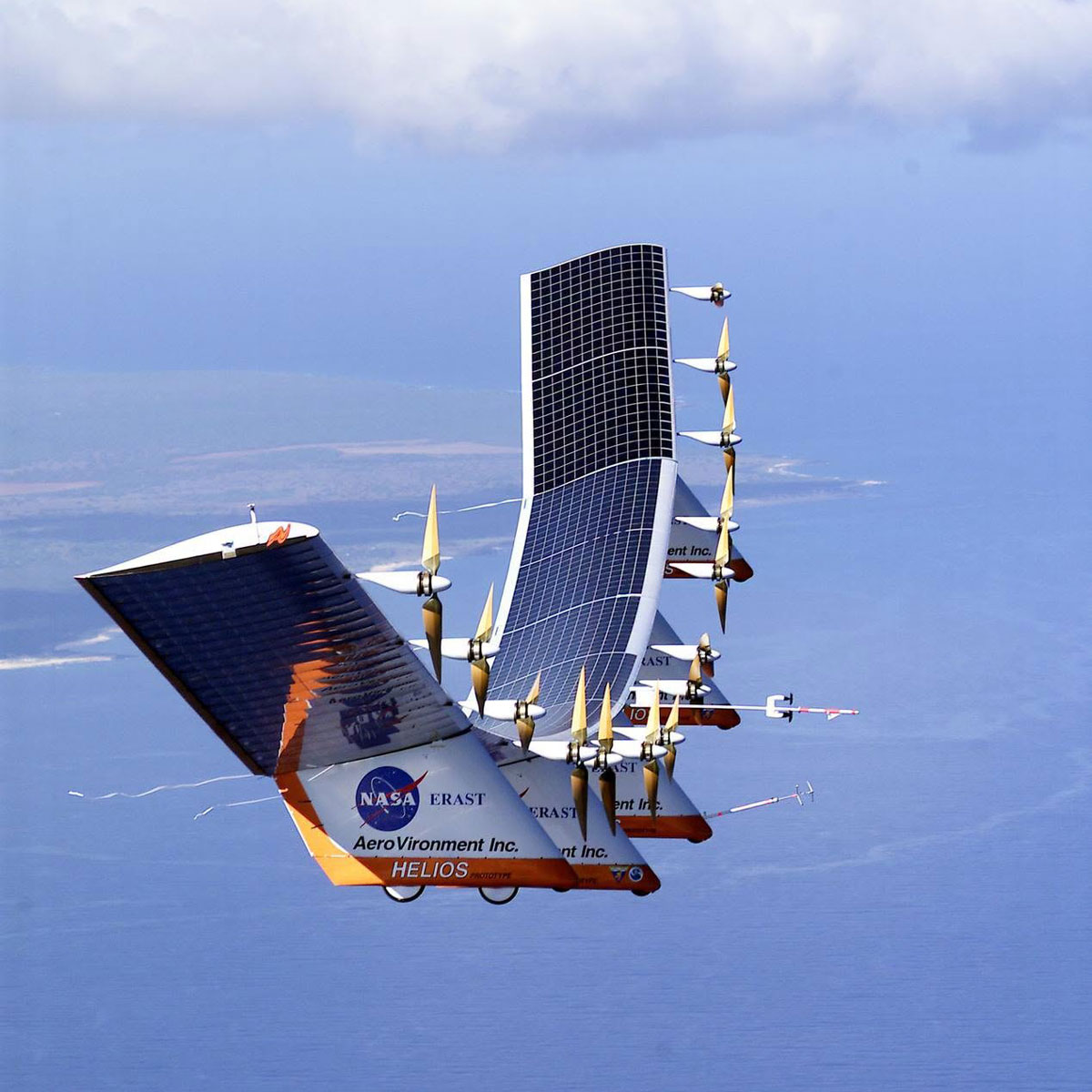
BREVARD COUNTY, FLORIDA – Twenty-five years ago, on Aug. 13, 2001, NASA’s experimental Helios Prototype soared into aviation history by reaching an altitude of 96,863 feet—or approximately 18.3 miles—above Earth.
The solar-powered, remotely piloted aircraft achieved a world altitude record for sustained horizontal flight by a winged, propeller-driven aircraft.
Developed under NASA’s Environmental Research Aircraft and Sensor Technology program, known as ERAST, the Helios Prototype was designed to demonstrate the potential of high-altitude, long-endurance aircraft powered by renewable energy.
Flying at 96,863 feet placed the aircraft in an extreme environment where the air density is less than 2% of what it is at sea level.
Despite those conditions, Helios was able to maintain sustained horizontal flight using electric propellers powered by solar energy.
The lightweight aircraft featured an expansive flying-wing design covered with solar cells. Its historic flight demonstrated how remotely piloted aircraft could potentially serve as long-duration platforms for atmospheric research, environmental monitoring and communications.
The Aug. 13, 2001, achievement remains a landmark moment in NASA aeronautics and the development of solar-powered aviation.













