
Pickleball 101: A Comprehensive Guide for Beginners – Rules, Tips, and Strategies for a Successful Start
By Space Coast Daily // December 8, 2023
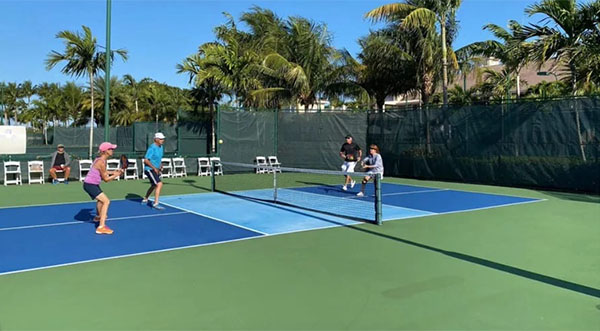
Welcome to the vibrant world of pickleball, a sport that has taken the recreation scene by storm with its unique blend of fun, strategy, and accessibility.
If you’re new to the game, fear not! This comprehensive guide will walk you through the fundamental rules, essential equipment, and provide valuable tips to help you embark on your pickleball journey with confidence.
Basic Rules:
- Court Dimensions
Pickleball is typically played on a rectangular court, similar to a badminton court but larger than a ping pong table. The standard court size for doubles play is 20 feet by 44 feet, and for singles play, it’s 20 feet by 22 feet.
- Serving
The serve is a crucial aspect of pickleball. It must be executed underhand and diagonally across the court.
The ball must bounce once on the server’s side and once on the receiver’s side before players can hit it in the air.
The serve must clear the non-volley zone and land within the opposite diagonal court.
- Volleying
Volleys (hitting the ball in the air without letting it bounce) are not allowed within the non-volley zone, a 7-foot area on each side of the net.
Players can volley from outside the non-volley zone, but their feet must remain behind the non-volley zone line.
- Double Bounce Rule
The game begins with a serve, followed by a return that must bounce before the serving team can hit it in the air. This is known as the “double bounce rule.”
After the initial bounces, the ball can be played in the air or off the bounce.
- Scoring
Pickleball games are typically played to 11 points, and a team must win by at least two points.
Points are scored only by the serving team.
Essential Equipment:
- Paddle
Pickleball paddles come in various materials, including wood, composite, and graphite. Beginners may find composite paddles with a midweight range suitable for a balanced feel.
- Ball
Pickleballs have distinct hole patterns and are designed for either indoor or outdoor play. Choose a ball based on your playing environment.
- Footwear
Wear comfortable athletic shoes with non-marking soles. Pickleball courts often require shoes that won’t scuff or damage the surface.
Tips for Beginners:
- Master the Dink
The “dink” is a soft shot that clears the net and lands within the non-volley zone. Mastering this shot is crucial for controlling the pace of the game and outmaneuvering opponents.
- Positioning in the Kitchen
Learn to position yourself effectively within the non-volley zone. Being at the net allows for better control of the game.
- Communication with Your Partner
If playing doubles, communication with your partner is key. Coordinate movements, share strategies, and cover the court effectively.
- Focus on Placement, Not Just Power
While power is beneficial, accuracy and ball placement are equally important. Aim for strategic shots to exploit your opponents’ weaknesses.
- Practice Serve Placement
Work on serving to specific areas of the court. Developing precise serves can give you a strategic advantage from the beginning of the point.
- Stay Patient
Pickleball is a game of strategy and finesse. Stay patient, especially during longer rallies, and wait for the right opportunity to make your move.
- Learn the Non-Volley Zone Rules
Understanding and respecting the non-volley zone rules is crucial. Being aware of where you can and cannot volley will significantly impact your gameplay.
- Work on Footwork
Good footwork is essential in pickleball. Practice moving quickly and efficiently around the court, ensuring you are always in the best position to make your shots.
- Watch Experienced Players
Watching experienced pickleball players, either in person or through online resources, can provide valuable insights into strategy, shot selection, and court positioning.
- Join a Pickleball Community
Consider joining a local pickleball community or club. Playing with more experienced players can accelerate your learning curve, and the community aspect adds an extra layer of enjoyment to the game.
Conclusion:
Now equipped with the fundamental rules, essential equipment knowledge, and valuable tips, you’re ready to embark on your pickleball journey. This guide aims to provide you with a solid foundation, but remember that pickleball is also about having fun, staying active, and building connections within the community. So, grab your paddle, step onto the court, and savor the joy of pickleball – a game that offers endless opportunities for growth, camaraderie, and a whole lot of fun!













