
Responsible Home and Self-Defense: Tips and Equipment
By Space Coast Daily // July 10, 2024
A 2022 report revealed that the nationwide burglary rate in the United States recorded 269.8 cases per 100,000 population. This figure slightly decreased from 2021, when it stood at 270.9 cases.
The cases have also seen a downward trend since 1991.
Although burglaries have been declining, this doesn’t mean homeowners should be passive. At the same time, these unlawful house entries don’t just mean theft. Burglars may also attack you, causing severe injuries or death.
This guide will discuss how to secure your home, defend yourself, and the self-defense equipment that can help protect yourself. We will also explore the legal considerations you must remember to ensure responsible home security, self-defense tactics, and self-defense equipment usage.
Home Security Practices
Home security provides you and your loved ones protection and peace of mind.
Here are the security measures to implement in your home:
Install high-quality locks
High-quality locks are made of advanced materials and mechanisms, making them resistant to picking, manipulation, and forced entry attempts.
Deadbolt locks are one example of high-quality locks.
Deadbolt locks have bolts that must be activated with a key or a thumb turn. They offer good security because they’re not spring-activated and cannot be opened with a credit card or knife blade.
Additionally, installing heavy-duty strike plates helps strengthen door frames. These strike plates have longer screws than standard ones, making them challenging to split when applying pressure or kicking the door.
Use motion-sensor lighting
Motion-sensor lights activate when they detect movement, helping illuminate paths and deter intruders.
The motion sensor technologies used in these lights include:
- Passive Infrared (PIR): This motion-sensing technology is the most used in security systems. It detects infrared energy. The lights will turn on after detecting background temperature changes and warm bodies.
- Microwave (MW): This technology emits undetectable waves that capture the reflection of moving objects. They can monitor larger areas but are more susceptible to object interference.
- Dual Technology: Some motion-sensing lights combine PIR and MW.
Invest in a smart home security system
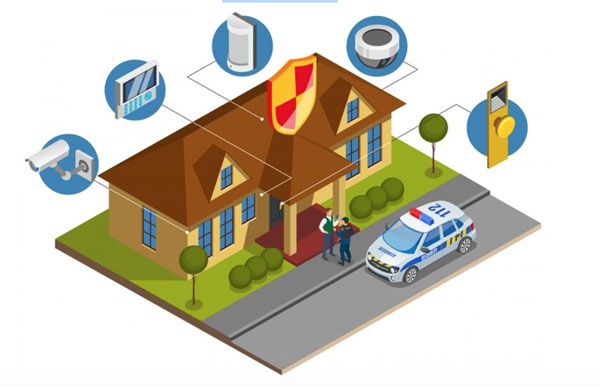
Smart home security systems are Wi-Fi-enabled devices that can notify you and authorities in case of a break-in.
They include the following devices:
- Security cameras
- Entry sensors
- Siren
- Burglar alarms
- Panic buttons
- Smart locks
Personal Self-Defense Measures and Equipment
Burglars can sometimes evade home security systems. To create a more robust protection, here’s how to prepare for potential break-ins:
Create an emergency contact list
An emergency contact list includes the contact information of individuals and services that can provide immediate assistance in emergencies.
Start by listing local emergency numbers, such as police and medical services. Then, add the contact information of your family members, friends, and neighbors.
Ensure you have printed copies and store them where they can be easily found. Additionally, create a list on your phone and share it with everyone you know to ensure they know who to call and how to reach them in emergencies.
Update the contact list regularly to keep it current. Make periodic changes as needed, particularly when moving to a new area or the details change.
Designate safe rooms in your home
Safe rooms are secure spaces where you and other occupants can retreat in case of burglaries. These rooms are strategically established based on location, accessibility, and security features.
If possible, build your safe room on the ground floor to avoid navigating stairs during emergencies.
To enhance security:
- Reinforce doors and windows with security bars, locks, and bullet-resistant materials.
- Equip the room with charging ports so you can contact emergency services.
- Consider installing a peephole or small security camera to monitor the outside area without opening the door.
You should also stock the room with essential supplies, such as water, first-aid kits, non-perishable food, flashlights, blankets, and other necessary items.
To camouflage your safe room, consider using the following:
- Concealed doors that can masquerade as bookshelves, cabinets, or mirrors
- Hidden compartments
- Decorative finishes that seamlessly blend the door and walls
Conduct regular safety drills with family members or occupants
Regular safety drills ensure that everyone in the household knows what to do in emergencies, reducing confusion and panic. These practices can also coordinate your responses in a break-in.
Outline a safety plan with steps each person should take during break-ins. Include the secure routes to safe rooms, instructions on securing doors and windows, and procedures for contacting emergency services and loved ones. Ensure that children understand this plan.
During the drills, simulate different scenarios. For example, practice what to do if a break-in occurs while everyone sleeps or in different parts of the house. Rehearse how to communicate and emphasize the importance of staying calm.
You can conduct these safety drills once a month.
Image by Aleksandar Little Wolf on Freepik
Equipment for self-defense
Some self-defense equipment to keep at home include:
Pepper sprays and stun guns
Pepper sprays and stun guns are non-lethal devices. They incapacitate intruders, allowing you time to escape or call for help.
Pepper sprays have oleoresin capsicum, a compound from chili peppers that causes temporary blindness and disorientation.
Meanwhile, stun guns incapacitate intruders through an electric shock. This shock attacks the burglars’ muscles, causing pain and immobilization.
These devices require close contact with attackers, so you must use them when an intruder is within reach.
Multi-tools
Multi-tools are foldable devices with blades and tool extensions, such as scissors, knives, pliers, screwdrivers, openers, and saw blades.
They also have glass breakers, tactical pens, and pepper spray compartments. You can attach them to keychains or store them in bags and pockets, ensuring easy access when needed.
Bulletproof clothing
Bulletproof clothing involves garments that absorb or deflect the impact of bullets and other projectiles. They can protect you from life-threatening violent acts carried out by intruders.
Bulletproof clothing is designed for everyday wear. You can seamlessly blend these clothes into daily attire, ensuring you wear a discreet layer of protection.
Examples include:
- Blazers
- Shirts
- Hoodies
- Jackets
- Pants
- Vests
Remember that bulletproof clothing can still be vulnerable to attacks. Its protection levels vary based on the materials, designs, and threats it is designed to shield against.
Pistol lights
About 32 percent of adults in the U.S. said they own a gun. Others said they live in a household with a gun.
The most cited reason for owning a firearm was protection. Since burglars can bring firearms, having one can help protect you.
If you own a gun or live with someone with one, ensure you have pistol lights. These mounted lights attach under the barrels of semiautomatic pistols. They allow you to operate your weapon and light with one hand.
Pistol lights can also help you navigate your house and identify intruders in low-light conditions.
Self-defense umbrellas
Self-defense umbrellas can withstand significant force and impact. Their shafts are made of sturdy, highly resistant materials to bending. You can use them to block an intruder’s strike.
Many self-defense umbrellas integrate modern technologies to enhance functionalities. Examples of these features include:
- GPS tracking
- Tactical handles
- LED flashlights
- Alarm systems
- Lock mechanisms
- Smartphone connectivity
Tactical pens
Tactical pens resemble regular pens. However, they provide self-defense features.
These pens are made of durable materials like titanium, steel, and anodized aluminum and have rigid handles that allow for a firmer grip.
Depending on the design, tactical pens can have other features. Some of them have attached whistles and knives.
Other tactical pens also have DNA catchers that collect DNA samples from assailants. This feature can be used to identify intruders.
Legal Considerations
Home defense involves understanding what is justifiable self-defense under the law.
Justifiable self-defense refers to your legal right to protect yourself when facing imminent danger. However, the criteria used to judge whether your actions in self-defense are justified vary across states.
Some states allow individuals to defend themselves without retreating before using force. Others adhere to a duty to retreat, requiring you to avoid confrontation before resorting to violence.
Courts also weigh the following considerations:
- Did the victim provoke the attack?
- Did perpetrators threaten with the use of deadly or non-deadly force?
- Were the victims obliged to retreat from the violence or threat of imminent force?
- Did the victim have a reasonable fear or belief that the use of force was imminent?
- Did the victim use reasonable force to respond?
- What protection can victims who feel, on reasonable grounds, receive if a threat exists when it doesn’t?
Furthermore, states regulate the use, purchase, and ownership of self-defense weapons. Some may even be stricter with specific types of accessories and firearms. The legal options available include:
- Firearms, e.g., handguns, rifles, and shotguns
- Non-lethal weapons, e.g., pepper sprays, stun guns, tactical pens, and tasers
- Melee weapons, e.g., batons and knives
The criteria for self-defense weapon purchase and ownership include:
- Age restrictions (typically 18 to 21 years old)
- Permits and background checks
- Restrictions on felons and individuals with specific convictions
To ensure the responsible use of self-defense weapons:
- Understand proper handling, use, and storage
- Train and familiarize yourself with the weapons
- Understand the federal and state laws surrounding the use and possession of self-defense weapons
Be Prepared, Vigilant, and Responsible
Preparation and vigilance are crucial to protect yourself and your loved ones against intruders. With proactive security steps and self-defense equipment, you can fortify a defense mechanism that reduces the likelihood of potential threats.
Being responsible is equally essential. You must know your rights and responsibilities to ensure your self-defense measures are justified under the law. At the same time, you must understand the legalities of self-defense weapons to stay compliant and informed.













