
Your Guide to Navigating Florida’s Child Car Seat Laws
By Space Coast Daily // November 23, 2024
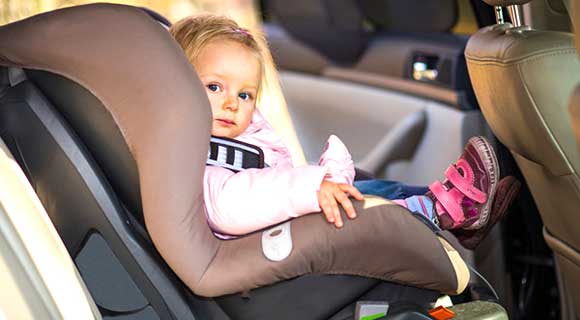
As a parent you have a lot on your plate—however, your child’s safety takes precedence. Whether you’re at home or on the go you’re always concerned about keeping your little one safe and the state of Florida also cares about child safety.
Did you know an estimated 63,000 children were injured in car accidents in 2020? This relatively high statistic also emphasizes the importance of prioritizing child safety in motor vehicles. To help prevent any injuries in car accidents the Sunshine State has strict laws regulating the proper usage of child safety seats.
Florida’s Car Seat Law
Section 316.613 of the Florida Statute lists the state’s child safety seat laws for motor vehicles and states:
“Every operator of a motor vehicle as defined in this section, while transporting a child in a motor vehicle operated on the roadways, streets, or highways of this state, shall, if the child is 5 years of age or younger, provide for the protection of the child by properly using a crash-tested, federally approved child restraint device.”
To put it simply, all children riding in any type of motor vehicle must be restrained in an approved car seat until the age of five. Once a child turns 5 years old, they can move up to a child booster seat. After the age of 6, the child can use the vehicle’s built-in safety seat belt system.
What Florida’s Car Seat Law Doesn’t Cover
At first glance, it can seem like Florida’s car seat law covers everything parents need to know. However, pretty soon most parents realize there’s some guidance missing.
The law doesn’t address a child’s weight or height requirements and how they can apply to the type of car seat used. The law also doesn’t specify when you can switch from a rear-facing car seat to a front-facing one.
To help ensure your child’s safety in a motor vehicle, it’s often best to refer to the American Academy of Pediatrics. The organization covers everything not outlined in Florida’s child safety seat laws.
Types of Car Seats and When to Use Each One
Parents have the option of using three different types of child safety seats before transitioning to the vehicle’s seat belt system. Since Florida law is a little vague about when to use each one, here are some guidelines recommended by the American Academy of Pediatrics.
Rear-Facing Car Seats
All newborns must use a rear-facing car seat since the rear-facing position provides additional protection if an accident occurs. Most hospitals require parents to use a rear-facing car seat when the infant is released and some hospitals won’t release an infant until parents show they have an approved rear-facing car seat.
Even though Florida doesn’t give parents any guidelines on when they can stop using a rear-facing car seat, national guidelines exist. Most guidelines recommend following the car seat manufacturer’s recommendations and usually address a child along with their age, weight, and height. A good rule to follow is to keep using a rear-facing car seat, even if your child is over the recommended age limit. Instead, follow the height and weight limits.
Forward-Facing Car Seats
While rear-facing car seats provide more protection than forward-facing ones, most kids don’t enjoy staring at the vehicle’s back seat. Eventually, you’re going to need to graduate to a forward-facing child safety seat but the question is when is it safe to make the transition?
Once again, it’s a good idea to follow the car seat manufacturer’s recommendations for height and weight—typically, you can safely move to a forward-facing model when your child reaches at least 25 pounds. Since children grow and develop at different rates, don’t pay too much attention to age recommendations. Some children may not reach 25 pounds until they’re around 3 or 4 years old.
Yes, listening to a toddler complain about their lack of a view in a rear-facing car seat can be exasperating. However, it’s better than risking your child’s safety by switching to a forward-facing car seat too soon.
Booster Seat
Even though Florida law allows parents to start using a booster seat when their child turns 4, it doesn’t necessarily mean it’s a great idea. Remember, some four-year-olds are still struggling to reach the recommended weight to transition to a forward-facing car seat. If this applies to your child, you probably don’t want to skip straight to a booster from a rear-facing car seat.
Guidance from pediatricians and booster seat manufacturers recommends waiting until your child weighs around 40 pounds. Children with heights of 35 inches or higher may also be ready to move up to a booster seat. Before letting your child transition to a booster seat, check for the following milestones:
- Your child has outgrown the safety harness on a forward-facing car seat
- Your child can’t sit back in the car seat with their knees bent at the edge of the seat cushion
If your child meets these milestones, it’s probably time to move them to a booster seat. Most booster seats are designed to support little ones up to 85 pounds and heights of 4’9”.
Using a Seat Belt
You may not be quite as excited as your child when it’s time to get rid of the booster seat. Now, you’re relying on your vehicle’s seat belt system to keep them relatively safe in a car accident.
According to Florida law, kids can start using seat belts when they turn six. However, it’s still a good idea to follow the booster seat manufacturer’s recommendations for height and weight. Most child safety experts recommend waiting to use a seat belt until the child is at least 4’9” tall and around 8 years old. Your child may not be thrilled to use a booster seat past the age of 6 but remember it’s for their safety.
Keeping Your Child Safe in Motor Vehicles
Florida’s child safety seat laws have a primary purpose: the goal is to help children stay safe in the event of a car accident occurring.
While the state’s law is a little vague, you can refer to the safety seat’s manufacturer’s recommendations to learn about what you should do. Your child’s pediatrician is there to help provide some much needed guidance on when it’s time to transition from one type of car seat to another so don’t hesitate to ask them about it when the time is near.













