Drug Crimes and Handling Police Requests in Florida
By Space Coast Daily // March 14, 2025
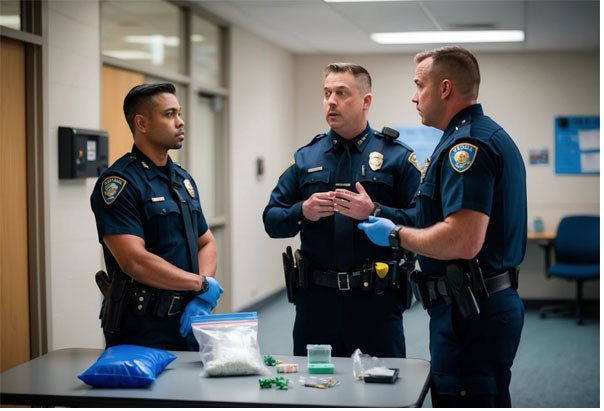
Drug-related offenses in Florida can lead to serious legal consequences, making it crucial for individuals to understand their rights when approached by law enforcement.
Knowing how to respond to police requests can significantly impact the outcome of any encounter involving drug crimes. With Florida’s strict laws regarding drugs, being informed can provide essential guidance in managing these situations.
When facing police inquiries regarding drug possession or trafficking, individuals should remain calm and assertive. They have the right to refuse consent to searches without a warrant and to request legal representation. Understanding these rights can help individuals navigate complex and potentially intimidating interactions with law enforcement.
Additionally, the consequences of drug crimes in Florida can vary widely based on the severity of the offense. From misdemeanors to felonies, the legal repercussions can lead to fines, probation, or imprisonment. Being equipped with knowledge about the legal landscape allows individuals to take proactive steps in their defense and protect their future.
Overview of Drug Crimes in Florida
Florida’s drug crime landscape encompasses various offenses and classifications, reflecting the state’s strict regulations surrounding controlled substances. Understanding these elements is crucial for those involved or affected by drug-related legal issues.
Types of Drug Offenses
Drug offenses in Florida can range from minor possession to serious trafficking charges. Key categories include:
- Possession: Having controlled substances, which can lead to misdemeanor or felony charges depending on the amount and type.
- Distribution: Selling or distributing drugs, including prescription medications, which involves harsher penalties.
- Trafficking: This offense applies to large quantities and involves significant prison time and hefty fines.
- Manufacturing: Producing drugs, such as methamphetamine or cannabis oil, carries severe legal consequences.
Each type of offense requires careful legal consideration. Criminal defense attorneys often play an essential role in navigating these complexities, ensuring that rights are protected.
Drug Scheduling and Classification
Florida uses a schedule classification system to categorize controlled substances, influencing the severity of penalties. The schedules range from I to V:
- Schedule I: Substances with no accepted medical use and a high potential for abuse, such as heroin and LSD.
- Schedule II: Drugs with accepted medical uses but high abuse potential, like oxycodone and cocaine.
- Schedule III: Moderate to low potential for physical and psychological dependence, including anabolic steroids.
- Schedules IV and V: These include substances with lower potential for abuse, like Xanax and some cough preparations.
The classification affects legal outcomes, emphasizing the importance of consulting a qualified criminal defense attorney when faced with drug-related charges. Legal representation can make a significant difference in the prosecution’s approach and the potential for reduced penalties.
Legal Standards and Definitions
Understanding the legal standards related to drug-related offenses is crucial for individuals facing charges in Florida. These standards encompass the definitions and implications of possession, trafficking, and distribution, as well as the nuances of constructive possession and intent.
Possession, Trafficking, and Distribution
In Florida, possession refers to an individual’s control over a controlled substance. There are two primary types of possession: actual and constructive. Actual possession occurs when an individual physically holds the substance. Constructive possession means the substance is within an individual’s control, even if not physically present.
Trafficking involves the illegal sale or distribution of drugs in specified amounts. Florida law classifies trafficking into different degrees based on the quantity and type of drug involved. The penalties for trafficking are severe, often resulting in mandatory minimum sentences.
Distribution is the act of selling or delivering controlled substances. It can occur in various forms, including selling to others or providing drugs with the intent to distribute. Each of these actions carries significant legal consequences, necessitating the expertise of a criminal defense attorney for those accused.
Constructive Possession and Intent
Constructive possession is a critical aspect of drug law. It indicates an individual may not directly possess drugs but has the ability to access them. For example, drugs found in a shared space may implicate all occupants if they have control over that area.
Intent plays a significant role in drug charges. Prosecutors must often prove that an individual intended to sell or distribute drugs, which can involve examining text messages, transactions, and witness statements.
The state may demonstrate intent through various means, including the presence of scales, packaging materials, and large amounts of cash. A criminal defense attorney can help assess the evidence and build a defense based on the specifics of the case.
Arrest Procedures and Rights
Understanding arrest procedures and the rights of individuals during these encounters is crucial. This knowledge can empower individuals to protect themselves and navigate the legal process effectively.
The Right to Remain Silent
Under the Fifth Amendment, individuals have the right to remain silent when approached by law enforcement. This means that they are not obligated to answer questions that may incriminate them.
When arrested, individuals should clearly state their intention to invoke this right. Law enforcement officers are required to respect this request. Silence cannot be interpreted as guilt, and asserting this right can prevent unintentional self-incrimination.
It is advantageous for individuals to communicate this right to law enforcement calmly. Consulting a criminal defense attorney before engaging in discussions with law enforcement is also advisable. They can provide guidance on the best course of action during police encounters.
Search and Seizure Laws
Search and seizure laws, governed by the Fourth Amendment, protect individuals from unreasonable searches by law enforcement. Officers generally need a warrant supported by probable cause to conduct a search.
In Florida, certain exceptions allow for warrantless searches. These may include situations like consent, exigent circumstances, or if the officer has probable cause to believe evidence is present. It’s vital for individuals to know their rights regarding searches.
If an unlawful search occurs, any evidence obtained may be inadmissible in court. Speaking with a criminal defense attorney can be essential in challenging illegal searches and protecting one’s rights during legal proceedings. Understanding these laws helps individuals navigate potential legal issues effectively.
Responding to Police Requests
Understanding how to respond appropriately to police requests is essential for individuals involved in drug-related offenses. Proper knowledge in handling interrogations and understanding warrants can significantly influence legal outcomes.
Handling Interrogations
When facing an interrogation, individuals should remain calm and composed. It is crucial to assert the right to remain silent until a criminal defense attorney is present. This ensures that any statements made do not inadvertently harm one’s case.
Policing tactics may vary; therefore, being aware of the rights during an interrogation is vital. Officers will often ask leading questions to obtain admissions. Individuals should avoid making spontaneous comments and should clearly state the intention to talk to a lawyer before answering any questions.
Documenting the details of the interrogation can prove invaluable. Including the time, location, and officer’s name can assist a defense attorney in forming an effective strategy.
Understanding Warrants
Warrants are legal documents that authorize law enforcement to perform searches or make arrests. It’s essential to recognize the implications of a warrant and the individual’s rights concerning it.
When a warrant is presented, individuals should review its validity. Questions about the nature of the warrant, including whether it specifies a location or possession of items, can be important. A defense attorney can assist in determining possible defenses against unlawful searches or seizures.
Additionally, individuals must not resist during the execution of a warrant. Noncompliance could lead to increased charges or charges of obstruction. Instead, they should comply and then consult with a criminal defense attorney as soon as possible to explore legal options.
The Role of Criminal Defense Attorneys
Criminal defense attorneys play a crucial role in navigating the complexities of drug crimes in Florida. They provide vital support throughout the legal process and implement specific strategies tailored to each case.
Legal Representation Process
The legal representation process begins when an individual accused of a drug crime seeks counsel from a criminal defense attorney. This initial consultation allows the attorney to gather essential information about the case, including details of the arrest, evidence presented, and any witness statements.
Key steps in this process include:
- Case Assessment: Evaluating the strength of the prosecution’s evidence.
- Client Communication: Maintaining open lines of communication to keep clients informed.
- Strategy Development: Creating a personalized defense strategy based on the case specifics.
The attorney will also represent the client during arraignments, hearings, and trials, ensuring their rights are upheld throughout the proceedings.
Defense Strategies in Drug Cases
Defense strategies for drug charges can vary widely, depending on the circumstances. Common tactics include challenging the legality of the search and seizure processes.
Additional strategies may involve:
- Insufficient Evidence: Arguing that the prosecution does not have enough evidence to warrant a conviction.
- Mistaken Identity: Demonstrating that the accused was misidentified in connection with the crime.
- Coercion or Covert Police Practices: Highlighting any unethical tactics used by law enforcement.
Criminal defense attorneys analyze case details to determine the most effective approach, ultimately aiming to reduce charges, negotiate plea deals, or pursue an acquittal. Each strategy is crafted to protect clients’ rights and interests in a complex legal landscape.
Pre-Trial Motions and Hearings
Pre-trial motions and hearings play a critical role in drug crime cases. These legal proceedings can significantly impact the case’s direction and outcome, especially regarding the admissibility of evidence and the assessment of probable cause.
Motion to Suppress Evidence
A motion to suppress evidence is a request made by the defense to exclude specific evidence from trial. This motion often argues that the evidence was obtained in violation of constitutional rights, such as the Fourth Amendment’s protection against unreasonable searches and seizures.
In Florida, if law enforcement conducts a search without probable cause or a warrant, any evidence found may be subject to suppression. A criminal defense attorney will present arguments during a hearing to demonstrate the evidence’s illegality.
The judge will then decide whether to grant or deny the motion. If granted, it can weaken the prosecution’s case by removing critical evidence that could lead to a conviction.
Preliminary Hearings
Preliminary hearings serve as an early checkpoint in the criminal justice process. They are held to determine if there is enough evidence to proceed to trial.
During this hearing, the prosecution must present sufficient probable cause that a crime occurred and that the defendant was involved. The defense may challenge the evidence presented, aiming to have the charges dismissed if the prosecution fails to meet the burden of proof.
These hearings are crucial for establishing the strength of the case. If the judge finds insufficient evidence, charges may be dropped, providing a potential avenue for the defendant to avoid trial entirely.
Criminal Court Procedures
In Florida, the criminal court process involves several steps that individuals charged with drug crimes must navigate. Key stages include the arraignment and the options available for resolution through trials or plea bargains.
The Arraignment
The arraignment is the initial court appearance for a defendant after an arrest. During this stage, the charges are formally presented, and the defendant is asked to enter a plea.
Plea options typically include:
- Guilty: Accepting responsibility for the crime.
- Not Guilty: Contesting the charges.
- No Contest: Not admitting guilt but accepting the consequences.
It is essential for defendants to have a criminal defense attorney present to advise on legal rights and strategies. Effective representation can influence the plea decision and set the stage for future proceedings.
Trials and Plea Bargains
If a defendant pleads not guilty, the case may proceed to trial. Trials in Florida can take various forms, such as jury trials or bench trials (decided by a judge). The prosecution must prove the defendant’s guilt beyond a reasonable doubt.
Alternatively, many defendants opt for plea bargains. This involves negotiating with the prosecution for a potentially lesser charge or reduced sentence. Plea bargains can be beneficial, often leading to quicker resolutions.
Having a skilled criminal defense attorney is crucial during this process. They can negotiate terms that may significantly alter the outcome, ensuring the defendant’s rights are upheld throughout.
Penalties and Sentencing Guidelines
Florida’s drug crime penalties can vary significantly based on the offense type and circumstances. Specific sentencing guidelines and potential mandatory minimums play a significant role in the outcomes faced by individuals charged with drug-related offenses.
Mandatory Minimum Sentences
Certain drug convictions in Florida carry mandatory minimum sentences. These sentences are enforced by law and do not allow for judicial discretion. For example, a person convicted of trafficking in large quantities of controlled substances can face substantial time in prison:
- Heroin: Minimum 3 years for 4 grams or more.
- Cocaine: Minimum 3 years for 28 grams or more.
- Methamphetamine: Minimum 3 years for 14 grams or more.
Repeat offenders or those involved in violent actions during drug offenses may face enhanced penalties. It is crucial for individuals to consult with a criminal defense attorney to navigate these strict regulations.
Alternative Sentencing
Florida provides alternatives to traditional sentencing for certain cases. Options include:
- Drug Court: Aimed at rehabilitation rather than punishment, this option focuses on treatment for addiction while under supervision.
- Pretrial Intervention Programs: These allow eligible defendants to avoid prosecution by completing specific requirements, such as community service or drug treatment.
Utilizing alternative sentencing may significantly reduce penalties for some defendants. Effective legal representation can help ascertain eligibility and navigate these options, potentially leading to more favorable outcomes.
Drug Diversion Programs
Drug diversion programs provide an alternative to traditional criminal justice proceedings for individuals charged with drug-related offenses. These programs focus on rehabilitation rather than punishment, emphasizing treatment and support.
Eligibility and Requirements
Eligibility for drug diversion programs varies by jurisdiction and the specifics of the offense. Typically, individuals must not have prior convictions for violent crimes. Offenders charged with minor drug offenses may qualify, especially if they demonstrate a willingness to seek treatment.
Requirements often include:
- Undergoing a comprehensive assessment by a certified clinician.
- Committing to a treatment plan, which may involve counseling, community service, or rehabilitation programs.
- Regularly attending check-ins with a supervising officer or program coordinator.
Meeting these criteria can significantly affect outcomes and opportunities for participants.
Benefits of Diversion Programs
Participation in drug diversion programs offers several advantages. One significant benefit is the potential for reduced legal penalties. Successful completion can lead to charges being dismissed or reduced, allowing individuals to avoid a criminal record.
Additionally, these programs connect individuals to treatment resources. Access to counseling, peer support, and educational seminars can aid in recovery.
Other benefits include:
- Decreased chances of recidivism through structured support.
- Opportunities to develop coping strategies and life skills.
- Improved employment prospects, as a clean record opens more job opportunities.
Engaging in a diversion program can be a transformative experience, providing a second chance for many individuals.
Expungement and Record Sealing
Understanding the processes of expungement and record sealing in Florida is crucial for those seeking to minimize the impact of drug crimes on their lives. This section details the criteria for qualifying for expungement and the effects of these legal actions on criminal records.
Qualifying for Expungement
In Florida, not all convictions are eligible for expungement. Generally, a person can seek expungement if they have completed their sentence, including any probation and parole, and if the offense is not a felony or a serious crime like drug trafficking.
Criteria for eligibility also include the absence of prior convictions or pending charges. A criminal defense attorney can assist individuals in determining their eligibility. Additionally, offenses such as juvenile records, certain misdemeanors, or charges that were dropped may qualify for record sealing.
Impact on Criminal Records
Expungement and sealing of records can significantly affect an individual’s future. Once a record is expunged, it is destroyed and can no longer be accessed by the public or most employers. Sealed records, while still existing, are restricted from public view.
This process enhances employment opportunities and facilitates better chances for housing and credit. With a criminal defense attorney’s help, individuals can navigate these processes effectively. Legal professionals can also provide guidance on presenting cases to the court for expungement or sealing, ensuring all required documentation is accurately filed.