
Understanding the Different Types of Bioreactors and Their Applications
By Space Coast Daily // June 24, 2025
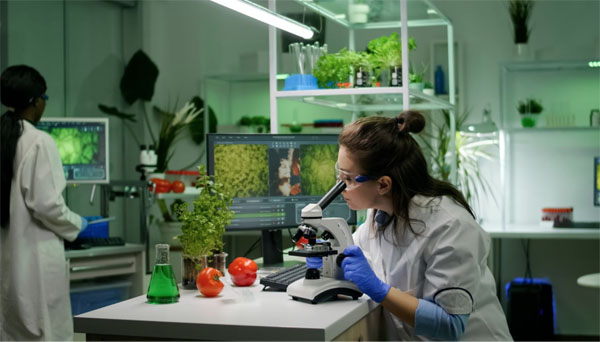
Bioreactors are relevant in the biotechnological, pharmaceutical, and industrial microbiological world because they facilitate biological reactions that are so controlled. These customized vessels are programmed in a way that promotes the growth of microorganisms or cells at an optimum level and thereby helps the formation of the product, so they are important in various sectors, such as medicine and environmental sciences.
In this article, we shall get to understand what bioreactors are, bioreactor types, their uses, and the ways of choosing the right kind.
What is a Bioreactor?
A bioreactor is a well-regulated environment established to foster a biological environment or bioreactor cell culture. It mainly consists of giving optimum conditions to cells/microorganisms to grow, process, and generate desirable products (proteins, enzymes, vaccines, or biofuels, etc.).
Some major roles of a bioreactor are:
- Keeping the temperature down, pH, and oxygen level at an optimum value
- Stirring or shaking the contents to ensure uniformity
- The prevention of contamination by providing a sterile environment
- Letting nutrient feeding and waste removal
Bioreactors may be as small as those found in a lab and up to industrial centres that are many thousands of litres. Bioreactor applications are also critical in such fields as biopharmaceuticals, food technology, tissue engineering, and environmental engineering.
Types of Bioreactors
A variety of systems and bioreactor types have been developed, each suited to particular biological systems and production requirements. Concerning their design, operational manner, and the organisms they accommodate, they exhibit differences.
1. Stirred Tank Bioreactor (STR)
- The bioreactor is employed most frequently in industrial settings.
- Outfitted with an impeller for mixer duties and with spargers installed to deliver aeration
- Well-suited for either microbial or cell culture processes
Advantages:
- Effective mixing along with efficient oxygen transfer
Perfectly scalable and highly versatile
- Conveniently easy to clean and sterilize.
Applications:
- Fabrication of antibiotics, enzymes, and monoclonal antibodies
2. Airlift Bioreactor
- Circulation of nutrients and cells is driven by air or other gaseous streams.
- No mechanical agitation is utilized.
Advantages:
- Yet this system generates only minimal shear stress, which makes it well-suited to processing sensitive cells.
- Energy-efficient
Applications:
- Growing mammalian or plant cells
- Wastewater treatment
3. Fixed Bed Bioreactor
- Consists of a solid matrix or scaffolds on which cells adhere and proliferate.
- Frequent application in immobilized cell cultures
Advantages:
- High cell density
- Suitable for extended long-term processes
Applications:
- Manufacture of therapeutic proteins
- Tissue engineering and regenerative medicine
4. Fluidized Bed Bioreactor
Working like a fixed-bed reactor, except that a fluid stream keeps the particles or beads in suspension.
Advantages:
- Improved mass transport
- Prevents clogging or channelling.
Applications:
- Waste treatment
- Enzyme production
5. Photobioreactor
Engineered for organisms that depend on light, including algae or photosynthetic bacteria
Advantages:
- Supports growth that depends on light.
- Function either as an open or a closed system.
Applications:
- Algae-based biofuels
- Nutraceutical production
6. Membrane Bioreactor (MBR)
Integrates biological treatment together with membrane filtration
Advantages:
- High-quality effluent
- Compact design
Applications:
- Wastewater treatment
- Biopharmaceutical purification
7. Single-Use Bioreactors (SUBs)
These single-use, ready-sterilized units are commonly fabricated from plastic and have gained significant popularity in biopharmaceutical production.
Advantages:
- Decreases the risk of cleaning and contamination.
- Shorter setup time
Applications:
- Production of material for clinical trials
- Personalized medicine manufacturing
Applications of Bioreactors
The use of bioreactors has been widespread in different sectors. The bioproduct industry is set to grow to over $30 trillion over the next two decades. Some of the major bioreactor applications are:
1. Biopharmaceuticals
- Monoclonal antibodies, vaccines, and therapeutic proteins production mechanisms
- Employment of the microbial and mammalian cell lines under controlled conditions
2. Industrial Biotechnology
- Enzymes, biofuels, and organic acids manufacture
- Uses the cheap microbial fermentation methods
3. Food and Beverage Industry
- Fermentation of food such as yogurt, beer, and vinegar
- Yeast, bacteria, and molds are used as flavoring and preservatives
4. Environmental Engineering
- Remediation of industrial wastewater and sewer waste
- Utilization of microbial cultures in the destruction of pollutants
5. Regenerative Medicine and Tissue Engineering
- Culture of human tissue and organs in bioreactors
- Fixed-bed and perfusion bioreactors in scaffold-based growth
6. Farming and Fish farming
- Manufacture of microbial feed supplements, biopesticides, and biofertilizers
- Raising algae to provide animal food or soil nutrients

Choosing the Right Bioreactor
Choosing the most suitable bioreactor technology from a reputable company, such as IKA, depends on a number of aspects.
1. Kind of Organism
- Shear-sensitive cells (e.g., mammalian) must be mixed gently (e.g, airlift or wave bioreactors)
- Strong microbes (e.g., bacteria) are able to withstand turmoil (e.g, stirred tanks)
2. Production Scale
- Bench-top reactors may be used in lab-scale processes
- Large-scale bioreactors are required by commercial-scale manufacturing operations
3. Process Type
- Batch- One fill, simple operation
- Fed batch – Permits the addition of nutrients over time.
- Continuous – constant steady state operation of having a constant input and output
4. Maintenance and Cost
- Single-use systems provide reduced cleaning costs, which can prove to be costlier per unit
- Stainless steel systems have CIP (clean-in-place), but are cost-effective in the long run
5. Regulatory Requirements
- Visibility, sterility, and validation of production are needed in biopharmaceutical production
- Less strict requirements can be on environmental or industrial processes
Final Thoughts
Bioreactor is the creation that characterizes the modern biotechnological world, as this is where cells and microorganisms are grown in a controlled way so that different uses of them can be acquired. Depending on factors such as life-saving drugs to treating waste waters, and even growing tissue cultures, a suitable bioreactor can exert an unmatched effect on biological processes.














