Next-Gen U.S. Submarine Program Slips to 2040, Raising Concerns
By Space Coast Daily // July 14, 2025

BREVARD COUNTY, FLORIDA – The U.S. Navy’s ambitious next-generation attack submarine, known as the SSN(X), is facing significant delays and cost escalations that have pushed its projected debut well into the 2040s.
According to a new report, the Navy is now targeting 2040 for the first SSN(X) to enter production, a full decade later than its original 2031 target.
The timeline has been gradually pushed back—first to 2035 and now further delayed—due to mounting budgetary pressures and the soaring costs associated with designing and fielding cutting-edge submarine technology.
In its Fiscal Year 2026 budget request, the Navy has allocated $623 million specifically for the SSN(X) program.
This funding will support critical early design work, technology development, and initial prototyping efforts as the service seeks to lay the groundwork for what it describes as the most advanced and capable attack submarine in U.S. naval history.
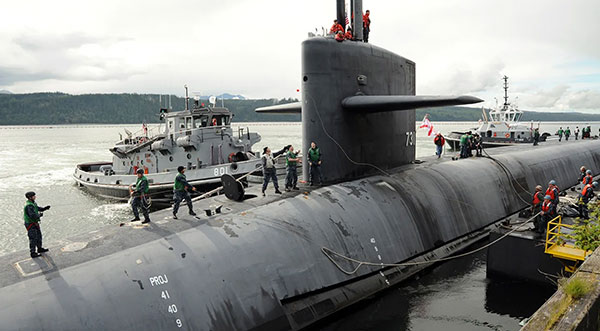
The SSN(X) program aims to deliver a submarine platform that exceeds the capabilities of the current Virginia-class boats and incorporates features from the larger and more heavily armed Seawolf-class. Key priorities for SSN(X) include unparalleled stealth to evade enemy detection, advanced sensors and intelligence-gathering systems, an expanded payload capacity—particularly for torpedoes and potentially new missile systems—and seamless integration with the Navy’s growing fleet of unmanned undersea vehicles (UUVs).
The delays reflect the immense complexity of developing a vessel that will have to operate in increasingly contested maritime environments, particularly in the Indo-Pacific region, where peer adversaries like China are rapidly advancing their own naval capabilities.
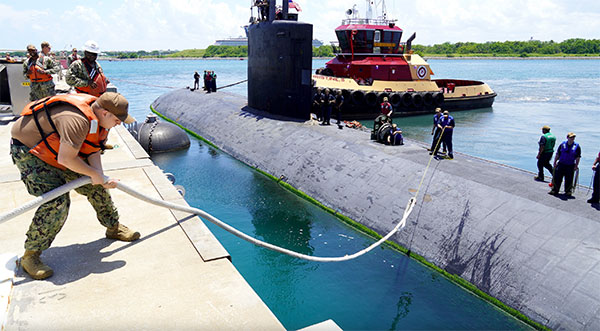
Despite the shifting timeline, Navy leaders have emphasized the importance of SSN(X) as a crucial element of future undersea dominance, warning that adversaries are making significant strides in anti-submarine warfare (ASW) technology.
As the program progresses through its design phase, analysts expect the SSN(X) to feature a modular construction approach, advanced propulsion systems—potentially leveraging quieter, more efficient reactors—and robust cyber defenses.
However, with the first hull now not expected until at least 2040, the Navy will continue to rely on upgraded Virginia-class submarines, including the upcoming Block VI and VII variants, to bridge the gap and maintain undersea superiority in the interim.