
Miami Dolphins’ 0-2 Start: Analyzing the Week 2 Loss to the Patriots
By Space Coast Daily // September 18, 2025
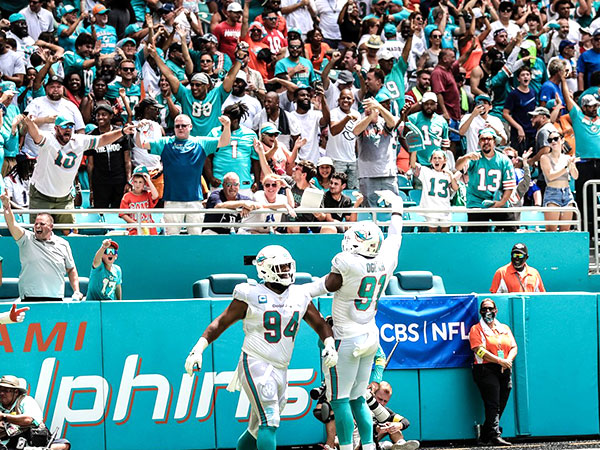
The Miami Dolphins’ home opener turned into another painful reminder of their troubling start to the 2025 season. Despite flashes of offensive improvement, the Dolphins fell 33-27 to the New England Patriots on September 14, dropping them to an alarming 0-2 record. The loss highlighted persistent issues that have plagued this franchise under head coach Mike McDaniel, with procedural penalties and late-game execution failures undermining what should have been a winnable game.
For Florida fans evaluating their fantasy football options, the Dolphins’ offensive struggles present both challenges and opportunities on the best DFS sites. Daily fantasy players witnessed a tale of two halves from Miami’s skill position players, with Tua Tagovailoa completing 26 of 32 passes for 315 yards and two touchdowns. However, DFS enthusiasts should note the concerning trend of Miami’s inability to convert crucial late-game situations, making their players risky tournament selections despite their talent level.
Procedural Penalties Plague Crucial Moments
The most damaging aspect of Miami’s loss wasn’t necessarily talent deficiency but rather self-inflicted wounds through procedural violations. The Dolphins committed multiple false starts and delay-of-game penalties at the most inopportune times. During their final two drives, when trailing by three and six points respectively, Miami sabotaged their chances with basic operational failures.
On their penultimate possession, two offensive procedure penalties put the team behind the sticks, forcing a fourth-and-nine situation that led to Tagovailoa’s costly interception. Even more frustrating was the final drive sequence, where Aaron Brewer’s false start was followed by a delay-of-game penalty that pushed Miami back to first-and-20 from New England’s 36-yard line. These weren’t complex schematic breakdowns but fundamental breakdowns in preparation and execution.
The procedural issues extended beyond just the final drives. Patrick Paul’s false start prevented Miami from attempting a two-point conversion at halftime, forcing them to settle for the extra point. Aaron Brewer’s holding penalty wiped out a potential first-and-goal opportunity in the third quarter. These penalties represented a broader organizational problem that has persisted throughout McDaniel’s tenure.
Tagovailoa’s Mixed Performance and Growing Frustrations
Tua Tagovailoa’s performance against New England embodied the Dolphins’ season in microcosm, moments of brilliance overshadowed by critical mistakes. After struggling mightily in Week 1 with just 114 passing yards and multiple turnovers, Tagovailoa showed significant improvement with 315 passing yards and an 81.2% completion rate. His touchdown pass to Jaylen Waddle demonstrated the touch and precision that made him effective in previous seasons.
However, Tagovailoa’s decision-making in pressure situations raised concerns about his ability to elevate the team when stakes are highest. His fourth-quarter interception on fourth-and-nine came when he held onto the ball too long despite having Julian Hill open as a safety valve. The play epitomized a quarterback still struggling to process information quickly enough under duress, particularly when the offensive line provides inconsistent protection.
The frustration was evident in Tagovailoa’s body language during the final drive. On third-and-13, instead of taking a calculated risk downfield to Waddle, he chose to run out of bounds, essentially conceding the down. This conservative approach in do-or-die situations reflects either diminished confidence in his arm strength or reluctance to trust his receivers in contested situations—both concerning developments for a quarterback in his fifth NFL season.
Broader Team Challenges Exposed
The loss to New England revealed systemic issues that extend beyond individual performances. Miami’s defense, under coordinator Anthony Weaver, allowed the Patriots to score on their first three possessions for the second consecutive week. After permitting the Indianapolis Colts to score on every drive in the opener, the defense showed minimal improvement against a Patriots offense that had struggled significantly in Week 1.
The Dolphins’ inability to generate consistent pressure without blitzing exposed their front seven’s limitations. Despite having what should be a dominant pass rush, Miami recorded just one sack and two pressures on 10 blitz attempts, with Patriots quarterback Drake Maye completing seven of eight passes against the blitz for 76 yards and a touchdown. This suggests either schematic predictability or talent deficiencies that opposing offenses are exploiting.
Special teams provided the most dramatic momentum swings of the game, highlighting both the potential and problems within the organization. Malik Washington’s 74-yard punt return touchdown, Miami’s first in five seasons, gave the Dolphins a brief 27-23 lead. However, the ensuing kickoff coverage immediately surrendered a 90-yard return touchdown to Antonio Gibson, encapsulating the team’s inability to sustain positive momentum.
DFS Implications and Fantasy Outlook
From a daily fantasy perspective, the Dolphins present a challenging evaluation. Tyreek Hill finally recorded a reception longer than 30 yards, finishing with six catches for 108 yards despite the ball being underthrown. Jaylen Waddle contributed five catches for 58 yards and a touchdown, while De’Von Achane added 82 receiving yards to his 30 rushing yards. These numbers suggest the talent remains, but the consistency issues make Miami players risky DFS investments.
The offensive line struggles particularly impact DFS consideration for Dolphins skill players. Kion Smith and rookie Jonah Savaiinaea were consistently beaten in pass protection, with Smith’s poor performance on the final play serving as a microcosm of the unit’s limitations. Until Miami addresses these protection issues, its passing game remains volatile for tournament play.
Looking Forward
The 0-2 start places enormous pressure on McDaniel and his staff to address fundamental execution problems. While the talent level suggests improvement is possible, the procedural penalties and late-game management issues indicate deeper organizational concerns. For Dolphins fans hoping for a turnaround, the team must first master basic operational fundamentals before addressing the more complex schematic challenges that have hindered their championship aspirations.
The upcoming schedule doesn’t provide much relief, with division rivals Buffalo looming on Thursday Night Football. Until Miami demonstrates it can execute in pressure situations without self-inflicted wounds, this promising roster will continue underachieving relative to expectations. The talent exists for fantasy relevance, but the operational failures make the Dolphins unreliable for both real football success and DFS consistency.














