How AI in Scientific Research Is Helping Students Learn Better: 7 Key Insights
By Space Coast Daily // November 6, 2025
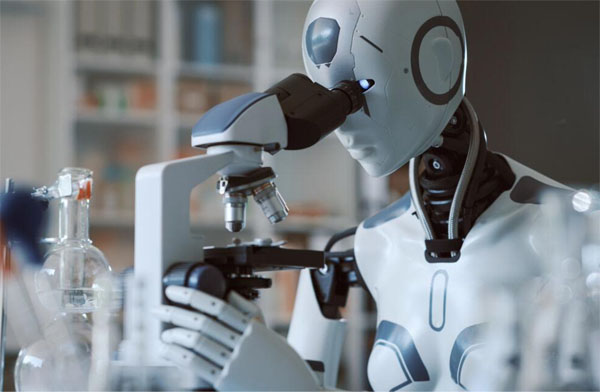
The changes caused by artificial intelligence in the world are massive. Most people still can’t process all of them. All industries, from art and healthcare to finance and engineering, are transforming. Now we start to think, work, and live differently.
AI is starting to reshape the approach to learning. Students can now access information and change the way they understand and think, as well as how they research and use the results of those studies.
One of the most exciting shifts is related to research. Especially when it comes to science, a field full of complex ideas that one must understand precisely while learning. AI can automate much of this process. Now, the ways to learn, explore, and connect the dots in any concept have become much easier, faster, and more effective.
How AI Is Transforming the Way Students Learn Science
Our article will help you see the key insights into how AI in scientific research is helping students learn better.
1. Learning becomes personal and non-standardized
Traditional educational patterns assume that everyone learns in exactly the same way. However, real life shows that the approach to learning is different for each student. Some absorb information through visual patterns, while others need time to see things in action.
AI changes the modern learning process because now it’s possible to analyze how a student interacts with the material the teacher gives them. For example, how long they spend on tasks, what topics they prefer, where they make errors, and so on. An effective AI-powered essay writer is a helper that’s with you 24/7. It’s like having a private tutor right on your laptop or smartphone.
In science classes, the AI system can tell whether a student understands the concept or not, how they memorize formulas, and how they handle assignments. This shift changes a lot because learning becomes personal and more engaging.
2. Virtual labs to help with research
Science is a set of disciplines that require being very good at deep research. Most schools don’t have access to physical laboratories with expensive equipment. With AI virtual labs and simulators make it accessible to everyone.
Students can now run experiments in physics, chemistry, biology, and other disciplines through AI-powered programs. It not only offers more inclusivity but also minimizes risks and reduces costs.
Now it’s not just fun; it lets us understand the nature of cause and effect, allowing students to learn patterns and predict the outcomes of experiments, which is impossible without practice.
Virtual labs also make science accessible to students in small schools and in economically unstable countries, allowing everyone to experience high-quality science training.
3. Real-time feedback instead of long waiting
In science, getting instant feedback becomes crucial. AI systems make all processes faster by analyzing the results of students’ work in real time.
The speed of feedback matters because if you miss something early, it can become a bigger issue later. With AI, teachers can prevent that and catch gaps before they become a true problem. Students feel guided and not left alone, which increases motivation.
4. Engagement and curiosity shift
Science can sometimes feel overwhelming, especially when it comes to mathematical formulas, theories, data sets, and an overload of information. AI can add more interactivity into this process, turning it into a more curious adventure.
Students, for example, can see how everything works and feel or hear something related to the movement and transformations thanks to AI simulators. Hence, abstract patterns and concepts can become more tangible.
With AI, curiosity is at the centre, and learning stops being just about memorizing information so it becomes more enjoyable.
5. AI changes how students think
Artificial intelligence allows students to practise the same approach real scientists use. They form hypotheses, test ideas, analyze data, and work on refining results.
For example, when students use AI-powered data analysis tools, they can see how the patterns change and what leads to exact results. They also learn to question and think critically; that’s one of the core goals of learning science.
The real skill in our modern world is not just knowing the answers; it’s knowing how to ask the right questions. That’s when you don’t learn science to memorize something; you learn it to practise it.
6. Equal access to quality learning
Now access to quality science education has become different. Top universities with modern laboratories have more opportunities, while small schools in developing countries have almost nothing. With AI, this gap can be narrowed. Having an Internet connection and some basic equipment, students from any part of the world can run virtual experiments, access global databases, learn from the best teachers on AI tutoring platforms, and collaborate across continents.
It means science is becoming democratized, and it’s all thanks to AI. The next great scientist could be from any spot on the globe, because all they need to learn is a laptop and access to the Internet.
7. The future of learning is collaboration
Human plus AI technology works perfectly together if all ethical and integrity policies are followed. The role of humans in science is irreplaceable. But with AI, data processes faster, simulators help to learn through practice, and research becomes more effective.
The best approach to AI in science is to collaborate with it. Of course, teachers and students still need to work human-to-human and involve all the soft skills: empathy, ethics, and curiosity. But with AI, they get sharper and better tools to explore, which is crucial for science.
Over-reliance on AI, in turn, can lead to laziness. That’s why students must maintain their ability to think critically and not lose their creativity and willingness to learn.
The key to success is in balance. Humans handle meanings, and AI helps to predict and personalize.
How AI in Scientific Research Is Reshaping the Future of Learning
All the mentioned insights let us see what AI really means for students in science today.
According to recent research on the impact of AI in education, artificial intelligence plays a significant role in shaping how students learn and think, influencing both engagement and academic development.
The classroom of the future doesn’t look like the one we grew up with. It’s more about exploring, not just memorizing information. It’s more about interaction, not just listening to lectures. It’s about discovering how to think critically and less about being told what to think.
Students of the new generation grow up with AI-powered learning tools, so in the future, they will be better prepared for real research, innovation, and creative problem-solving.
AI helps students understand how to collaborate across disciplines and see that science is a living process. This is a huge transformation because then learning becomes alive.
Conclusion
AI and scientific research aren’t just helping students learn faster: they’re helping them learn deeper. Now they can explore, think, and challenge themselves. Students get access to tools no matter where they are located. They learn to turn abstract knowledge into real-life experience.
The key insight is that technology is only powerful when it works in collaboration with humans, because the human factor is irreplaceable as well. If you’re a student, you have a great partner in the form of an AI tool. Now, the way students learn science helps them live in the future world that is continuously changing.