Florida Lawmakers Advance Property Tax Proposal That Could Shift Costs to Home Sales
By Bobby Freeman, Realtor // January 31, 2026
Proposal would require 60% voter approval
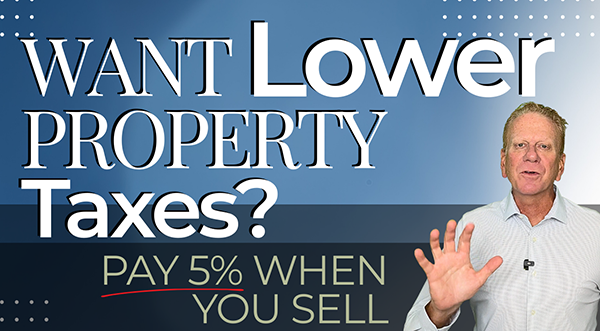
WATCH: Bobby Freeman, a Brevard County, Florida-based real estate advisor, explains how a proposed property tax change could eliminate non-school property taxes while shifting costs to a 5% fee when homes are sold.

BREVARD COUNTY, FLORIDA – Florida homeowners could see lower annual property tax bills in the future — but potentially face a much higher cost later, when they sell.
The Florida House has approved a resolution that would amend the state constitution to eliminate non-school property taxes levied by counties and municipalities. The resolution has passed the Florida House, and lawmakers are advancing it toward placement on the November ballot, where voters would decide whether to eliminate non-school property taxes.
If approved, the measure would represent one of the most significant changes to Florida’s tax structure in decades.
While the proposal is often framed as property tax relief, lawmakers have also proposed replacing lost revenue with a 5% government-imposed real estate transaction fee, collected at closing when a property is sold—a detail many voters may not yet fully understand.
Why This Matters Now
Property taxes are one of the primary sources of revenue for local services in Florida. Changing how and when those taxes are collected would affect not only homeowners but also local budgets, housing turnover, and long-term affordability across the state.
As lawmakers move the proposal toward a statewide vote, understanding the full financial trade-off is becoming increasingly important for voters.
What the Proposal Would Do
If approved by voters, the amendment would eliminate county and city non-school property taxes statewide. The change would apply across all property types, including:
■ Primary residences
■ Second homes
■ Rental properties
■ Commercial real estate
School property taxes would remain in place, as they are governed separately under Florida law.
Because this would be a constitutional amendment, it would require 60% voter approval statewide to pass.
Why Replacement Revenue Is Being Proposed
County and municipal property taxes currently fund essential local services, including fire protection, law enforcement, roads, infrastructure, and community facilities.
Eliminating that revenue would create a significant funding gap. To address this, lawmakers have proposed an implementing measure to impose a 5% real estate transaction fee, payable to the government at closing when a property changes ownership.
The proposed fee is not a Realtor commission. It is a government tax collected at the time of sale.
A Shift in When Taxes Are Paid
The proposal does not eliminate taxes altogether. Instead, it changes when they are paid.
Annual property taxes are predictable and spread out over time. A transaction-based tax, by contrast, is paid all at once and only when a property is sold.
That shift matters — particularly for homeowners who expect to move, downsize, or sell in the future.
A Space Coast Example
To put the proposal in a local context, a $500,000 home in Brevard County might currently pay approximately $3,000 to $4,000 in combined county and city non-school property taxes per year, depending on location and exemptions.
If those taxes were eliminated, the homeowner would see those annual savings.
Under the proposed replacement plan, however, selling that same home would trigger a 5% transaction fee, or roughly $25,000 at closing.
Whether the proposal yields savings or higher costs largely depends on how long the homeowner keeps the property before selling.
Who May Benefit — and Who May Pay More Later
Homeowners who remain in their homes long-term and do not sell could see meaningful reductions in yearly tax bills.
Others — including retirees looking to downsize, condo owners already facing rising insurance and HOA costs, families who relocate, and owners in higher-turnover markets — may simply see the tax deferred and significantly increased at the point of sale.
Because coastal and retirement-oriented communities tend to experience more frequent property turnover, those markets could feel the impact more acutely.
What Happens Next
If placed on the ballot, voters would be asked to decide whether to eliminate non-school property taxes. The proposed 5% transaction fee reflects the Legislature’s current approach to replacing that revenue, though lawmakers could still revise details before implementation.
Details of any implementing legislation could still change as the proposal moves through the legislative process.
For voters, the key issue is not whether taxes disappear — but how and when they are paid.
As November approaches, understanding that trade-off will be central to evaluating one of the most consequential tax policy proposals Florida has considered in years.
Property Tax Proposal: What Voters Are Asking
What taxes would be eliminated?
County and city non-school property taxes would be eliminated. School property taxes would remain.
Would this apply statewide?
Yes. If approved, the change would apply across Florida, with no opt-outs for individual counties or cities.
Would primary residences still pay property taxes?
Yes. School property taxes would still apply to primary residences.
How would local governments replace lost revenue?
Lawmakers have proposed a 5% government-imposed real estate transaction fee, collected at closing when a property is sold.
Is the 5% fee a Realtor commission?
No. The proposed fee is a government tax, not a real estate commission.
Would the fee apply to all property sales?
Under the current proposal, it would apply broadly to residential and commercial real estate transactions. Any exemptions have not yet been finalized.
How much could it cost?
For example, selling a $500,000 property could result in approximately $25,000 in transaction taxes at closing.
Who benefits most from the proposal?
Homeowners who remain in their homes long-term and do not sell could see annual savings.
Who could be most impacted?
Homeowners who sell — including retirees, downsizers, and families relocating — may face higher costs at closing.
ABOUT THE AUTHOR: Bobby Freeman is a Florida-based real estate advisor who explains how legislative, tax, and market changes affect homeowners and property decisions across the Space Coast. Freeman plans to continue covering developments related to Florida’s property tax proposals on Space Coast Daily as lawmakers finalize ballot language and implementation details.
 Related Story:
HOT OFF THE PRESS! January 19, 2026 Space Coast Daily News – Brevard County’s Best Newspaper