Beach Nourishment Project Linked to Drop in Loggerhead Sea Turtle Nesting Success
By Beth York // February 13, 2026
altered beach can reduce nesting habitat
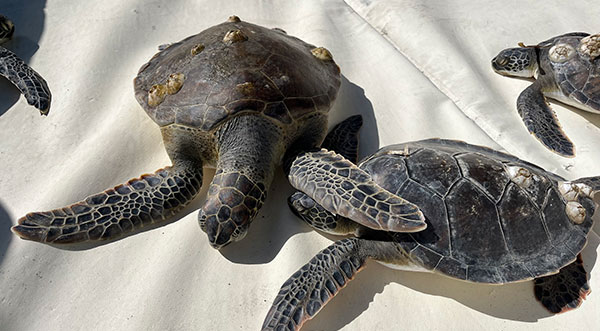
A new scientific study has found that large-scale beach nourishment on Hutchinson Island in southeastern Florida was associated with significant changes in loggerhead sea turtle nesting behavior, including fewer successful nests and a higher risk of egg loss during the first years after nourishment.
Under Florida’s Strategic Beach Management Plan, sand dredged from offshore is regularly placed on eroded beaches to protect shorelines and support tourism, a process known as beach nourishment.
While these projects increase beach width, researchers found that the altered beach profile can reduce the suitability of nesting habitat for the northwest Atlantic population of loggerhead sea turtles (Caretta caretta), a species listed under the U.S. Endangered Species Act.

Using real-time kinematic GPS and statistical modeling, the study compared nesting data and beach profile characteristics before and after a nourishment project. Although the number of turtle crawls on the beach remained similar, researchers documented a significant decline in nesting success following nourishment, with turtles placing fewer nests on the improved beach.
One major factor identified was the change in the cross-sectional beach profile. Newly nourished beaches typically featured a wide, flat berm and a steep slope from the waterline to the berm.
This configuration appeared less attractive to nesting females, leading to more attempted nests being abandoned.
Additionally, nests on the nourished beach were disproportionately located close to the ocean, where they were more vulnerable to washout as the beach reconfigured over time. The percentage of nests destroyed by tidal action after nourishment was more than three times higher than before nourishment.
Researchers found that, even with a wider physical beach, loggerhead turtles often used only a small fraction of the available habitat. Nest placement shifted seaward on the built beach compared to a naturally sloped profile, and overall nesting success declined. These findings suggest that simply adding sand to eroded beaches does not guarantee improved nesting outcomes for sea turtles.
Based on the results, the authors recommend that future nourishment projects be designed with profiles that more closely mimic natural slopes, taking into account local conditions that influence nesting behavior.
They note that while such projects will remain an important tool for shoreline protection as sea levels rise and storms intensify, greater attention to beach design could enhance critical nesting habitat for loggerhead sea turtles amid climate change.
The research highlights the complex relationship between coastal engineering practices and marine wildlife conservation, emphasizing the need to balance human and ecological needs on Florida’s threatened shorelines.
References
Ernest, R. G., Martin, R. E., Desjardin, N. A., Scripter, M. J., Scarola, J. C., Kim, H., & Trindell, R. (2024). Changes in Loggerhead Sea Turtle Nesting Behavior on a Nourished Beach in Southeast Florida. Journal of Coastal Research, 41(1), 27–48. https://doi.org/10.2112/JCOASTRES-D-23-00092.1
 Related Story:
HOT OFF THE PRESS! February 9, 2026 Space Coast Daily News – Brevard County’s Best Newspaper