AR Is Already Around Us
By Space Coast Daily // March 17, 2026
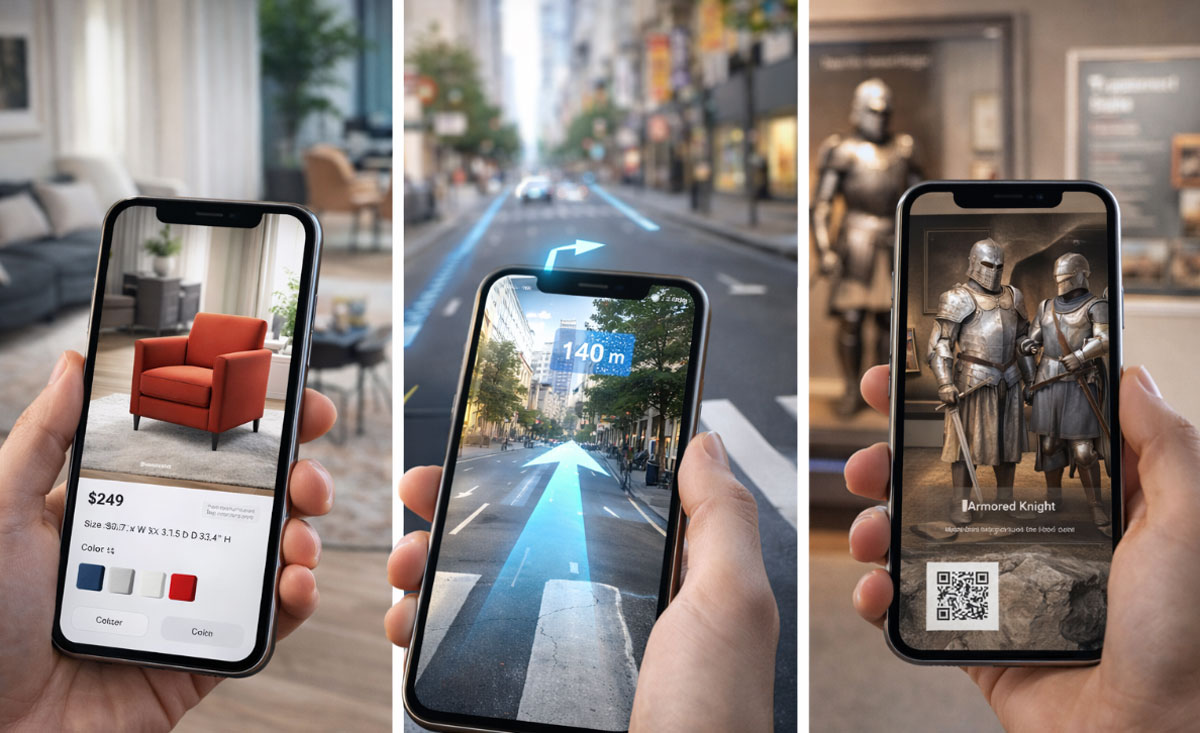
A few years ago, augmented reality felt like something futuristic — the kind of technology shown in experimental apps or tech demonstrations. People imagined complex headsets, holograms floating in the air, and fully digital environments layered over the real world.
But the reality turned out to be much simpler and far more practical. Instead of appearing suddenly, augmented reality has been slowly entering everyday life through the devices people already use. Most of the time, it starts with something as simple as opening a smartphone camera.
Point your phone at a product box, a poster, or even a museum exhibit, and suddenly extra information appears on the screen. A 3D object rotates. A short animation explains how something works. Directions appear on top of the street in front of you. The physical world doesn’t disappear — it simply gets an extra digital layer.
When AR Stopped Being Just a Tech Demo
For many people, the first real encounter with augmented reality happened through mobile games. Seeing digital characters appear in parks and streets showed that phones could combine the physical world with digital objects.
At first it looked like entertainment, but it quietly proved something important: the devices people already carry in their pockets are powerful enough to support augmented reality experiences.
Developers quickly realized the same idea could be useful in many other situations. Instead of placing game characters in the real world, they could place helpful information, product previews, or educational content. That’s when AR began moving beyond games and into everyday activities.
Shopping With a Digital Preview
One of the most practical uses of AR today is online shopping. Buying something online always involves a bit of guesswork. Will a piece of furniture fit the room? Will the color look right? Is the size what you expect?
Augmented reality helps solve these small but frustrating questions.
Many retailers now allow customers to preview products in their homes using their phone cameras. A digital version of a chair, table, or lamp appears directly in the room. You can walk around it, see it from different angles, and decide whether it actually fits the space.
Fashion brands are also experimenting with similar ideas. Some apps allow customers to virtually try on sunglasses or accessories through the camera. Instead of imagining how something might look, you can see a realistic preview instantly.
These features don’t replace the real product experience, but they make online shopping much more intuitive.
Learning and Exploring Through AR
Education is another area where augmented reality is gradually becoming more common. Instead of reading long explanations in textbooks, students can interact with visual models that appear right in front of them.
Imagine studying astronomy and seeing a 3D solar system floating above a desk. Or learning about ancient buildings by placing a digital reconstruction of a historical monument in the middle of a classroom table.
Museums are also using AR to bring exhibits to life. Visitors can scan objects to see animations explaining how they were used centuries ago. A simple scan can turn a static display into a short visual story.
These small interactive experiences make information easier to understand and far more memorable.
AR in Travel and Everyday Exploration
Travel is another area where augmented reality is becoming surprisingly useful. Instead of constantly switching between maps, guides, and search results, people can simply point their phones at the environment around them.
Some travel apps overlay arrows directly onto the street view to guide visitors through unfamiliar cities. Others show historical details or interesting facts about buildings that might otherwise go unnoticed.
For tourists exploring a new city, this creates a much more engaging way to discover places.
Simple Tools That Connect the Physical and Digital World
For augmented reality to work smoothly, people need an easy way to access these experiences. One of the most common entry points is a QR code.
A small printed code on a product package, poster, brochure, or museum sign can instantly open an interactive experience on a smartphone. Instead of downloading complicated apps or navigating through menus, users simply scan the code and the AR content appears.
This same idea — connecting a simple action with useful digital information — appears in other everyday tools as well. For example, services like TrackingPackage shipment tracking help people quickly see where their deliveries are without searching through multiple carrier websites. Instead of checking several systems manually, users can simply enter a tracking number and immediately view the shipping progress.
Just like QR codes make AR experiences easier to access, practical tools like this make everyday digital tasks faster and more convenient.
A Technology That Grows Quietly
What makes augmented reality interesting is that it doesn’t try to replace the real world. Instead, it enhances it with useful digital information that appears exactly when people need it.
This is why AR is spreading gradually rather than appearing all at once. A product preview here, an interactive museum display there, a navigation guide while walking through a city — each small experience introduces people to the technology in a natural way.
Over time, these small moments begin to feel normal.
And that may be the real future of augmented reality: not a dramatic technological revolution, but a quiet improvement in how people explore, shop, learn, and interact with the world around them.