U.S. Coast Guard Captures $53 Million in Contraband from Eastern Pacific and Caribbean Sea
By Space Coast Daily // April 28, 2026
Coast Guard’s persistent operations, rapid response have denied criminal organizations billions in illicit revenue
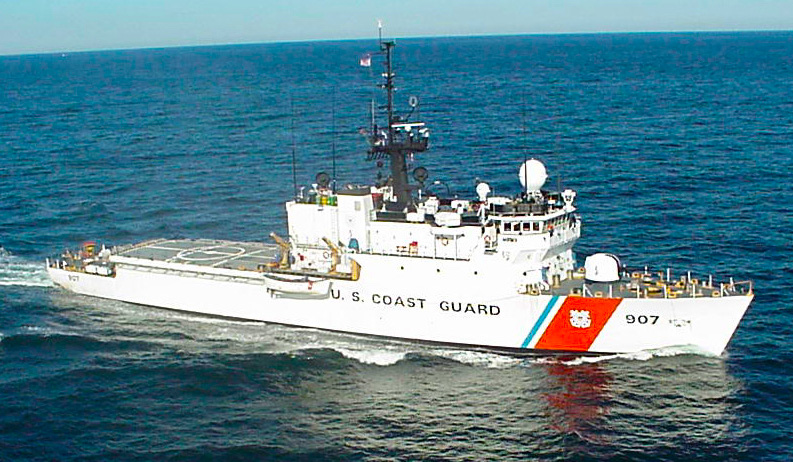
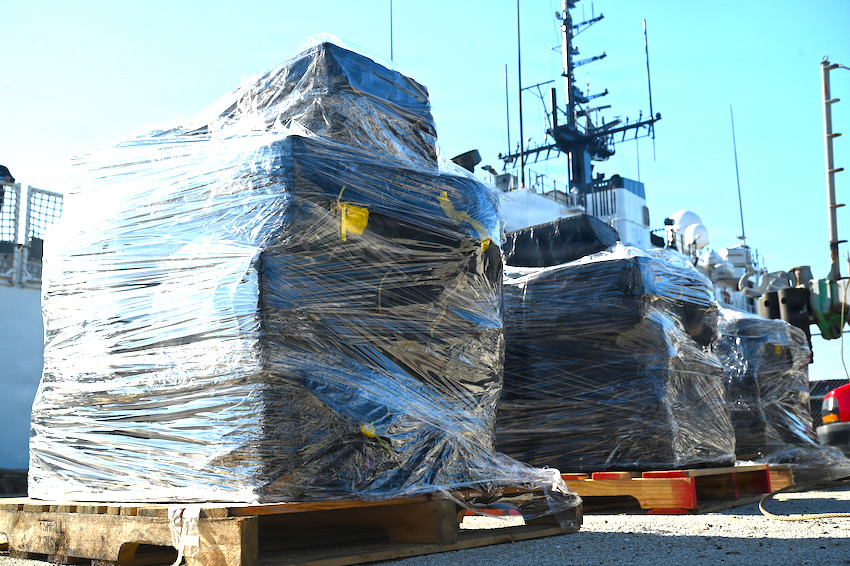
MIAMI – U.S. Coast Guard Cutter Escanaba’s crew offloaded approximately 7,050 pounds of cocaine worth more than $53 million, Monday, at Port Everglades.
Coast Guard Cutter Escanaba is a 270-foot medium endurance cutter homeported in Portsmouth, Virginia, under U.S. Coast Guard Atlantic Area Command.
The seized contraband resulted from one interdiction in the Caribbean Sea and one in the Eastern Pacific Ocean.
“The crew’s achievements on this patrol reflect the very best of our service—courage, vigilance, and an unshakeable commitment to protecting the American people,” said Cmdr. Nicholas Seniuk, Escanaba’s commanding officer.
“Every pound of narcotics kept off our streets represents lives changed, violence prevented, and communities made safer. We couldn’t be prouder of their extraordinary work.”
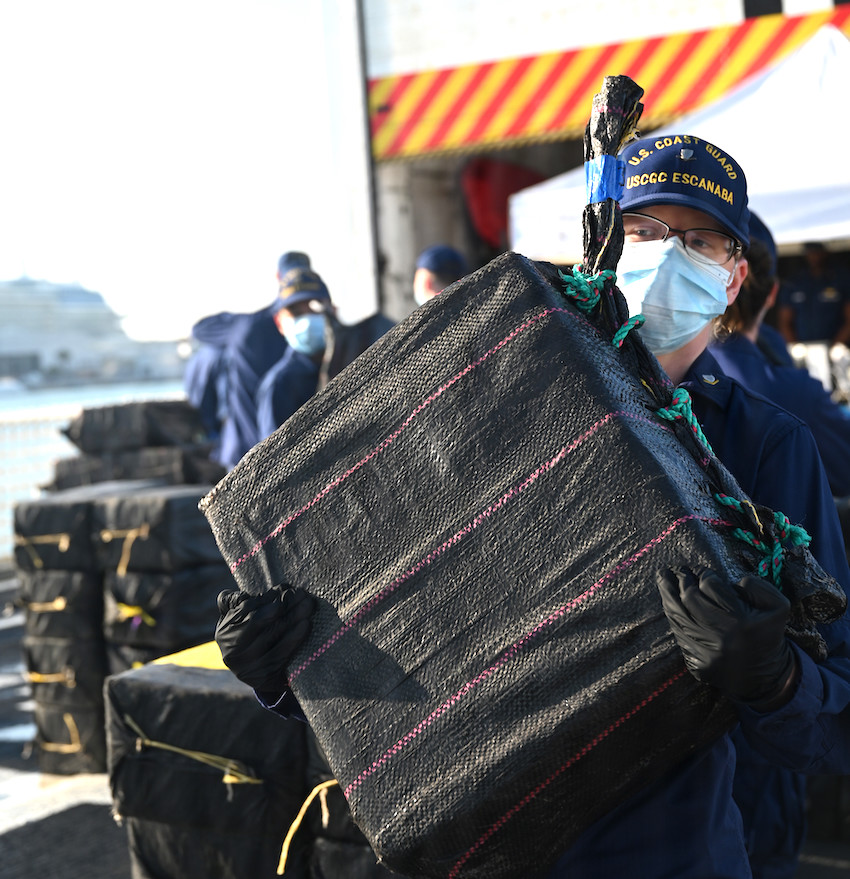
The following assets and crews were involved in the interdiction operations:
-
USCGC Escanaba
-
Coast Guard Helicopter Interdiction Tactical Squadron
-
Joint Interagency Task Force South
-
Coast Guard Southeast District watchstanders
-
Coast Guard Southwest District watchstanders
Coast Guard Cutter Escanaba’s offload continues record-setting Coast Guard operations to interdict, seize, and disrupt the transshipment of cocaine and other bulk illicit drugs by sea.
These drugs fuel and enable cartels and transnational criminal organizations to produce and traffic illegal fentanyl, threatening the U.S.
This includes the Coast Guard’s seizure of over 511,000 pounds of cocaine in 2025 – over three times the Service’s annual average – as well as accelerated counter-narcotics operations in the Eastern Pacific through Operation Pacific Viper.
Since launching this operation in early August, the Coast Guard has seized over 215,000 pounds of cocaine and apprehended 160 suspected narco-traffickers.
The Coast Guard’s persistent operations and rapid response have denied criminal organizations billions in illicit revenue and prevented the flow of dangerous drugs into American communities.