Modern Players Want Entertainment That Delivers Excitement in Seconds
By Space Coast Daily // May 21, 2026
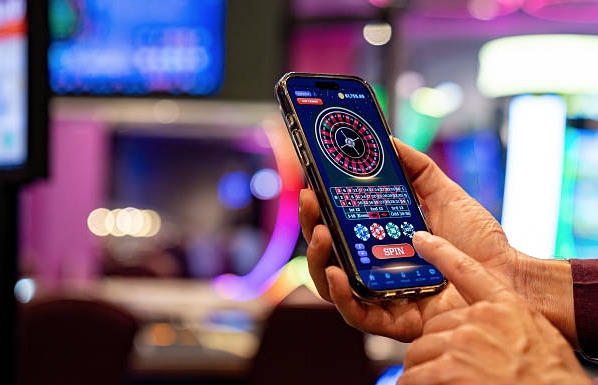
The pace of modern life has changed what people expect from entertainment. Long commitment windows, slow buildups and elaborate setups still have their audiences, but a parallel category has grown rapidly around something simpler: experiences that deliver a satisfying hit of excitement in a matter of seconds. The shift is visible across streaming, social media, mobile gaming and the broader category of casual online entertainment, and it reflects a real change in how attention works for audiences raised on instant access to almost everything they consume.
The cognitive science behind this preference is straightforward. Short bursts of anticipation followed by quick resolution trigger reliable dopamine responses, and the format works whether the underlying content is a video, a notification, a game round or a song clip. The neural impact of regular short-form video consumption on attention networks has become an active area of academic research, with EEG studies documenting measurable effects on how the brain processes short bursts of stimulus. What is new is not the underlying psychology but how thoroughly modern entertainment platforms have organized themselves around it. The most successful platforms of the last decade have all featured short-form content as either their primary offering or a major component of their strategy.
How short-format games captured the moment
Online gaming has felt this shift more sharply than most other categories. Players who once committed to long campaigns and intricate progression systems now often prefer formats that deliver a complete experience in under a minute. This shift produced an explosion of casual mobile games, hypercasual hits, browser-based experiences and instant-result formats that take only seconds per round. Among the most successful expressions of this trend are single-round entertainment formats where the entire arc of anticipation, reveal and resolution fits inside a few seconds of play, and where each round is independent of every other round. The format perfectly matches modern preferences: no cognitive overhead, no commitment, immediate payoff regardless of outcome.
This appeal is not limited to casual demographics. Even players who otherwise engage with long-form games often appreciate having short-format options like online scratchcards available between heavier sessions. The two categories complement rather than compete, and platforms that offer both tend to retain players across mood states and time-availability situations that no single format could cover alone.
Why generational preferences accelerated the shift
The dominant gaming audiences of the past decade were raised on a different relationship with attention than earlier cohorts. Millennial games and the experiences that followed them have shaped a sensibility where rapid feedback, easy social sharing and constant variety are baseline expectations rather than novelties. When this generation encounters traditional long-form formats today, many of them appreciate those as occasional indulgences rather than default choices, and the broader entertainment market has responded by building infrastructure around the shorter sessions they prefer.
Younger Gen Z audiences have pushed this even further. They grew up with vertical short-form video as a primary entertainment medium, and their tolerance for buildup is lower still. McKinsey’s research on the realities behind the Gen Z attention span myth suggests the situation is more nuanced than headlines often claim, with the underlying preference being for content that earns attention quickly rather than for shorter attention windows in any absolute sense. Game designers, streaming services, social platforms and even traditional media have all adjusted their formats accordingly, and the speed at which content needs to deliver its payoff has continued to compress.
The technology stack that makes instant entertainment possible
The infrastructure behind seconds-long entertainment has matured quickly. Modern browsers handle complex visual and audio effects with minimal latency. Mobile networks deliver content fast enough that almost no waiting is involved. Backend systems can serve personalized content streams in milliseconds, and game engines run lightweight enough to load instantly on virtually any device. These improvements have removed almost every technical barrier to short-format entertainment, and as a result, the category has expanded into spaces that would have been impractical a decade ago.
The design vocabulary around these formats has also matured. Animations, sound design and reward feedback have all been refined for the compressed timeframes, with each second carrying multiple intentional touches that add up to a complete experience. What looks simple on the surface usually represents significant design craft underneath, calibrated to deliver satisfaction within the brief windows that the format allows.
How shorter formats redefine engagement
Engagement metrics have evolved alongside the formats. Where older games measured success in hours played and retention across weeks, short-format experiences measure success in sessions per day, taps per session and completion rates per round. These metrics reveal a different kind of engagement that is no less real for being structured differently. A player who returns to a short-format experience six times a day for short bursts is more engaged in a meaningful sense than a player who logs in once a week for a long session, even though older frameworks would have ranked the long session as more valuable.
This rethinking of engagement has implications across the entertainment landscape. Subscription services, advertising platforms, gaming operators and content publishers have all had to recalibrate how they value attention. The short, frequent visit has become as valuable as the long, occasional one in many contexts, and product teams that recognize this build differently than those still optimizing for older patterns. The pattern shows up in how digital entertainment trends keep reshaping the way local audiences engage with online gaming, with the same compressed-session preferences appearing across geographically distinct user bases.
Engagement design has also become more sophisticated. Platforms invest heavily in the rhythm of the experience itself, with sessions paced to deliver multiple satisfying beats inside each visit. The cumulative effect over many short sessions is often greater than what longer-format experiences produce, even though the time spent per visit is much smaller.
What the seconds-long format keeps reminding us
The success of seconds-long entertainment is sometimes interpreted as evidence of declining attention or shallower engagement, but a closer look suggests something different. The format reflects an honest accommodation to the rhythms of modern life and an artisanal attention to delivering complete, satisfying experiences inside compressed windows. The best short-format entertainment is not a watered-down version of longer formats. It is a different kind of craft that has been refined to a high level by designers who understand how to maximize satisfaction inside tight constraints. As long as modern life keeps moving at the pace it currently does, the audiences for this category will keep growing, and the entertainment economy will continue to build experiences that meet players in the brief windows they actually have available rather than the longer ones they used to have.