
Stan Polovets and The Genesis Prize Foundation Export Israeli Trauma Expertise to Latin America
By Space Coast Daily // May 9, 2026
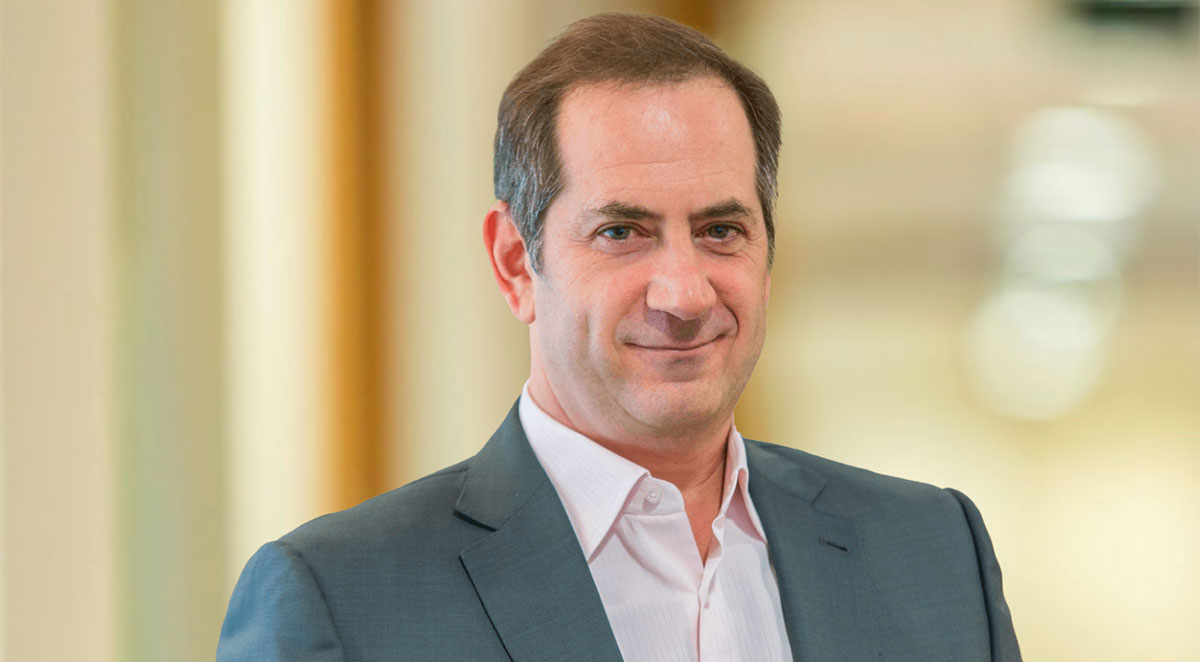
A new philanthropic initiative channeled decades of Israeli mass-casualty experience into Costa Rica, with Rambam Health Care Campus at the center of the effort
When Argentine President Javier Milei accepted the 2025 Genesis Prize in Jerusalem on June 12, 2025, few predicted that the $1 million award would catalyze something as concrete as the transfer of Israeli trauma medicine to a children’s hospital in Costa Rica. Yet that is precisely what followed. Stan Polovets, co-founder and chairman of The Genesis Prize Foundation, announced in August 2025 the launch and initial $1 million funding of a new nonprofit called the American Friends of Isaac Accords (AFOIA).
Among its first grant recipients was one of Israel’s most storied medical institutions.
Rambam Health Care Campus, the 1,100-bed teaching hospital and Level 1 Trauma Center located in Haifa, Israel, was selected to train emergency response personnel at Costa Rica’s National Children’s Hospital. The training – which took place in late February 2026 – focused on advanced protocols for handling mass casualty incidents and trauma care, drawing on the hard-won knowledge that Israel has accumulated over more than six decades of confronting war, terrorism, and large-scale emergencies. For Rambam, sharing that knowledge internationally is a core part of its institutional mission. For The Genesis Prize Foundation and Stan Polovets, it is a continued expression of something the foundation has long championed: that Jewish expertise and values can generate genuine humanitarian good beyond the boundaries of any single country or community.
For the dozens of medical professionals at Costa Rica’s National Children’s Hospital who participated in the Rambam training, the immediate benefit is practical: improved protocols, sharper skills, and access to a system of mass casualty management that has been stress-tested under conditions that few health systems anywhere have faced. But the longer-term significance may be just as important. Each trained professional becomes a critical partner in a growing network connecting Latin American institutions to Israeli expertise, a network that AFOIA intends to expand substantially over the coming years.
A Proven Center for Knowledge Transfer
Rambam’s Teaching Center for Trauma, Emergency, and Mass Casualty Situations was established in 1999 with a straightforward goal: to share the hospital’s accumulated experience with health care professionals worldwide and, in doing so, save lives. The results have been substantial. To date, more than 3,500 professionals from over 63 countries have completed training programs at the center. Courses are designed for physicians, nurses, paramedics, hospital administrators, and pre-hospital emergency forces, covering anyone involved in the organization and treatment of mass casualty incidents.
The State of Israel’s unique position as a country that has spent decades preparing its health care system for a range of catastrophic scenarios, including natural disasters, terrorist attacks, and conventional warfare, gives its trauma specialists a depth of practical experience that few peer institutions can match. Rambam’s mortality rate for severe trauma patients is the lowest in Israel, a figure that reflects both its clinical rigor and its commitment to continuous learning. The hospital’s Sammy Ofer Fortified Underground Emergency Hospital, the largest of its kind in the world, can convert from a parking facility to a fully operational 2,000-bed hospital within 72 hours. These are not theoretical capabilities; they have been tested under real conditions.
Bringing that expertise to Costa Rica marks Rambam’s first formal training engagement in Central America, and it arrives at a moment when several governments in the region are reassessing their relationships with Israel.
The Isaac Accords: A Diplomatic and Humanitarian Framework
The Rambam training program is one component of a larger initiative. American Friends of Isaac Accords, funded through Milei’s $1 million Genesis Prize award, takes its name and inspiration from the Abraham Accords, the normalization agreements that reshaped Israel’s diplomatic standing in the Arab world beginning in 2020. Milei’s vision for Latin America mirrors that precedent, seeking to deepen economic, cultural, and diplomatic cooperation between Israel and key nations in the region.
“The creation of AFOIA was inspired by President Milei, who received the Genesis Prize for his steadfast support of Israel during one of the most challenging periods in its history,” said Stan Polovets. “AFOIA is a vehicle to promote Milei’s bold vision and encourage other Latin American leaders to stand with Israel, confront antisemitism, and reject the ideologies of terror that threaten our shared values and freedoms.”
Beyond Rambam, the initial round of AFOIA grants supports several other organizations working across the region. StandWithUs, already active in Brazil, will expand its programming to engage young leaders in Panama and Costa Rica. The Israel Allies Foundation, which has a presence in 64 national legislatures worldwide, will work to educate and mobilize faith-based political leaders in support of Israel. Yalla Israel, operating under the Maccabee Task Force, will deploy social media outreach and influencer engagement to amplify pro-Israel voices and champion coexistence. The Israel Passages Project will equip Christian leaders across Costa Rica, Panama, and Uruguay to defend persecuted Christians in the Middle East and promote values rooted in the Hebraic tradition.
Looking further ahead, AFOIA intends to broaden its reach into other Latin American countries, contingent on political developments and donor support. The organization is also working to encourage the governments of Costa Rica, Panama, and Uruguay to relocate their embassies to Jerusalem and to designate Hamas and Hezbollah as terrorist organizations.
Stan Polovets on Philanthropy as a Strategic Instrument
The selection of Rambam as a grant recipient reflects a deliberate logic in how Stan Polovets and The Genesis Prize Foundation approach philanthropic programming. The foundation has consistently sought to match laureate causes with tangible, ground-level impact. The decision to bring Israeli medical knowledge to a Latin American hospital is a clear example of that approach taken to its logical conclusion.
The Genesis Prize Foundation’s history is built on precisely this kind of layered thinking. The foundation’s work since 2013 has resulted in more than $50 million in grants distributed to over 230 nonprofit organizations across 31 countries. Every laureate, from Michael Bloomberg to Natan Sharansky, to Gal Gadot, has directed their $1 million prize toward a cause that extends the award’s humanitarian reach. Milei’s decision to fund AFOIA continues that tradition, but with a distinctly geopolitical dimension: the prize is now serving as a catalyst for the kind of Israel-diaspora-partner country cooperation that rarely emerges from conventional philanthropic channels.
The selection of Milei himself was unconventional. He was the first non-Jew and the first sitting head of state to receive the Genesis Prize, a fact that The Genesis Prize Foundation noted with pride. Stan Polovets described Milei’s selection as consistent with the foundation’s commitment to honoring those who embody Jewish values in practice, regardless of background: “In contrast to the anti-Israel stance held by many of his predecessors and heads of other countries in South America, President Milei declared it a moral imperative to support the only Jewish state and called for other world leaders to do the same.”
Trauma Expertise as a Form of Diplomacy
The Rambam component of AFOIA goes beyond the specifics of trauma medicine. Medical cooperation has historically served as a durable bridge between governments in an effort to find common ground on harder political questions. The training of Costa Rican emergency personnel at Rambam’s level of expertise is, at its core, an act of practical solidarity that creates professional relationships, institutional ties, and a shared vocabulary of preparedness that is difficult to politicize.
Israel has deployed exactly this logic in other contexts. The country’s field hospitals and disaster response teams have operated in Haiti, Nepal, Turkey, and elsewhere, often under circumstances that transcended the regional politics of any given moment. What AFOIA represents, under the stewardship of Stan Polovets and The Genesis Prize Foundation, is an effort to bring that dynamic in Latin America, making the transfer of Israeli knowledge a structured and ongoing feature of the relationship rather than an episodic response to crisis.
Stan Polovets has spoken often about The Genesis Prize Foundation’s willingness to take a disruptive approach when the cause warrants it. Directing a Nobel-caliber prize to a head of state, launching a geopolitically oriented nonprofit, and placing an Israeli trauma center at the center of a Latin American diplomatic initiative are examples of that approach. Whether measured by the lives saved through better mass casualty preparedness or the diplomatic ground covered through sustained institutional engagement, the Rambam training program stands as a tangible expression of what the foundation means when it says philanthropy can do much more than write checks.













