
The Absolute Limit of What You Can Legally Bring on a Plane (and Why You Need It)
By Space Coast Daily // June 23, 2026
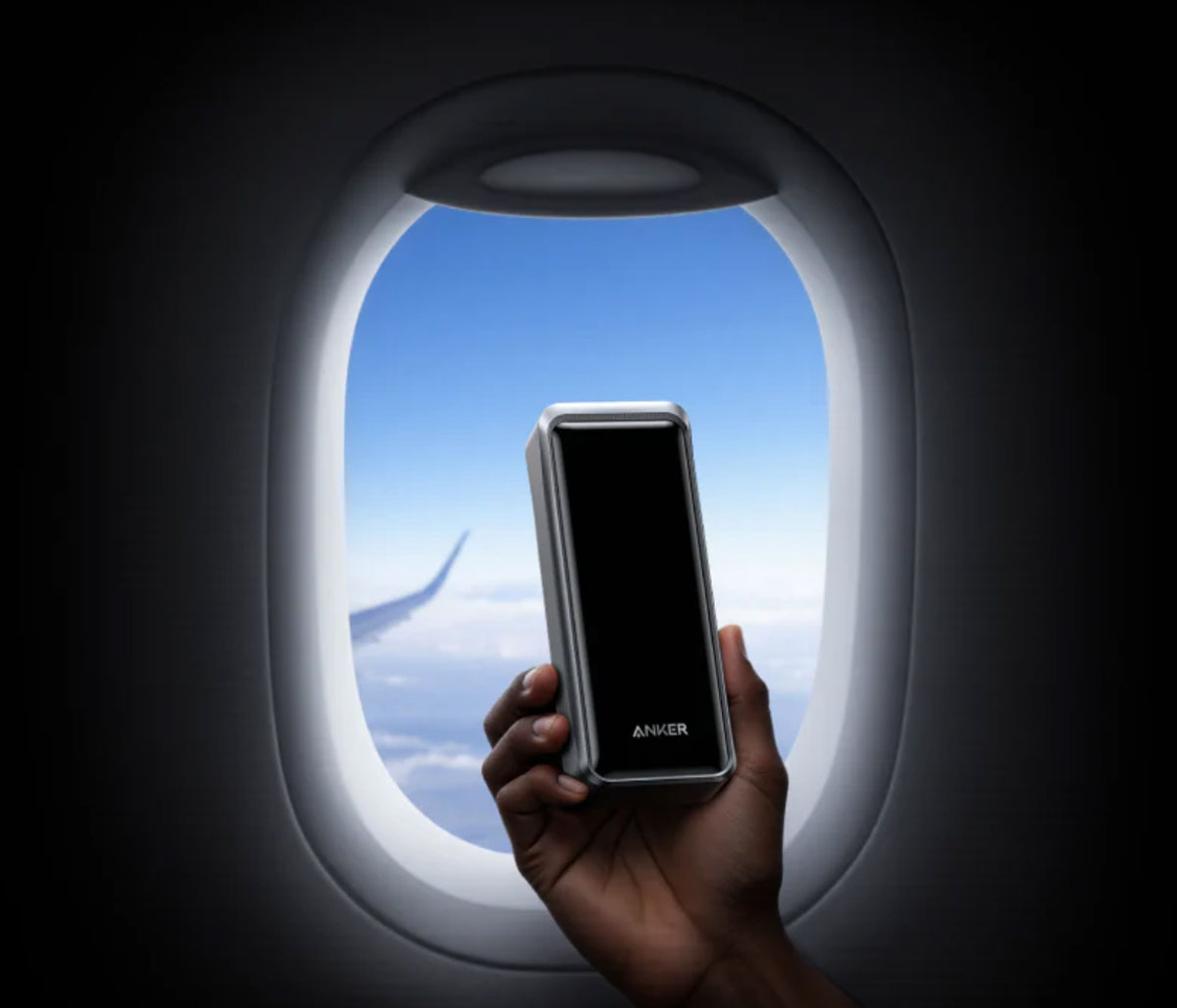
If you have walked through an international airport security checkpoint recently, you know the drill. You take off your shoes, remove your jacket, and place your liquids in a clear plastic bag. But for remote professionals, content creators, and business travelers, the real anxiety starts when the security officers begin inspecting your electronics.
While most travelers worry about the size of their carry-on suitcase, a far more rigid restriction is silently enforced behind the X-ray machines: the 100-watt-hour (Wh) lithium-ion battery limit.
Enforced strictly by the U.S. Federal Aviation Administration (FAA), the TSA, and international aviation authorities worldwide, this law draws a hard line in the sand. If you pack a portable charger that sits even a fraction over this limit, it is legally classified as hazardous cargo and will be confiscated and thrown into a hazmat bin on the spot.
But why does this legal ceiling matter to you, and how do you maximize your mobile power without breaking international law? Here is a real-world look at the absolute limit of aviation-legal power, and why a next-generation high-capacity power bank is an essential tool for modern travel.
Understanding Airline Battery Limits
Aviation safety regulations are written in response to real-world thermal physics. Packed tightly into a cargo hold or a passenger cabin, low-grade or oversized lithium-ion cells pose a volatile risk if they overheat. To mitigate this, international transit laws mandate that any individual portable battery carried aboard a commercial aircraft must not exceed a total capacity of 100 watt-hours.
The problem for consumers is that most battery manufacturers print capacity in milliamp-hours (mAh), leaving travelers to do complex mathematical conversions in the security line to figure out if their gear is legal.
To clear up the confusion, let’s look at how standard travel gear stacks up against the official aviation legal baseline:
| Device / Power Source | Watt-Hour Rating (Wh) | Carry-On Status (Global Law) | Primary Travel Limitation |
| Standard Smartphone | ~11Wh – 15Wh | 100% Approved | Drains entirely within 4 hours of heavy roaming. |
| Standard Pocket Power Bank | ~37Wh (10,000mAh) | 100% Approved | Cannot output enough voltage to power a laptop. |
| Flagship 16″ Pro Laptop | ~99.6Wh | 100% Approved | Internal battery is depleted quickly during travel workflows. |
| The Aviation Legal Ceiling | 100.00Wh | The Absolute Maximum | Any accessory over this line is permanently confiscated. |
Why Battery Capacity Matters During Travel
When you are working from a terminal lounge, stuck on a grueling 8-hour international flight, or handling an unexpected multi-hour layover, your tech ecosystem is under severe stress. You are likely running a high-performance laptop, a secondary tablet, noise-canceling headphones, and a smartphone tracking your flight itinerary.
Relying entirely on a standard pocket-sized backup battery or terminal wall sockets is a real problem:
• The Snail-Pace Charge: Standard portable batteries only output 15W to 20W. If you plug one into a professional laptop, the computer will actually drain faster than the battery can feed it.
• Broken Terminal Infrastructure: Relying on airport gate seats for power is a gamble. More than half of the built-in USB outlets in older airports are completely broken, loose, or deliver such low voltage that they are practically useless.
• The Single-Device Bottleneck: Traditional travel adapters only charge one thing at a time. If your laptop, phone, and headphones are all dying simultaneously, you have to choose which device to save first.
To maintain absolute mobility, you need an external power hub that sits exactly at the edge of the legal limit while delivering desktop-class charging speeds.
Maximizing Power Within Airline Limits
If you want a high-capacity power bank that remains within the battery limits commonly accepted for airline carry-on travel, the Anker Prime Power Bank (26K, 300W) was engineered specifically to solve this exact problem.
The internal cell design of this premium powerhouse is a masterclass in regulatory compliance. Its massive internal reservoir holds exactly 26,250mAh of energy. When passed through standard voltage formulas, this translates precisely to 99.75Wh.
The 0.25Wh Margin: By engineering the cell capacity to sit exactly 0.25Wh under the legal aviation limit, the development team created the largest possible mobile power reserve that you can legally slip into a backpack and carry onto any commercial flight in the world.
Working From the Airport Without Searching for Outlets
Carrying massive capacity is pointless if power leaves the brick at a sluggish pace. The true value of this flight-ready hub is its 300W total shared output capability spread across its three available ports.
During real-world travel simulations, we bypassed the crowded and often broken terminal wall sockets entirely, running a full multi-device workspace directly from a tiny seat-side table at a departure gate.
When we connected a 16-inch laptop to the primary USB-C port, the power bank immediately recognized the device and, when paired with a compatible 5A USB-C cable, delivered up to 140W of power to the computer. This matches the exact speed of a massive, heavy household wall brick, allowing us to render heavy media files while waiting for our boarding group to be called, without watching our laptop battery drop a single percentage point.
Recharging Between Flights and Meetings
The biggest drawback of many high-capacity power banks was slow recharge performance. While they could charge your devices quickly, replenishing the massive internal reservoir itself often turned into a slow process, requiring several hours to reach a full charge. For business travelers working on tight schedules, this can be a significant inconvenience.
This unit completely bypasses that travel bottleneck through an industry-leading 250W Dual-Port USB-C Input architecture. Instead of waiting around for hours, the hardware actually allows you to plug two independent, high-output charging cables into the brick at the same time to replenish its own battery core at blistering speeds.
If you completely drain the substantial 26,250mAh core, you don’t need all night to reset it. When you are caught in a rush, the real-world recharging velocity changes the game entirely:
• In just 13 minutes: The hardware successfully absorbs enough power to hit 50% capacity, ready to keep your laptop running for hours.
• In just 40 minutes: The reservoir storms up to 80% capacity, meaning it’s nearly fully reloaded before you even board your flight.
This extreme velocity completely reinvents how you plan your transit. During a frantic morning check-out, a tight airport layover, or while catching a quick espresso at a terminal cafe when every single minute counts, you no longer need a full overnight reset. You can simply anchor to a wall outlet for less than fifteen minutes, suck down half a tank of massive energy, and fully reload your device for another full day of off-grid production.
Keeping Track of Power While Traveling
When you are traveling, guessing how much power you have left is an unnecessary stress. Traditional power banks offer terrible visibility, relying on a sequence of three or four blinking dot lights to give you a vague estimate of remaining juice.
This hardware upgrades consumer control by integrating a highly responsive, crisp smart digital display panel directly on its front chassis. The screen provides precise, real-time metrics down to the decimal point, including:
1. Live Wattage Diagnostics: See the exact input and output wattage data for every individual port to verify your laptop is receiving a full fast charge.
2. Dynamic Time Calculations: View an accurate, down-to-the-minute calculation of remaining battery run-time based on your current device load.
3. Core System Health: Monitor internal temperatures and battery cycle counts to ensure absolute safety and longevity throughout your travels.
For advanced users, built-in Bluetooth connectivity allows you to pair the unit with a dedicated mobile application, letting you check your power stats from your phone while the battery stays tucked safely away inside your overhead carry-on bag.
Final Verdict: Built for Frequent Travelers
Relying on broken terminal infrastructure and carrying a heavy bag full of individual plastic wall blocks is a stressful, outdated way to travel.
The Anker Prime 26K Power Bank successfully redefines the boundaries of mobile productivity. By packing an absolute max-legal 26,250mAh reservoir, single-port 140W professional speeds, and a massive 300W total shared output pool into a premium, streamlined chassis, it gives you total independence from the grid.
Pack your bags, breeze through airport security with absolute confidence, and reclaim your freedom to work, stream, and create anywhere in the world, completely on your own terms.













