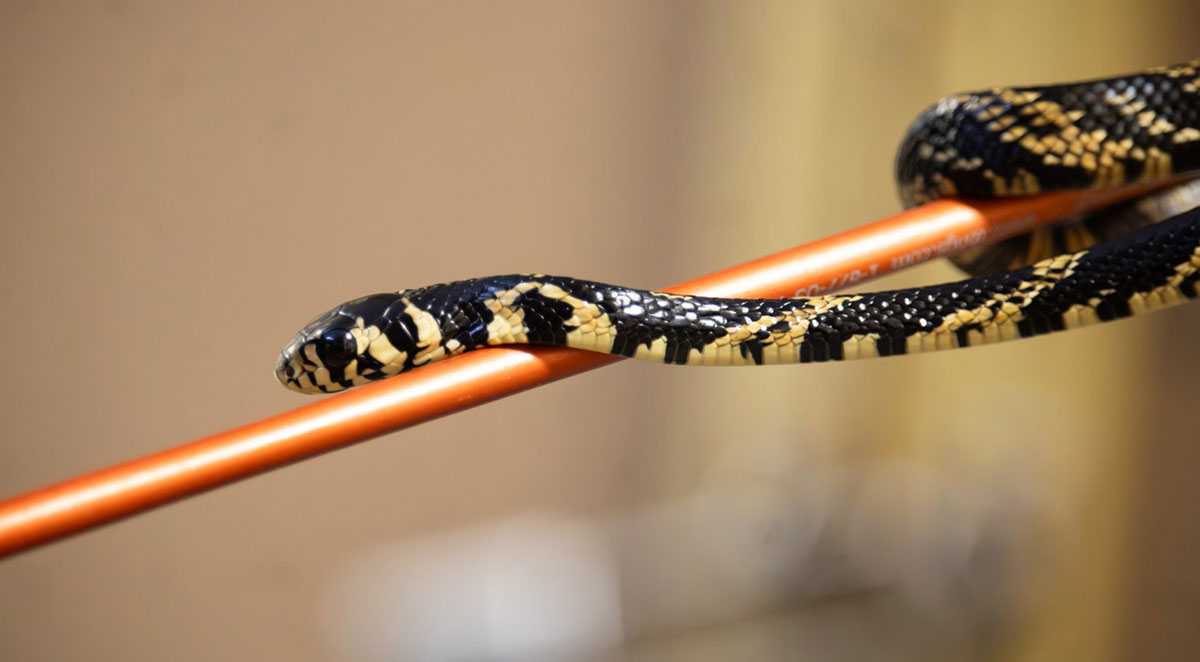
first successful clutch of tiger ratsnake eggs ever hatched at the Zoo
Brevard Zoo is celebrating a milestone after welcoming six healthy tiger ratsnake snakelets, the first successful clutch of tiger ratsnake eggs ever hatched at the Zoo.
BREVARD COUNTY, FLORIDA — Brevard Zoo is celebrating a milestone after welcoming six healthy tiger ratsnake snakelets, the first successful clutch of tiger ratsnake eggs ever hatched at the Zoo.
The hatchlings are the offspring of first-time parents Tony and Wanda. Wanda laid a clutch of 12 eggs in early April, and 11 of those eggs showed signs of development. To give the young snakes the best chance of survival, Zoo animal care staff carefully removed the eggs for incubation behind the scenes.
In the wild, female tiger ratsnakes lay their eggs in warm, sheltered locations before leaving them to develop on their own, as the species does not provide parental care.
The newborn snakelets, each measuring about a foot long, are already beginning to explore their surroundings.
“Our roughly foot-long snakelets have been busy exploring their big, new world,” said Curator of Animals Nicole Payne.
Payne explained that newborn snakes don’t begin eating immediately after hatching.
“Baby snakes don’t eat until after their first shed, as they are using up all the yolk reserves they have stored in their little bodies,” Payne said. “Getting baby snakes to eat can be a tricky process and requires a lot of patience. We have a few tricks up our sleeve to increase their interest if they don’t take food right away.”
The young snakes will remain behind the scenes while they continue to grow and develop. Once they are ready, they will be transferred to other institutions accredited by the Association of Zoos and Aquariums (AZA), where they will help strengthen the managed population of tiger ratsnakes and promote genetic diversity within accredited zoos.
Zoo officials hope the snakelets will serve as ambassadors for their species, inspiring guests around the country to appreciate reptiles and support efforts to protect the disappearing habitats where tiger ratsnakes live in the wild.
While visitors won’t be able to see the hatchlings in person just yet, Brevard Zoo plans to share behind-the-scenes photos and updates on its social media channels as the young snakes continue to grow before heading to their future homes.