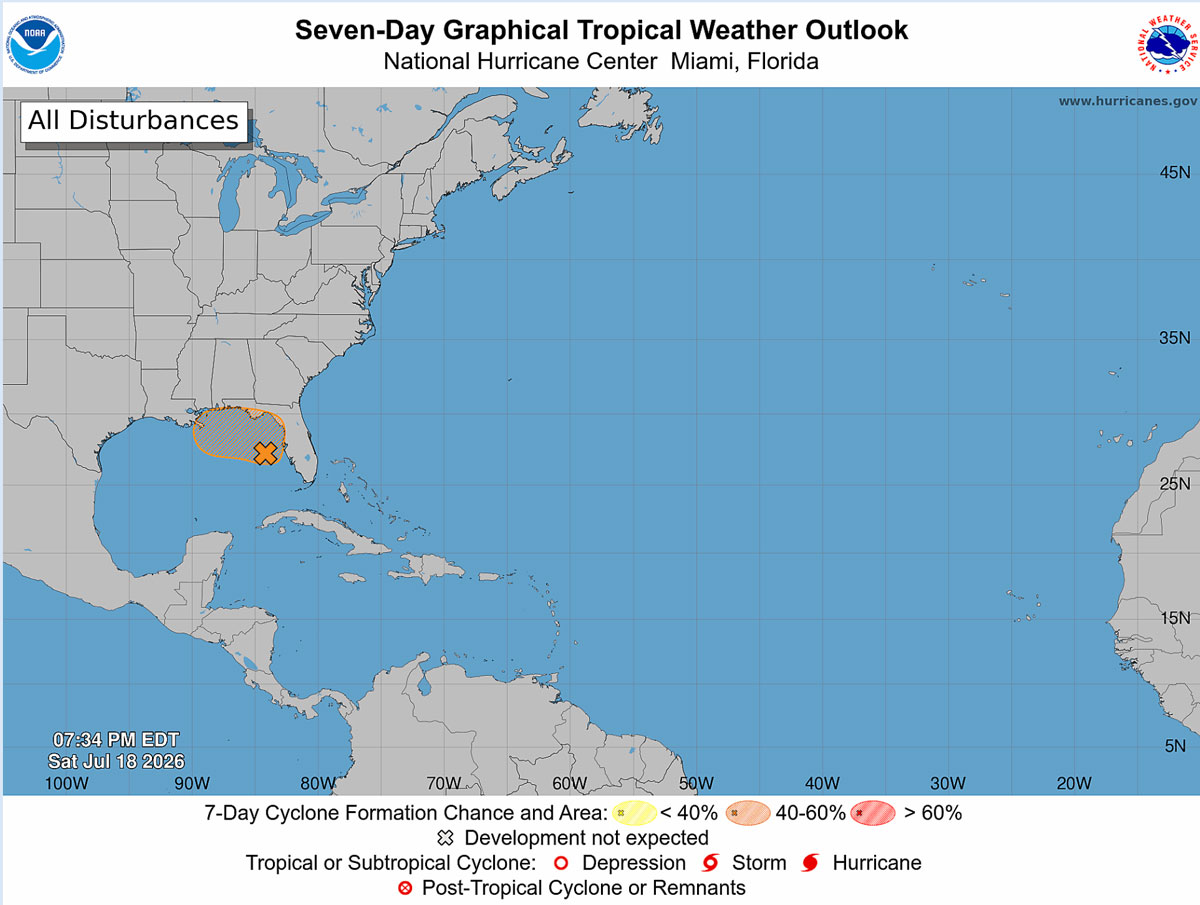
The National Hurricane Center is monitoring a broad area of low pressure over the eastern Gulf of America that continues to show signs of gradual organization, giving the system a 50% chance of tropical development over the next seven days. (NHC Image)
BREVARD COUNTY, FLORIDA – The National Hurricane Center is monitoring a broad area of low pressure over the eastern Gulf of America that continues to show signs of gradual organization, giving the system a 50% chance of tropical development over the next seven days.
At 8 p.m. ET on Saturday, forecasters said the disturbance, designated Invest AL91, remains disorganized with light winds and scattered showers and thunderstorms.
While no tropical cyclone has formed, environmental conditions could allow the system to slowly strengthen into a tropical depression over the next several days as it drifts northward or north-northwestward.
The National Hurricane Center currently assigns the system:
• 40% chance of development within the next 48 hours (medium)
• 50% chance of development within the next seven days (medium)
Forecast models indicate the primary concern is expected to be heavy rainfall, regardless of whether the system develops into a named tropical cyclone.
Residents along the Florida Gulf Coast, as well as portions of southern Alabama and southwestern Georgia, are encouraged to monitor the system closely. Forecasters warn that prolonged periods of heavy rain could lead to localized flooding across parts of the region during the coming days.
To gather more information on the disturbance, an Air Force Reserve Hurricane Hunter aircraft is scheduled to investigate the system on Sunday if conditions warrant.
At this time, no watches or warnings have been issued in association with the disturbance, and the National Hurricane Center emphasized that the system’s shower and thunderstorm activity remains poorly organized.