How Smart Dog Bowls and Activity Trackers Can Support Healthy Weight Management
By Space Coast Daily // August 4, 2026
 Dog weight management might sound easy. Calories in, calories out. But in real life, it gets messy fast. Portions vary from meal to meal. Treats add up without anyone noticing. And nobody’s tracking how much a dog actually moves on an average day.
This is where smart dog bowls and dog activity trackers come in. They are not weight-loss machines. What they do is turn guesswork into actual numbers, so pet owners can see what’s really going on instead of assuming.
Calories In, Energy Out: The Basic Idea
Every dog’s weight moves based on energy balance: calories consumed versus energy the body burns. That part is settled science, no debate there. The trouble is measuring both sides accurately in a home setting.
Most people look into portions. A “scoop” from one bag isn’t the same as a scoop from another, and kibble density varies by brand. Add in a dog who begs successfully at dinner, and the calorie math falls apart fast, usually without the owner noticing until a vet mentions weight gain at a checkup.
Calories Consumed vs. Energy Used
A dog activity tracker estimates energy expenditure using motion data, usually from an accelerometer worn on a collar. It counts activity minutes, rest periods, and sometimes intensity level. A smart bowl, meanwhile, measures what actually goes into the dog: portion size, how often the bowl gets visited, and how quickly food disappears.
Put those two data streams together and you get a rough picture of energy balance. Rough being the key word here.
Why Activity Estimates Might Vary
Here’s something worth being upfront about: no consumer activity tracker converts a dog’s movement into an exact calorie burn number. These devices infer activity level from motion patterns, then apply a formula that estimates energy use based on breed, weight, and age. That’s an estimate layered on an estimate.
A Border Collie sprinting after a ball burns energy differently than a Bulldog doing the same distance at a slower pace, and trackers don’t fully account for that kind of individual metabolic variation. Muscle mass, medical conditions, even ambient temperature all affect how many calories a dog actually burns during activity. So treat activity numbers as a trend indicator, not a lab-grade calorie count. Trends are still useful. They’re just not precise in the way a nutrition label is precise.
Getting Portions Right
Portion consistency is where a lot of home feeding routines fall apart quietly. One family member feeds a heaping cup, another levels it off. Over a month, that inconsistency adds up to real weight change.
A smart bowl that measures intake by weight rather than volume removes a lot of that guesswork. Instead of “about a cup,” you get an actual gram measurement, meal after meal, tracked the same way every time. That consistency matters more than most people expect. Small, repeated errors compound.
Treats and Table Scraps
Ask any vet what derails a weight management plan and treats come up almost immediately. A few training treats here, a bite of chicken there, none of it feels like much in the moment. But calorically, table scraps and treats can equal an entire extra meal by the end of the week.
Smart bowls track what’s eaten from the bowl itself. They generally can’t account for the hot dog someone dropped near the couch. That’s not a flaw in the technology, it’s a boundary worth knowing. If a dog’s weight trend doesn’t match what the bowl data suggests it should, unlogged treats are often the reason.
Eating Speed
Eating speed isn’t just a fun quirk to notice. Dogs who eat too fast tend to consume more before their body signals fullness, since satiety cues lag behind intake by several minutes. Fast eaters are also more prone to bloating and, in some cases, more serious digestive issues.
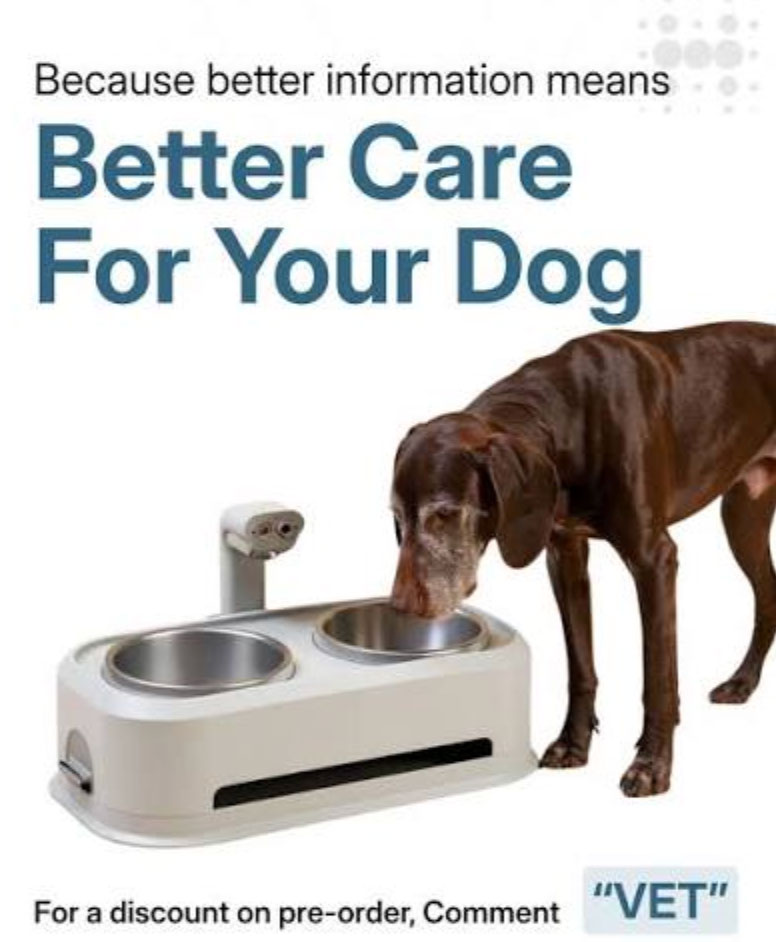
A bowl that tracks eating pace over time can flag when a dog’s typical rhythm shifts, whether they’ve sped up (sometimes linked to anxiety, competition with other pets, or hunger) or slowed down (which can point to dental pain, nausea, or general discomfort). This is one of the areas where EverBowl leans on more than a single sensor. It combines computer vision with load, pressure, and acoustic sensing to pick up on subtle changes in chewing and swallowing, not just how fast the bowl empties.
Weekly Weight Trends
Daily weight checks on a dog are noisy and, frankly, kind of pointless. Water retention, a recent meal, even how much they had to drink an hour ago can shift the number on a scale. What actually matters is the trend across a week or two.
This is where personalized baselines come in. Instead of comparing a dog against some generic breed average, a system that learns an individual dog’s normal patterns over the first week or so of use can flag a gradual 10 to 15 percent shift in intake long before it shows up as a visible weight change. That’s the whole point of tracking daily behavior instead of occasional weigh-ins: patterns show up early, before they become a problem you can see with your eyes.
Body-Condition Assessment
Body condition scoring, the hands-on rib check, the waist tuck view from above, still belongs to owners and vets. No bowl or wearable currently replaces a physical assessment. Weight numbers and intake trends tell you direction and speed of change. They don’t tell you whether a dog’s current condition is ideal, underweight, or overweight for their frame. That judgment call needs a person, ideally a vet, actually looking at and feeling the dog.
Where Veterinary Guidance is Important
None of this data is meant to replace a vet visit. What it does is make that visit more useful. Instead of describing a vague feeling that “something seems off,” an owner can hand over weeks of intake trends, eating speed changes, and weight patterns. Vets can then ask sharper questions and rule things in or out faster.
This is really the honest use case for smart feeding tech: earlier, better-informed conversations with a professional, not a device that solves weight problems on its own. A smart bowl won’t make a dog lose weight by itself. Neither will an activity tracker. What they can do is show you, clearly and consistently, whether the plan you and your vet agreed on is actually working, day after day, without you having to guess.
The Bottom Line
Smart bowls and activity trackers work best as a pair of instruments, not a diagnosis machine. One measures what goes in, the other estimates what gets burned. Together, they replace guesswork with a trend line. Whether that trend needs a diet adjustment, a vet visit, or nothing at all is still a call best made with a professional who knows the full picture, your dog included.