THIS DAY IN HISTORY: Apollo 15 Deep Core Sample Continues to Reveal Moon’s History 55 Years Later
By Space Coast Daily // August 3, 2026
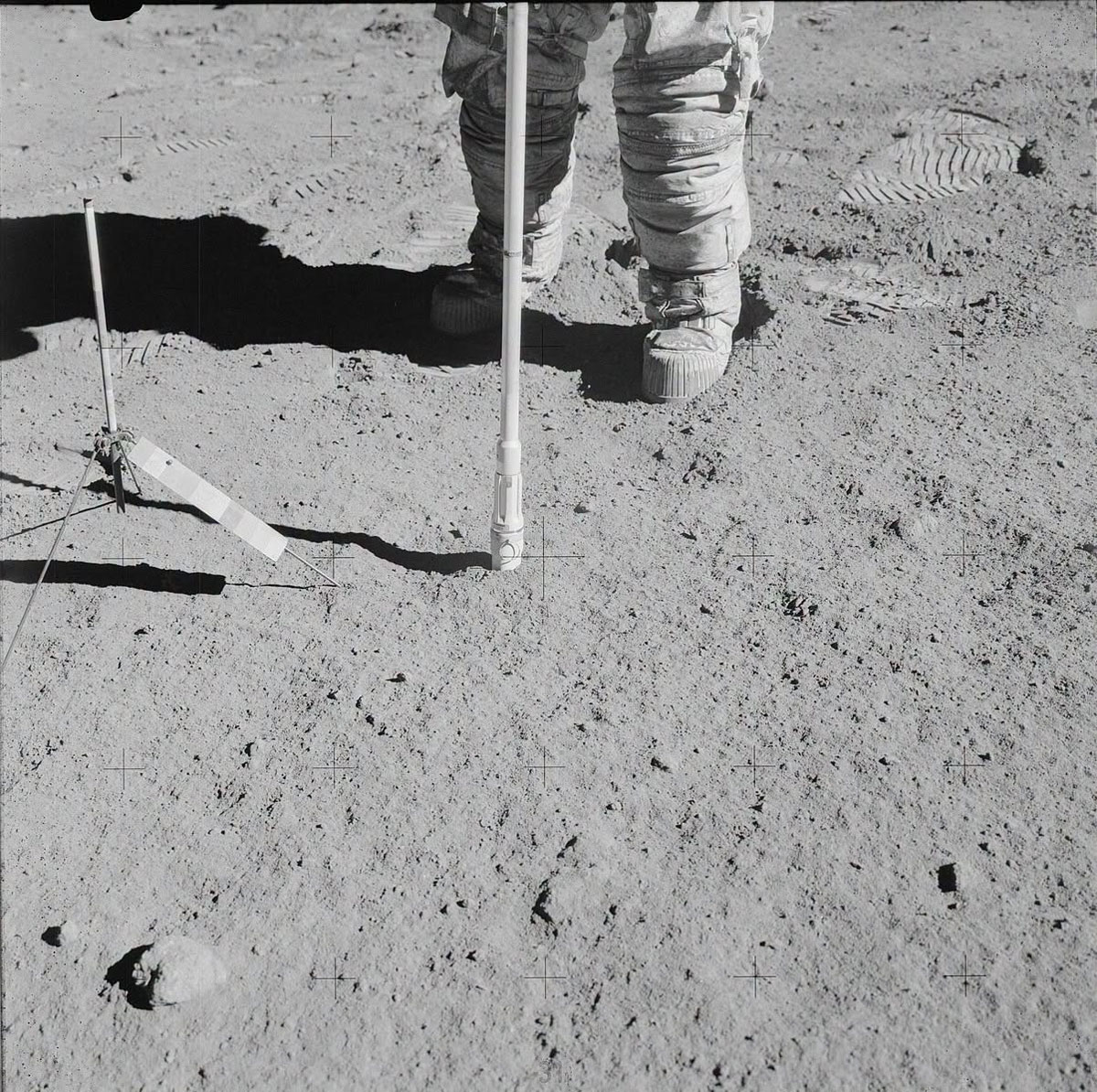
BREVARD COUNTY, FLORIDA – As Apollo 15 returned to Earth 55 years ago today, the spacecraft carried a first-of-its-kind lunar sample that would transform scientists’ understanding of the Moon’s geologic history.
During the mission, astronauts drilled 2.4 meters—nearly 8 feet—beneath the lunar surface and collected the deepest core sample ever retrieved from the Moon at the time. The groundbreaking effort gave researchers a layered time capsule showing how the lunar surface was built, reworked and reshaped over billions of years.
Extracting the core proved difficult. Drilling and removing the sample took longer than planned, forcing the Apollo 15 crew to shorten a later portion of its moonwalk. However, the scientific payoff proved well worth the tradeoff.
After returning to Earth, the sample was transported to NASA’s Johnson Space Center for preservation and study.
Material from the core’s deepest layers came from below the reach of cosmic rays, providing scientists with their first opportunity to examine lunar material largely untouched by recent surface radiation.
The layers preserved within the sample also offered valuable evidence about the sequence of geological events that shaped the landing site, including impacts and the gradual accumulation and mixing of lunar soil.
Apollo 15 launched July 26, 1971, and returned to Earth on Aug. 7, 1971. The mission was the fourth crewed lunar landing and placed a greater emphasis on scientific exploration than earlier Apollo missions.
More than five decades later, the deep core remains an important part of NASA’s lunar sample collection. As analytical technology continues to advance, scientists can revisit the material and uncover details that researchers in the Apollo era could not detect.
The sample’s enduring scientific value highlights the lasting legacy of Apollo 15 and demonstrates how carefully preserved lunar material can continue producing discoveries across generations.