
Here’s What a Technological Collaboration Between Bitcoin and Ethereum Would Look Like
By Space Coast Daily // September 3, 2026
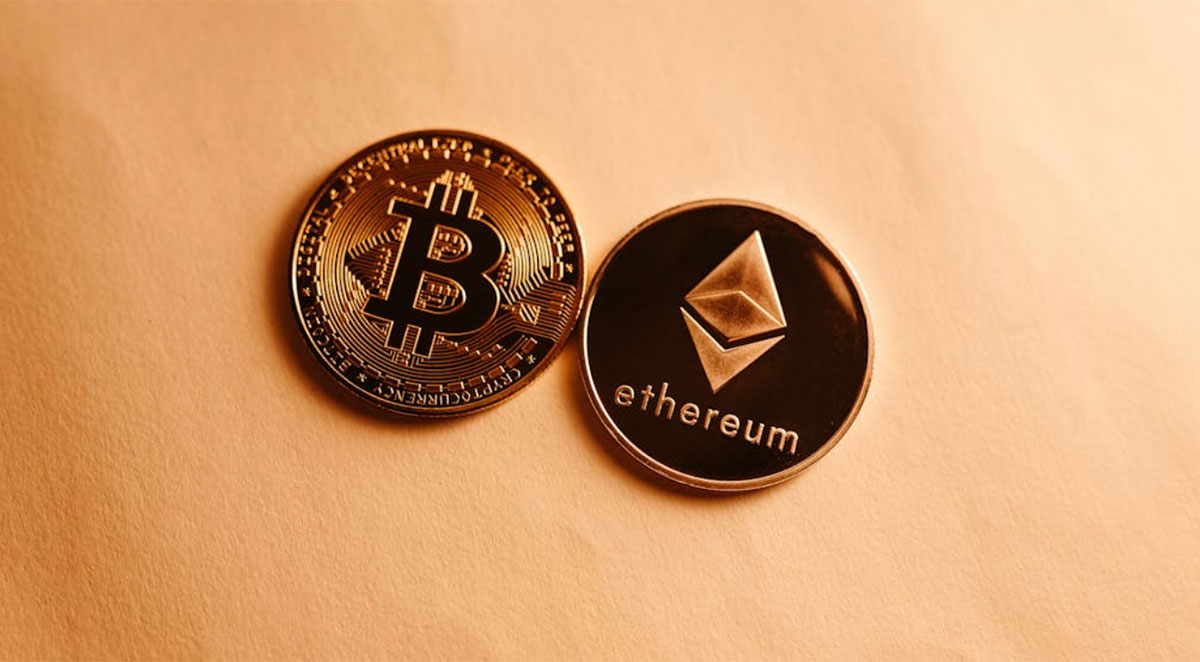
As two of the leading cryptocurrencies on the market, Bitcoin and Ethereum have demonstrated resilience during difficult market cycles. Bitcoin gained investors’ attention and trust, while Ethereum revolutionized the blockchain sector. Therefore, each project had its own path, but they inspired the creation of additional cryptocurrencies and blockchains when they encountered issues such as high mining difficulty or expensive transactions. Litecoin and Solana were competitors offering lower transaction fees and faster speeds, but their popularity was overshadowed by the rising demand for ETH/BTC.
Since both coins often move in the same direction when market sentiment shifts, they are interconnected. Besides, both influence market dynamics, so an interconnection between the two could benefit the industry’s development. Let’s see how to buy Bitcoin when the demand for Ethereum grows, and what are their chances to lead the trading sector.
New solution reveals Ethereum-to-Bitcoin integration
The project developed by Arbitrum, the scalability solution for the Ethereum blockchain, enables connection to Bitcoin via BitcoinOS (BOS). The integration combines a scalable smart contract that makes the BTC network suitable for building interoperable rollups and decentralized solutions so they can interact with the L2 Ethereum layers.
This will advantage users by making the transfer non-custodial and protecting them from counterparty risks. With Arbitrum, Bitcoin’s security and Ethereum’s vast ecosystem will benefit from scalability and liquidity, while also boosting Arbitrum’s total value locked (TVL), propelling it into the mainstream.
This approach is innovative because it offers Bitcoin holders extensive access to Ethereum’s ecosystem, including decentralized apps and networks worth investing in. In addition, it creates an opportunity for Bitcoin to carve out its own space in decentralized finance (DeFi).
A rising demand for tokenized BTC on Ethereum
Another example of using both cryptocurrencies is tokenized Bitcoin on the Ethereum network. This option is becoming popular because, until now, users could only send BTC to BTC addresses, and the same was true for Ethereum. However, users can leverage Ethereum-compatible tokens pegged to the BTC price, such as the following:
• Wrapped Bitcoin (WBTC) is an ETC-20 token established by a collaborative DAO (decentralized autonomous organization);
• Huobi BTC (HBTC) is a similar coin but issued by a crypto exchange founded in China;
• renBTC is another ERC-20 token locked in a decentralized custodian that can be redeemed at any time for BTC;
• tBTC is a BTC-backed ERC-20 token matching at least one Bitcoin in reserves;
However, users must be wary of the potential risks of tokenizing Bitcoin on Ethereum. For example, custodian solutions might require managing a centralized business, which exposes users to the risk of attack. On the other hand, non-custodial solutions might also be affected by vulnerabilities in the Bitcoin smart contract.
ETH/BTC as a strategy tool
Ethereum and Bitcoin can be useful when paired together, even as investments. The ETH/BTC ratio is a market indicator used by investors to gauge which coin rules the market, enabling them to rotate holdings accordingly, a strategy also known as the dual crypto rotation. The benefits of using this metric include the following:
• It helps focus on major assets and avoid altcoin risks;
• It offers a proper response to the changing market cycles;
• It helps stabilize relative strength and momentum;
The method is useful when investors apply the mantra of buying strength and exiting weakness. This means following the direction of the moving average on the ETH/BTC chart and favoring the right coin when the other drops below a certain rate. For instance, it’s best to hold Ethereum when the rate has risen above the 50-day moving average, and to prefer Bitcoin when the rate has been below the MA in the same timeframe.
Do BTC and ETH always function as complementary assets?
While many users might believe both assets are competing, the truth is that leveraging them in a complementary strategy is superior in the long term. That’s because Bitcoin is a monetary settlement layer, while Ethereum is a utility engine for applications, highlighting how their value is driven by different factors. Therefore, each project’s reaction to market events can be different, so they might not be inefficient at the same time.
The longevity and liquidity of both cryptocurrencies have attracted the attention of institutional investors, which is why spot Bitcoin ETFs and spot Ether ETFs were approved in 2024 and have been thriving since. Exposure to leading market coins without owning them brought significant benefits to the underlying projects. At the same time, investors and traders could diversify portfolios more efficiently.
Ideally, every investor should prioritize both Bitcoin and Ethereum for a healthy portfolio. Since they’re the largest coins by market capitalization and are evolving through smart contract development and blockchain adoption, adding them to a portfolio can help reduce losses and exposure to risk.
But portfolio diversification is much more
When starting a portfolio, using BTC and ETH as a safety net is always a good idea. However, since buying a full BTC or ETH can be difficult for a beginner, you will need to start with denominations that are affordable, namely the Satoshi and the Wei.
But you can explore other coins that are not only more approachable as an investment but also share the features of these coins and come with innovative technologies. For example, meme coins are interesting assets backed by communities, such as Dogecoin. However, investing in them comes with a certain level of risk, so make sure to choose reputable projects and allocate much less in them than BTC and ETH. You can also look into stablecoins as they’re backed by fiat money and are much safer in terms of volatility, but might not bring the same returns as riskier assets.
Conclusion
Bitcoin and Ethereum have dominated the cryptocurrency market for years after their releases. One is a reputable digital ledger, while the other is an efficient solution for bringing decentralization closer. Together, they can enhance the market’s efficiency across various projects, such as Arbitrum’s bridging operations, allowing BTC holders to interact with the ETH ecosystem, and BTC tokenization on Ethereum. Using ETH/BTC as an investment strategy is also helpful when one coin is leading the market, so both work as complementary assets.