How Live Dealer Studios Work Behind the Camera
By Space Coast Daily // October 14, 2026
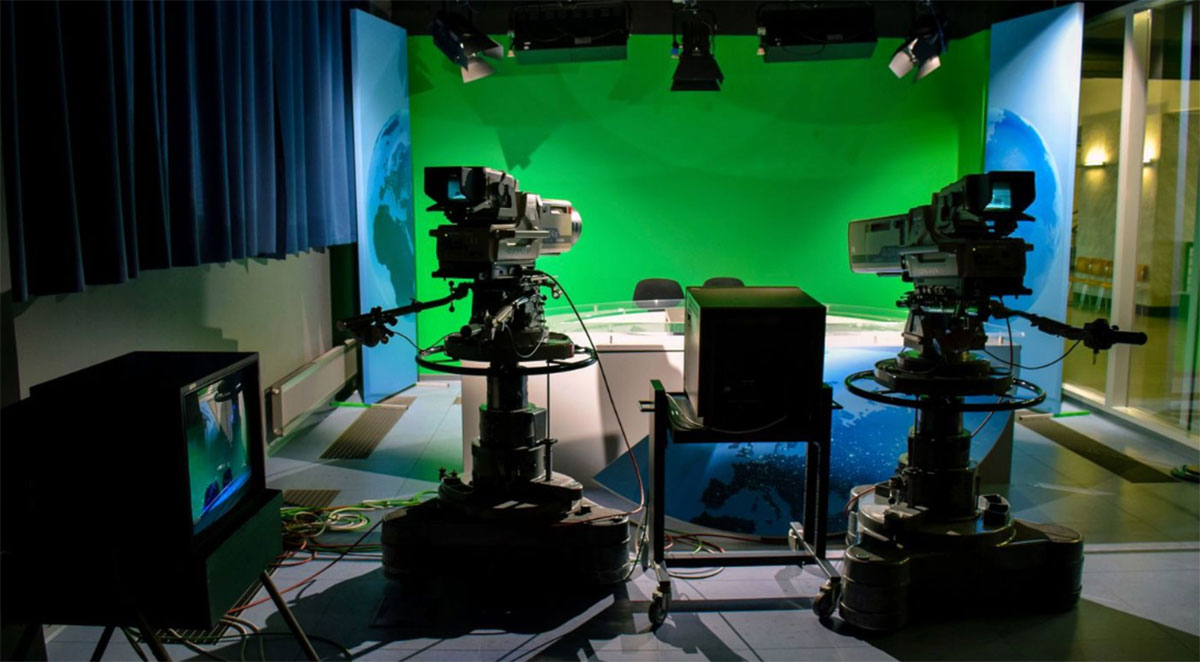
When you watch a live dealer table online, you see the presenter, the cards, the wheel and the action in front of you. What you do not see is the production setup behind the camera that keeps every part of that experience moving together.
When you open a live dealer game, it can be easy to think that you are simply watching someone deal cards through a camera. In reality, you are seeing the finished result of a carefully coordinated broadcast operation. Cameras, lighting, sound, gaming data, graphics and streaming equipment all have to work together so that what happens at the physical table makes sense on your screen.
The Studio Floor Becomes Television
A live dealer studio is essentially a television production space built around a gaming table. The table is obviously important but it is surrounded by equipment and systems designed to capture and present the action clearly.
Think about what you see when you join a live table. You might have a presenter speaking directly to you, a close-up of the cards, a wider view of the table and information about the current round displayed on screen. All of those elements have to come together smoothly.
The presenter is therefore only one part of the process.
While the presenter deals cards, spins a wheel or handles another game, other parts of the production setup are working at the same time. Cameras are capturing different angles and technical systems handle the information connected to the game.
Then you also have lighting and camera positioning. Lighting must remain consistent between different camera angles. A poorly balanced image could make cards, chips, dice or other table details harder to follow. With camera positioning, rather than relying on one fixed viewpoint, studios can use several cameras so that you can see the action from the angle that makes the most sense at a particular moment.
For an online casino operator such as smokos casino, the studio is an important part of the overall online experience. You may only see the finished game through a website or gaming interface but there is a full production operation behind that presentation. This is what seperates certain digital casinos from others. Those that focus on high-quality imagery, graphics and audio tend to become more in-demand with players.
How Cameras Feed the Gallery
One useful way to understand a live dealer studio is to follow the journey of the picture from the table to your screen. MCA-I describes a five-stage live production chain covering the studio floor, production process, encoding, distribution and playback.
| Production stage | What happens |
| Studio floor | Cameras capture the table |
| Production gallery | Feeds and graphics are coordinated |
| Encoding | The video is prepared for streaming |
| Distribution | The stream is delivered online |
| Playback | You receive the finished broadcast |
It starts with the cameras around the table. Depending on the game and studio, you can have a wider camera showing the presenter and table, a closer shot for cards or other game details and additional angles for specific parts of the action. MCA-I notes that three to five cameras can commonly be used to cover a table.
Why use several cameras? The simple answer is that one viewpoint cannot always show everything clearly.
A wide shot gives you a sense of the whole table. A closer camera can make the cards or playing surface easier to see. Another camera can be ready for a particular part of the game when a more detailed view is useful.
All those feeds eventually reach the production gallery.
You can think of the gallery as the control room behind the broadcast. This is where the different camera feeds can be monitored and coordinated. It is also where production staff can deal with return feeds, talkback communication, graphics and the visual presentation being sent to you.
Encoding Carries Tables to Players
After the production team has assembled the required video, the next step is encoding. This prepares the finished broadcast so it can travel through the distribution infrastructure and reach online viewers.
For you, the important point is timing.
A live dealer game is different from a recording because the physical action is happening while you are watching. If the presenter deals a card, for example, the video and the associated game information need to remain closely connected.
MCA-I describes encoding and distribution as part of the low-latency process used to deliver live production to online audiences.
The video is only one part of that equation. Result recognition and betting overlays also have to line up with what you see happening at the table.
Imagine watching the final stage of a round. You see the physical action first, then expect the corresponding result to appear in the interface. For the experience to feel coherent, the information displayed alongside the video needs to relate accurately to what just happened.
That is why production planning starts well before the signal reaches the encoder.
If you visit the Smokos online casino, which offers live dealer games, the interface you see is effectively the final layer of this process. The technology behind it is considerably more involved than the simple video window might suggest.
Remote Production as a Useful Benchmark
You can also look at developments in wider broadcast production to understand where studio design is heading. IBC2026 provided an interesting example through a distributed production setup involving PTZ cameras across seven locations and remote editing in Prague.
This example is useful because it shows how live production can be monitored and coordinated across different locations.
It should not, however, be taken as evidence that every live dealer studio uses the same approach. Casino studios can have very different layouts, staffing arrangements, technical systems and production requirements.
Instead, remote production provides a useful benchmark for understanding a wider broadcast trend. Some tasks can be centralized, allowing production teams to monitor multiple sources from a central location rather than having every function physically positioned beside the camera.
There are potential advantages to that approach. Centralized monitoring can make it easier to oversee several feeds and maintain consistent production standards. It can also allow specialist production staff to work with footage from different locations.
Even so, table-side operations remain important.
What Viewers Never See Working
The infrastructure supporting a live broadcast can be surprisingly large compared with the table you see on your screen.
Ross Video’s IBC2026 announcements provide one useful example of the scale possible in modern broadcast infrastructure. Its Ultrix FR30 platform supports up to 576 by 576 UHD connections, while its Rio XL replay platform can handle 16 HD cameras and eight outputs.
Those figures are not intended to describe a standard casino studio. Instead, they show how much signal-routing and production capacity can exist behind a modern live broadcast.
When you watch a live dealer game, the studio may not need anything close to those particular capacities. What matters is the same basic principle: different video feeds have to be available, monitored, routed, and presented in the right way.
The information you see around the video needs to be placed carefully so it supports the table view rather than obscuring it. Production staff need to know what is being sent to the audience and whether the relevant systems are behaving as expected.
Once you know what is happening behind the camera, the next live dealer session can look slightly different. Instead of seeing only a presenter dealing cards, you can also recognize the carefully coordinated production system that makes the whole experience possible.
Gambling is for entertainment purposes only and should never be seen as a way to make money. Please gamble responsibly and only bet what you can afford to lose. 18+ only.