What You Have to Know About HIF-2α Inhibitor Belzutifan (PT2977)
By Space Coast Daily // November 21, 2025
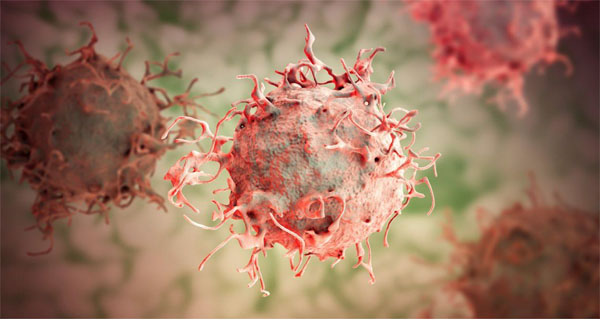
Cells, as you may know already, need oxygen to survive and function. And, when the oxygen level drops, they activate a response system in order to adapt. Those response systems can vary. For example, they can activate a system that should produce more blood vessels, or one that changes metabolism and shifts the way cells use the energy. And, HIFs, a family of proteins, is a central controller of those processes.
Now, in that family, there is one of the key regulators, known as HIF-2α. In a lot of cancer types, and especially kidney cancer, as well as in some genetic conditions, this particular regulator is quite abnormally active, even when the oxygen level is normal and when there would, thus, be no need for it to work. What this does is it drives tumor survival and growth, as well as blood vessel formation.
Since blocking small molecules is extremely difficult, for years and years scientists have operated under the assumption that HIF-2α is basically uncontrollable, so to speak. That is, they have believed that there is no way to affect it, and that there was nothing anyone could do when it entered the overactive state. The good news is that Belzutifan (PT2977) HIF-2α inhibitor changed that assumption and proved the scientists wrong. This was probably one of the rare occasions in which scientists liked being wrong.
Anyway, this particular drug is one of the first to successfully target HIF-2α. And, it is nowadays already approved for certain types of tumors. So, it opens up the doors to further research, leading scientists towards working hard to develop other types of targeted therapies – those that block the switch inside the body that normally allows cells to adapt to low oxygen conditions.
Belzutifan (PT2977) HIF-2α inhibitor is, therefore, undeniably an interesting drug that scientists are researching nowadays. If you’re a researcher yourself, or if you simply like staying up to date with the new developments, it is no wonder that you will want to understand this particular drug better yourself. And, that is precisely why you are here, trying to find out as much as you can about Belzutifan (PT2977) HIF-2α inhibitor. Well, then, keep on reading to get some important questions answered.
Why Is Targeting HIF-2α Important?
We have to start with the question of why targeting HIF-2α is so important in the first place. Although, I believe you could have guessed that from the above already, but let us recapitulate what we have been talking about, and let you know, in simple words, why this is so significant. Basically, targeting HIF-2α is important because it can drive tumor growth and survival, and, as I have mentioned already, blood vessel formation, and that can significantly affect the cancer treatment process in a highly negative way.
So, when this is blocked, we can expect cancer treatments to work better. And, we can expect cancer cells in general to be unable to adapt to low oxygen condition, and to, thus, stop growing and die. I suppose you get how important that is in the actual process of treating cancer. So, being able to target HIF-2α specifically also means being able to develop new types of treatments, and new targeted therapies that will potentially have better effects.
What Is Belzutifan (PT2977) HIF-2α inhibitor?
Now that you get how important this specific targeting is, what you want to do next is figure out precisely what Belzutifan (PT2977) HIF-2α inhibitor is and how it works. And, that is exactly what we are going to be talking about next. Without any further ado, thus, let us cut right to the chase and explain this particular drug in more details, in an effort to help you understand it clearly.
Basically, we are talking about an approved drug that comes in the form of a pill, and is, therefore, taken orally. It is a small molecule inhibitor that is designed to block or reduce specifically the activity of the HIF-2α protein. And, it is approved for certain tumors already, particularly kidney cancer, brain hemangioblastomas, as well as pancreatic tumors, especially for those patients who don’t need surgery right away. Apart from that, it has recently received approval for certain types of neuroendocrine tumors in patients that are 12 years old or older.
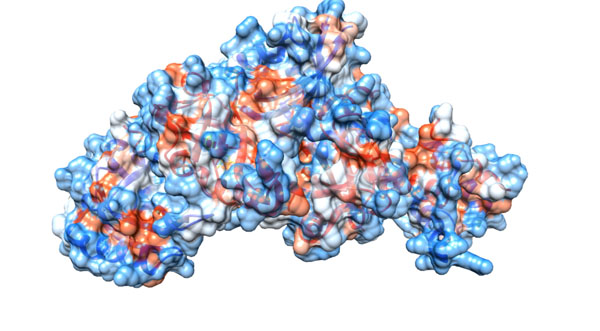
Read more about it: https://www.nejm.org/doi/full/10.1056/NEJMoa2103425
How Does It Work?
How does it work, though? Well, the mechanism is quite simple. If you’ve read so far, then you already understand how the system is pretty much broken in certain types of cancer, leading to an overactive HIF-2α, accumulating even when the oxygen levels are normal. This further means that HIF-2α pretty much constantly turns on those signals for growth, survival, metabolism, as well as blood vessel formation, all of which promotes the spread and progression of tumors.
Well, Belzutifan (PT2977) HIF-2α inhibitor works by preventing that protein from doing its job pretty much. It binds to the allosteric pocket in that HIF-2α molecule, which is not the active site, but actually a regulatory region. This way, it changes the shape of the HIF-2α, preventing it from working effectively and forming its active complex. Since that becomes impossible, it means that HIF-2α cannot activate those downstream genes that actually promote tumor growth.
What Are Its Advantages?
Now, what are the advantages of Belzutifan (PT2977) HIF-2α inhibitor? Given all that you have learned so far, you may be able to guess this yourself. Let me, nevertheless, make things clear. To put it simply, the biggest advantage lies in the fact that this particular drug offers an option to those patients that have limited alternatives, given that we are talking about targeted therapy.
Furthermore, its safety profile is acceptable so far, with most of the side-effects being easy to control and manage. And, of course, given that it affects the pathway that was once thought to be uncontrollable, Belzutifan (PT2977) HIF-2α inhibitor opens up the doors to further research, and to further development of targeted therapies, which is undoubtedly a huge plus in the field of cancer.