THIS DAY IN HISTORY: NASA Achieves First Successful Mercury-Atlas Launch with MA-2 Mission in 1961
By Space Coast Daily // February 21, 2026
Flashback to February 21, 1961
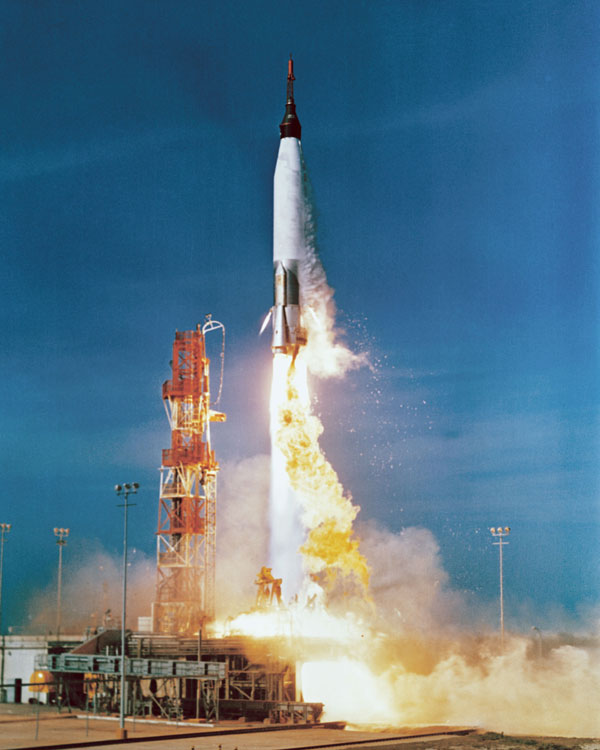
BREVARD COUNTY • CAPE CANAVERAL, FLORIDA – On February 21, 1961, NASA marked a major milestone in America’s early space program with the first successful launch of a Mercury-Atlas rocket.
The mission, known as Mercury-Atlas 2 (MA-2), was an uncrewed, suborbital test flight designed to evaluate the performance of the Atlas launch vehicle and the Mercury spacecraft under real flight conditions. The launch lifted off from Launch Complex 14 at Cape Canaveral, a site that would soon become synonymous with America’s push toward human spaceflight.
The successful flight came 207 days after the disappointing failure of Mercury-Atlas 1 (MA-1), which had broken apart during ascent due to structural issues. That setback prompted engineers to reexamine and strengthen the Atlas rocket and make key modifications to ensure the vehicle could withstand the intense aerodynamic pressures of launch.
MA-2 proved those improvements worked. During the mission, the spacecraft endured the stresses of liftoff, acceleration, and reentry, providing critical data on structural integrity, heat shielding, and launch escape systems.
Though it did not carry an astronaut, the flight was essential in clearing the path for future crewed missions.
The Mercury-Atlas program was part of Project Mercury, America’s first human spaceflight initiative.
Just a few months after MA-2, NASA would send its first American astronaut into space, and by early 1962, the United States would achieve its first orbital flight.
The success of Mercury-Atlas 2 demonstrated that lessons from earlier failures had been learned and corrected. On that February day in 1961, NASA took a decisive step forward—one that helped build the confidence and technical foundation needed to send Americans into space and, eventually, to the Moon.