Why the Smartest Engineers on the Space Coast Still Bomb Job Interviews
By Space Coast Daily // May 2, 2026
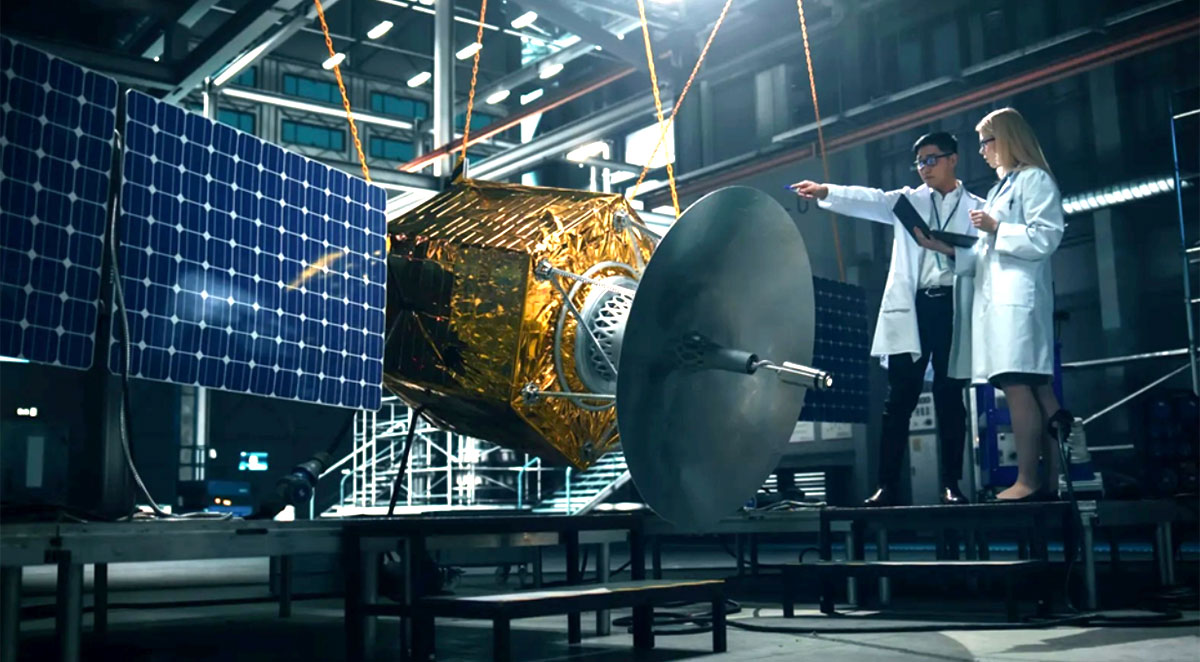
The Space Coast has always attracted some of the sharpest technical minds in the country. From the early days of the Mercury program to today’s commercial launch operations, Brevard County has been a magnet for engineers who solve problems most people cannot even articulate. These are professionals who design guidance systems, build flight software, and keep satellites talking to ground stations thousands of miles below.
And yet, a surprising number of them struggle to land the jobs they are clearly qualified for. Not because they lack the skills. Not because they do not have the experience. But because they cannot communicate any of it when a hiring manager sits across from them and says, “Tell me about yourself.”
The Competence Trap
There is a phenomenon in aerospace and defense hiring that recruiters on the Space Coast know well. The most technically gifted candidates often give the worst interviews. It sounds counterintuitive, but the pattern is consistent. Engineers who have spent years deep inside complex systems tend to assume their work speaks for itself. They walk into interviews with the quiet confidence of someone who has debugged flight code at 2 a.m. during a launch countdown. They expect the interviewer to recognize their competence the way a colleague would.
That is not how interviews work. An interview is a performance, and it follows rules that have very little to do with engineering. The hiring manager across the table may have reviewed fifty resumes that week. They are not going to reverse-engineer your brilliance from a mumbled answer about “working on the thermal subsystem.” They need you to frame your experience in a way that maps directly to what they are trying to solve.
This is especially true at the major Space Coast employers. Companies like Lockheed Martin, L3Harris, Northrop Grumman, and the growing number of commercial space firms in the region all use structured interview processes. Behavioral questions. Situational scenarios. Technical deep dives with specific evaluation criteria. Walking in unprepared for these formats is like showing up to a launch review without your data package.
The STAR Method Is Not Enough
Most career advice will tell you to use the STAR method for behavioral interviews: Situation, Task, Action, Result. That is solid foundational advice, and it works for entry-level candidates or people switching industries. But for experienced engineers competing for mid-level and senior roles on the Space Coast, STAR alone will not differentiate you.
The problem is that STAR gives you structure without substance. It tells you how to organize an answer but not how to select the right story, calibrate the technical depth for your audience, or connect your past work to the specific challenges the team is facing. A systems engineer interviewing at a defense contractor needs to do more than describe a time they solved a problem. They need to demonstrate that they understand the operational context, the stakeholder dynamics, and the constraints that make aerospace engineering different from building a consumer app.
This is where targeted preparation makes the difference. Generic interview advice treats every job the same. But an interview at Lockheed Martin is not the same as an interview at a startup, and the questions reflect that. The behavioral scenarios tend to focus on cross-functional collaboration, working within strict compliance frameworks, and managing technical risk on programs where failure has real consequences. If you have not thought through how to articulate your experience in those terms, you are going to sound generic even if your resume is exceptional.
Preparation That Actually Moves the Needle
The engineers who consistently perform well in Space Coast interviews share a few habits that set them apart from equally qualified candidates who do not get offers.
First, they research the specific role and program, not just the company. Knowing that Lockheed Martin builds the Orion spacecraft is table stakes. Understanding which facility the role sits in, what phase the program is in, and what technical challenges the team is likely dealing with right now is what lets you tailor your answers in a way that resonates.
Second, they practice out loud. This sounds obvious, but engineers are notorious for skipping this step. They will spend hours reviewing technical material but never actually rehearse saying their answers to another person. The gap between knowing something and explaining it clearly under pressure is enormous. Rehearsal closes that gap.
Third, they use company-specific preparation resources. Check out this Lockheed Martin interview question database by InterviewPal for example, it gives candidates a concrete sense of what they will actually be asked, rather than leaving them to guess. When you can walk into an interview having already thought through the most likely questions and refined your responses, the conversation feels natural instead of improvised. That confidence is visible to interviewers, and it matters more than most candidates realize.
The Soft Skills You Absolutely Need
There is another dimension to Space Coast interviews that catches technical candidates off guard: the emphasis on communication and collaboration. Aerospace programs are massive, multi-year, multi-team efforts. No one works alone. Hiring managers are not just evaluating whether you can do the technical work. They are evaluating whether you can explain your work to a program manager who does not have your background, whether you can flag risks without creating panic, and whether you can integrate into a team that has been working together for years.
Engineers who interview well know how to modulate their communication. They can go deep on technical details when speaking with a peer panel and then shift to high-level impact statements when talking to a director. They tell stories that show judgment, not just skill. They describe situations where they had to make trade-offs, push back on a decision, or adapt when requirements changed mid-program.
These are the moments that separate a “qualified” candidate from the one who actually gets the offer.
The Space Coast Hiring Landscape Is Shifting
The competitive dynamics on the Space Coast are changing in ways that make interview preparation more important than ever. The region is not just NASA and legacy defense contractors anymore. SpaceX operations at the Cape, Blue Origin’s growing presence, and a wave of smaller launch and satellite companies have expanded the talent market significantly. That means more roles, but also more candidates.
Remote and hybrid work options have also expanded the applicant pool. A systems engineering role at a Brevard County facility now draws applications from candidates across the country, not just locals who already know the cape roads and the launch schedules. That raises the bar for everyone, including people who have been working in the region for a decade and assumed their next role was a sure thing.
At the same time, the major employers are evolving their hiring processes. Structured interviews with standardized scoring rubrics are becoming the norm rather than the exception. This is good news for candidates who prepare, because it means the evaluation is more predictable. But it is bad news for anyone who thinks they can wing it on raw talent.
The engineers who will thrive in this environment are the ones who treat interview preparation with the same rigor they bring to their technical work. They study the format, practice their delivery, anticipate the likely questions, and walk in with a clear strategy for how they want to present themselves.
It Is an Engineering Problem
If you have spent your career on the Space Coast solving complex technical challenges, you already have the hardest part covered. The skills are there. The experience is there. The missing piece, for most engineers, is translating all of that into a 45-minute conversation that convinces someone to hire you.
The good news is that interviewing is a learnable skill, and it responds to the same systematic approach that makes you effective in your technical work. Define the problem. Gather the relevant data. Test your approach. Iterate. Engineers who frame interview preparation that way tend to see results quickly, because they are applying a methodology they already trust to a domain they have been neglecting.
The Space Coast is full of brilliant people doing extraordinary work. The ones who get the best opportunities are not always the most talented. They are the ones who figured out that getting hired is its own discipline, and they put in the work to get good at it.