NASA’s Open Photo Archives. Here’s How to Use Them for Learning, Teaching & More
By Space Coast Daily // October 10, 2026
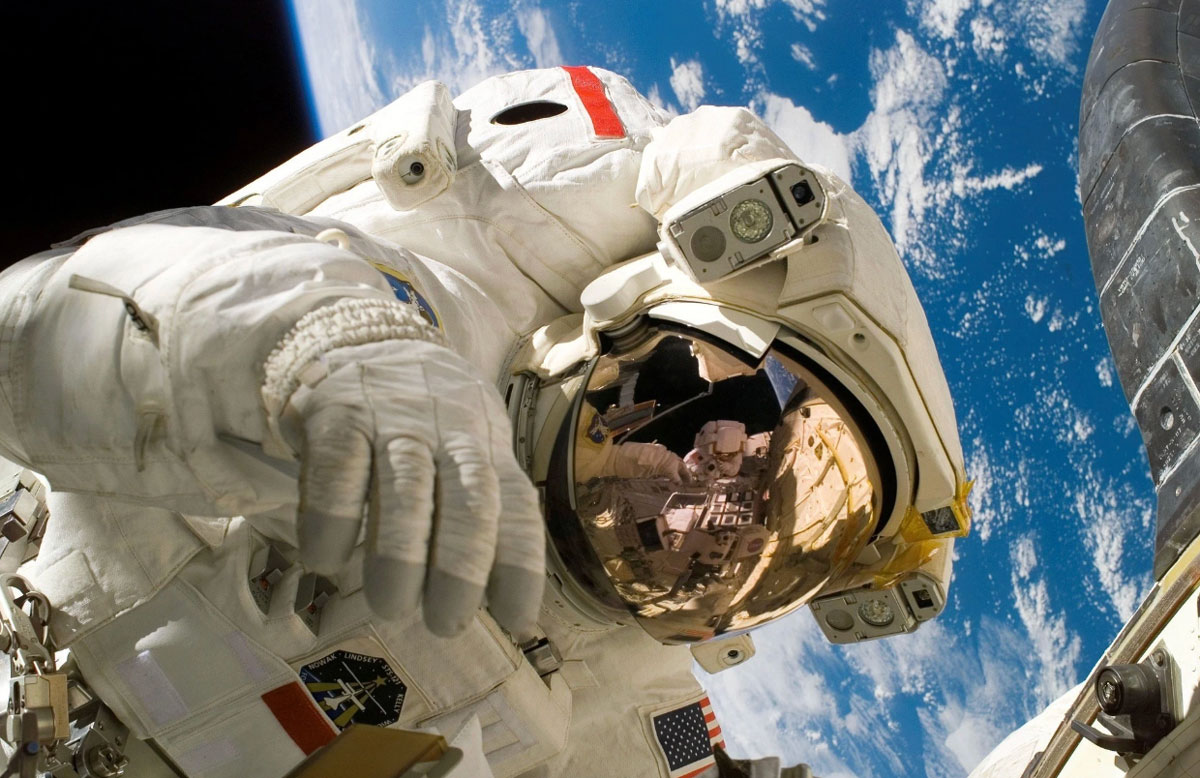
You don’t need to work for NASA, study astrophysics, or even know much about space exploration to access some of the most remarkable photographs ever taken by mankind. Directly, or through specialized equipment. NASA has made decades of visual history available to us, the general public, from Apollo-era launches at Kennedy Space Center to modern images captured by the James Webb Space Telescope.
Moreover, teachers across the world can use them in science lessons, and students can build presentations around them. There is some practical work involved, though.
NASA images come in different resolutions and formats, and the version intended for professional printing isn’t usually convenient for a classroom slideshow or website. Browser-based Convertio, for example, an online file converter, can turn supported TIFF or PNG images into more manageable JPG files when the original format doesn’t suit the project.
But where do you find these photographs, which versions should you download, and what are you legally allowed to do with them?
From Apollo to Artemis: What’s Actually in NASA’s Archives?
NASA’sKennedy Space Center: 60 Years in Photos gallery includes so many interesting images! Among them are astronauts preparing for missions, technicians working on spacecraft, launch facilities, and some of the enormous machines required to support space exploration.
In other words, the whole visual record of the industry that has shaped Brevard County’s development for generations. But it’s practical not only for history enthusiasts, but for learners around the globe. NASA specifically categorizes the Kennedy gallery for students and educators, covering subjects that include history, photography, technology, and rocketry.
But the library is not limited to just technical, historical overviews. The wider NASA Image and Video Library, available at images.nasa.gov, has a way more substantial stack of material. This is a searchable library launched back in 2017 to the relief of all space enthusiasts around the world, and it packs north of 140,000 photographs, audio recordings, and videos from over 60 collections. These materials cover human spaceflight, aeronautics, Earth science, and astrophysics. NASA continues to provide the library as a resource for finding and downloading agency media.
And, more than that, the archive has information about the files, which makes it perfect for conversion purposes. Depending on the record, users can find image dates, titles, credits, original resolutions, and technical metadata.
Why One NASA Photograph Can Be 2 MB or 164 MB
How much can the file format affect image size? The answer to that would be a lot.
On July 6, 2026, NASA published a comparison image of the Centaurus A galaxy, combining a ground-based view from the European Southern Observatory with observations from the James Webb Space Telescope, and offered several downloadable versions of that same composition. In very different file sizes, as you can see below. The largest file is approximately 77 times the size of the smallest.
| Format | Resolution | File size |
| TIFF | 7,788 × 7,371 | 164.27 MB |
| PNG | 7,788 × 7,371 | 88.97 MB |
| JPG | 7,788 × 7,371 | 30.94 MB |
| JPG | 2,000 × 1,893 | 2.14 MB |
If you want to choose the larger one, think again, because the file size depends on your purpose.
• TIFF
Mainly for professional imaging and print production. Good with high-quality image data and different compression methods, making it suitable for workflows where preserving detail is important.
• PNG
Uses lossless compression, meaning the image data can be stored without the losses of ordinary JPEG compression. Great for graphics, illustrations, and images that may need further editing.
• JPG
Known for lossy compression to reduce file size. Browsers love it, so do presentation applications. For a classroom slideshow, a reduced-resolution JPG should be perfectly sufficient.
A word of warning: Make sure that the image is not a small JPG, because the details that were lost in previous compression won’t be recovered when you convert it to TIFF or PNG. Continuous saving of a picture using lossy compression will gradually degrade the picture quality.
It is good practice to keep the original file for any project that includes historical or scientific material.
How to Download and Use NASA Photographs Properly
Here is a small step-by-step guide, if you are new to the process.
• Begin at NASA’s Image and Video Library, and type in a mission, location, spacecraft or scientific subject.
• After opening a photograph, examine its description, date, source credit, and available download options. Some of the pages on NASA Science have multiple copies of the images in various formats, and some of the archive records have several different versions of the same images with different resolutions.
• It’s reasonable to sort downloaded images by subject for a school project, and to document the source information with each image. This will make it easier to find a specific photo in the future or to look at its history.
If a project requires several formats, prepare separate copies. A quick workflow might look like this:
1. Download the highest-quality original appropriate for the project.
2. Save an untouched copy with its identifying information.
3. Choose the output format needed for the presentation, website, or print layout.
4. Use Convertio or other converting software to change the format if the original file isn’t suitable.
1. Check the resulting image for lost detail, unexpected cropping, or changes to its appearance.
Can You Legally Use NASA’s Photos?
Usually, yes, but there are exceptions.
NASA’sofficial image and media usage guidelines explain that its content is generally not subject to copyright in the United States. The agency permits educational and informational uses, including textbooks, public exhibits, websites, and classroom materials, subject to its published conditions. But don’t forget to cite NASA as the source.
But! Not all possible use will be authorized. Here are some restrictions.
• NASA is not responsible for ensuring that the information accessible via this website and its other services is copyright-free, and does not grant third parties permission to use NASA copyrighted images.
• NASA doesn’t permit its imagery, name, or insignia to be used for advertising a product or service, which is logical. Images of NASA staff or astronauts also can trigger additional requirements.
With a little attention to file format, image quality and usage rights, the same collections can be classroom resources, historical presentations, research illustrations, and, overall, an opportunity to experience decades of space exploration through the images that captured it.